


Best Frames for Thick Lenses (Men & Women Guide)
You pick up a new pair of glasses and the prescription is perfect. But the lenses look thick. Heavy. The frame almost disappears behind the glass.
That is not a lens problem. It is a frame problem. The right frame can cut visible thickness by up to 50 percent without changing your prescription or upgrading your lens material. At Bling Optical every frame is designed with this balance in mind — lightweight construction that works with your prescription not against it.
Here is what actually works and why.
Why Thick Lenses Happen and Why Frames Matter

Most high prescriptions are either minus (nearsighted) or plus (farsighted). The two lens types behave differently.
Minus lenses are thin in the center and get thicker toward the edges. Plus lenses are the opposite — thickest in the middle and taper outward.
When a lab cuts a lens to fit a frame it uses the thinnest available portion of the lens blank. Choose a large frame and the lens has to reach further out to fill it. That forces the lab into the thickest part of the blank.
A smaller frame means a smaller cut. The thickest outer ring of the blank gets trimmed off before the lens even goes into the frame. The math is simple — less lens area means less thickness on your face.
Best Frames for Thick Lenses — What Actually Works

Small Frames
This is the single most effective change you can make. For nearsighted prescriptions a lens width under 50mm keeps the lab working near the optical center where the glass is flattest.
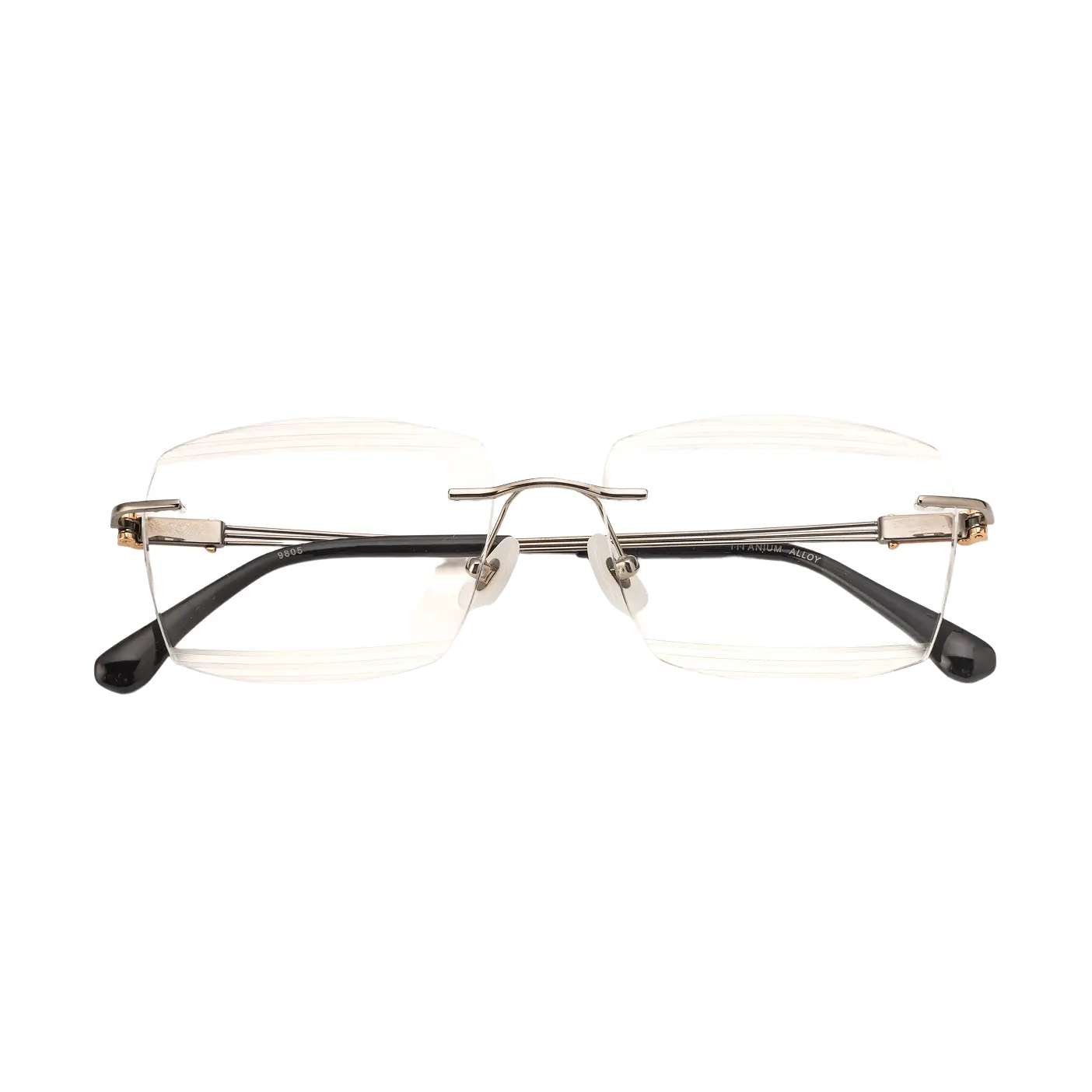
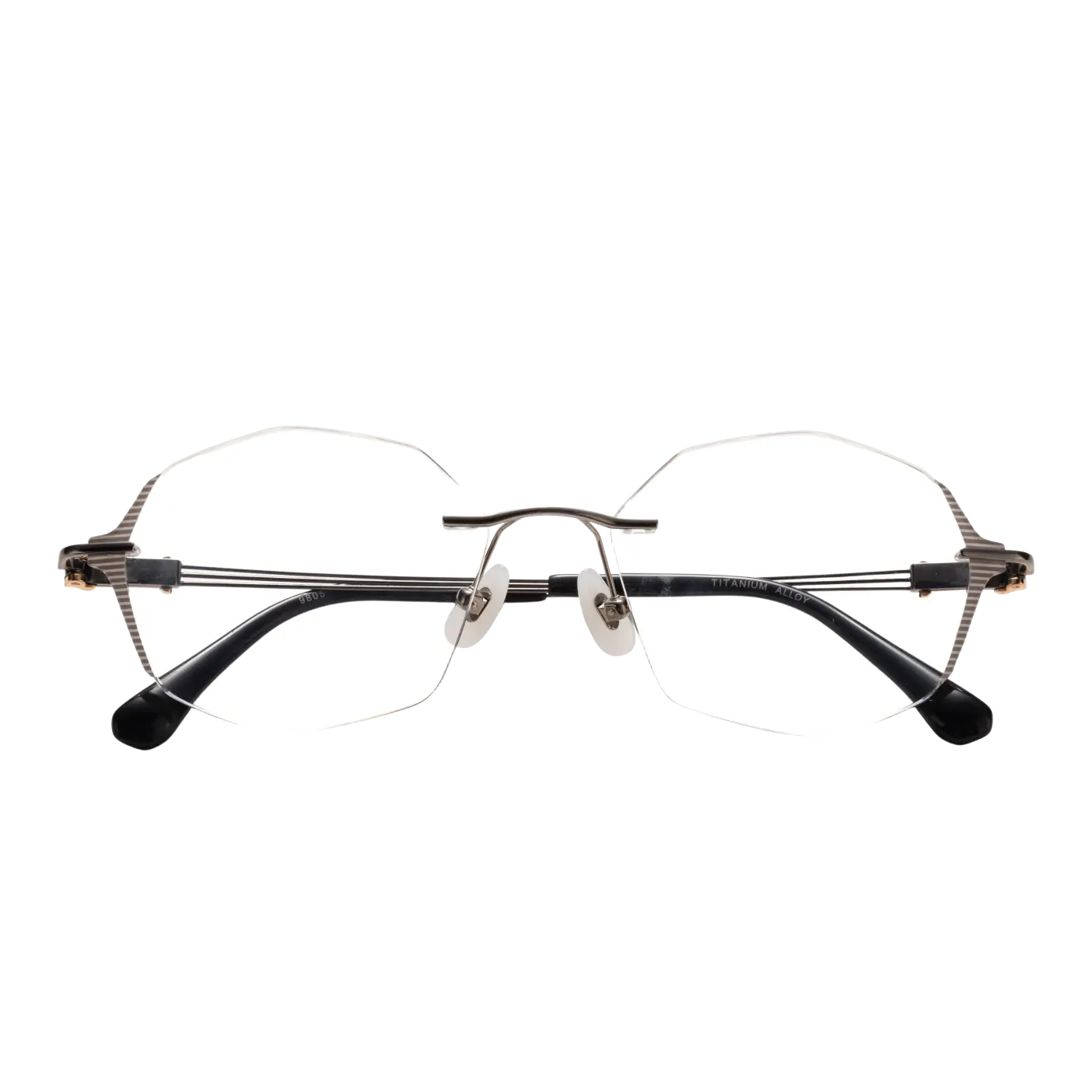
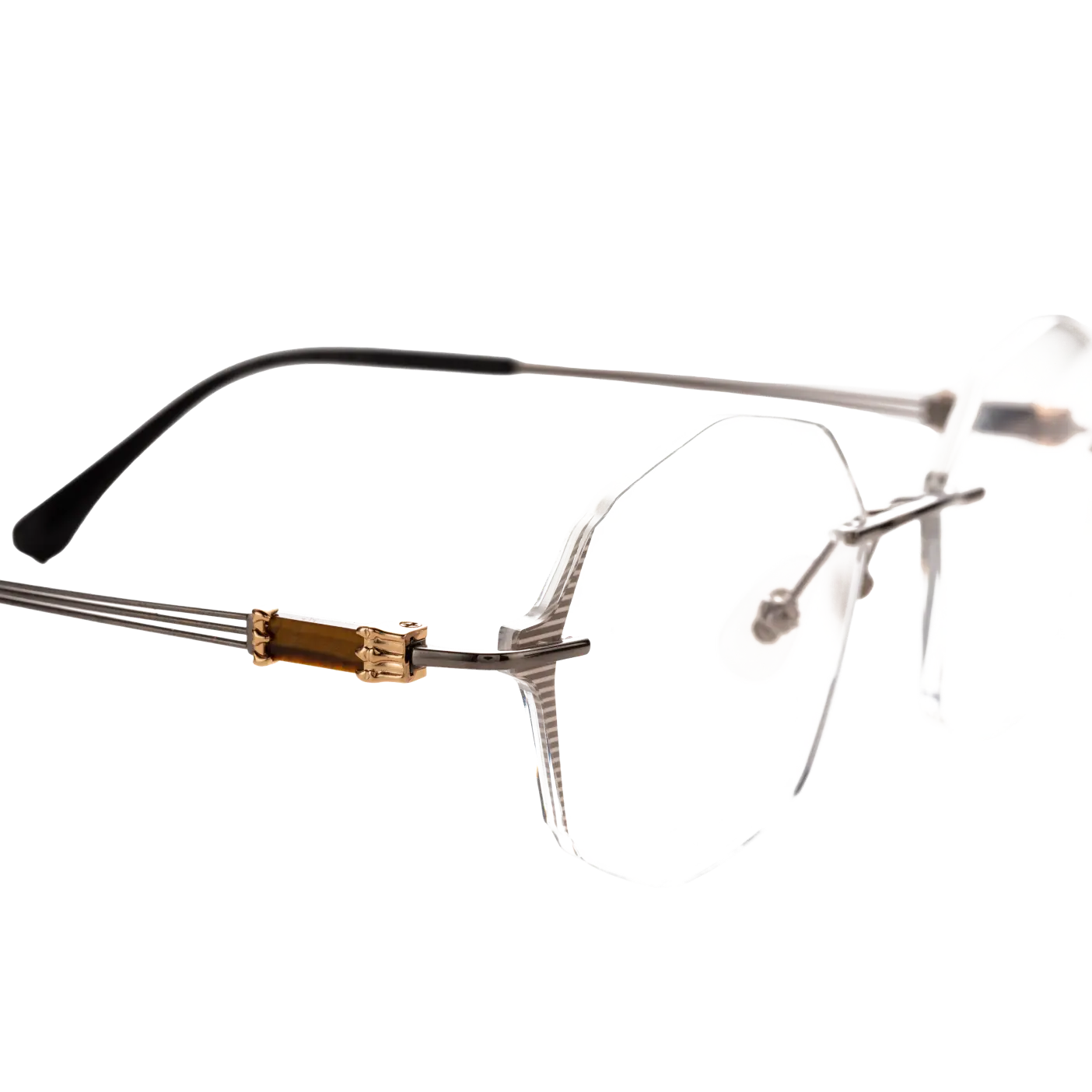
The difference between a 46mm lens width and a 56mm one is not cosmetic. It is physical. A smaller frame leaves the bulkiest edges on the cutting room floor. The Silver Polygon Rimless Glasses is a good example of how a compact frame design keeps weight and edge thickness genuinely low.
Full-Rim Frames

Full rims do two things. They let the lab trim the lens to a smaller diameter. And they wrap around whatever edge remains so it is not visible.
Rimless and semi-rimless frames expose the lens edge on all sides. Every millimeter of thickness is visible. A full rim hides that edge inside the frame wall. The thicker the rim material the more it can absorb.
Acetate rims are wider than metal ones which makes them better at this job. A 4mm acetate wall covers a lot more than a 1mm wire.
Round or Oval Shapes

Shape affects where the thick edges end up. Rectangular and square frames have sharp corners. Those corners are the furthest points from the lens center — so the glass has to be thickest there.
A round or oval frame has a more even distance from center to edge all the way around. No corners pulling the lens to its maximum thickness. The result is a flatter more balanced profile.
Dark or Bold Frames

A visual trick but a useful one. Dark frames draw the eye to the frame first. The contrast between a strong black or tortoiseshell rim and the face is the thing people register. The lens edge becomes secondary.
Light or clear frames do the opposite. There is no strong visual border so the eye moves straight to the glass — including the rings and reflections around the edge.
High-Index Compatible Frames

High-index lenses at 1.67 or 1.74 are physically thinner than standard plastic. But they need a stable frame that can hold them without warping.
Look for acetate or quality titanium frames with secure drill mounts or full rims. Thin wire frames can flex over time and shift the lens alignment. For high-index glass that misalignment matters.
Worst Frames for Thick Lenses — Avoid These

Rimless Frames
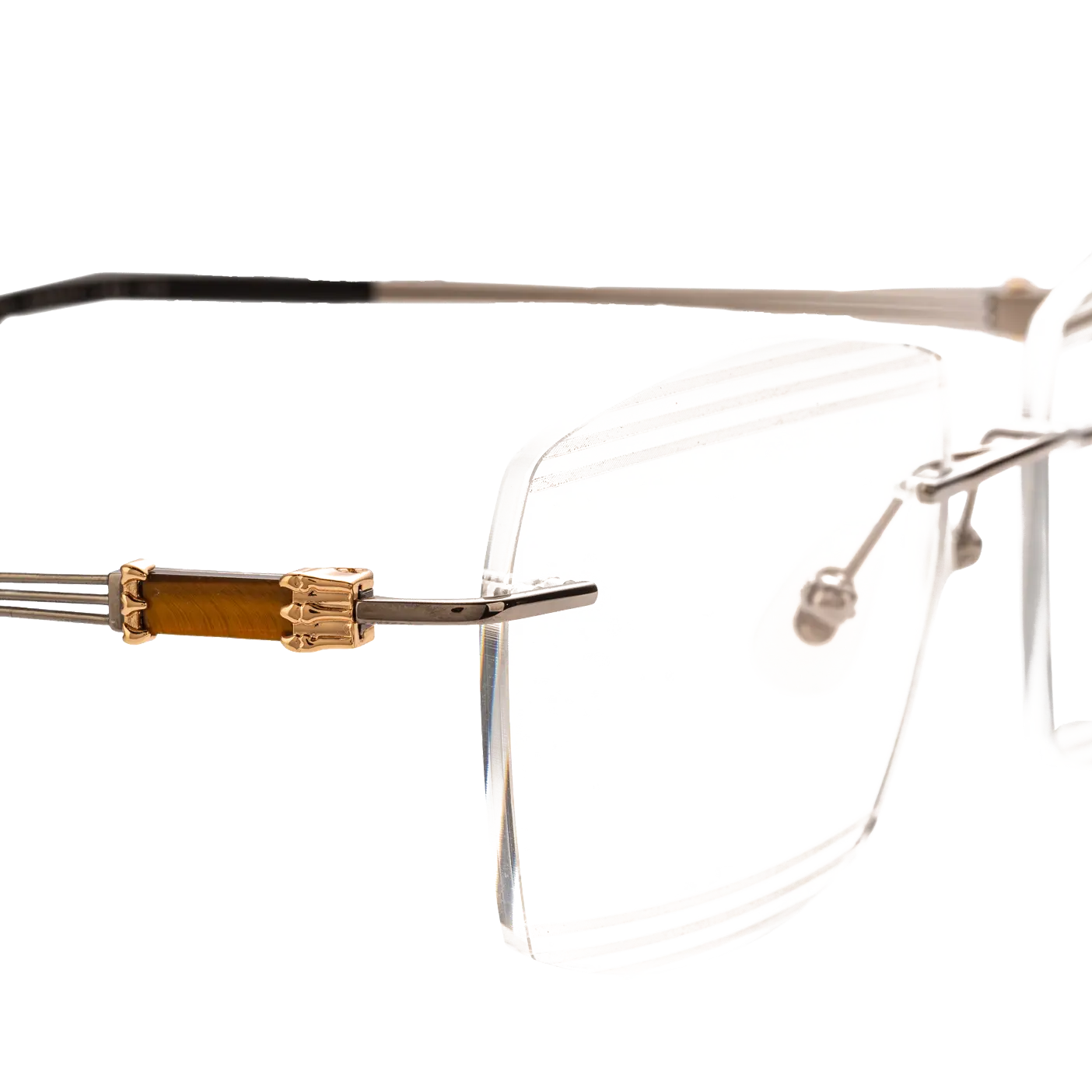
Rimless frames are often a challenge for high prescriptions. Without an outer frame wall, the full lens edge is exposed, and even high-index materials can reflect light and highlight thickness. That’s why rimless styles are usually recommended only for low to moderate prescriptions.
But at Bling Optical, we’ve engineered a solution for stronger prescriptions. Using MR-7 1.67 high-index lenses, we can create rimless glasses for prescriptions from +4.00 to -8.00. These ultra-thin lenses reduce edge thickness while keeping the frame light and elegant.
Whether you need single-vision nearsighted lenses, reading glasses, prescription sunglasses, or photochromic lenses, our rimless options ensure clarity and comfort without the bulky edges typical of high prescriptions.
Oversized Frames

Bigger frames mean a bigger lens. The lab has no choice but to cut further into the thickest part of the blank. The lens is heavier. The edges are thicker. And the frame slides forward on the nose because the weight sits further from the face.
The oversized trend works for a lot of prescriptions but not for strong ones.
Ultra-Thin Metal Frames

A 1mm wire frame has no wall to cover a lens edge. If the lens is 6 or 8mm thick at the edge it protrudes past the wire on the front and back. It looks unfinished.
If you prefer metal look for a deeper-profile metal frame rather than a minimal wire design. Enough material to actually wrap around the lens matters.
Frame Shape vs Lens Thickness — What Actually Makes a Difference

The technical term is effective diameter — the distance from the geometric center of the frame to its furthest corner, doubled. The higher that number the thicker the lens has to be to fill the frame.
Rectangular frames have a high effective diameter because the corners are far from center. Round frames have a lower one. That is the core geometry driving all of this.
Why Narrower Is Better

For minus lenses the glass is flattest at the center and steepest at the edges. A narrow frame lets the lab cut the lens before it reaches the steep outer section. That is where most of the visible bulk lives.
A 10mm reduction in lens width can make a more noticeable difference than upgrading from 1.67 to 1.74 index material. Both help but the frame geometry often has the bigger impact.
The Curve Factor
Minus lenses are naturally flat on the front. They do not suit curved or wrap-style frames — the lens blank is not shaped for that and the fit will look distorted.
Plus lenses have a steeper front curve. They need a frame with enough structural depth to accommodate that without the glass sitting too close to the eyelashes.
Keeping the frame small centered and round keeps the lens-edge-to-pupil distance short. That combination can reduce visible edge thickness by close to half compared to an oversized square frame with the same prescription.
Men vs Women — Best Frames for Thick Lenses

Best Frames for Thick Lenses — Men
For men the goal is usually a clean structured look that does not draw attention to the prescription. Bold rectangular frames in dark matte acetate handle heavier lenses well. The thick bridge and temples stabilize the weight and keep the frame from sliding. The Rimless Rectangle Glasses and the broader executive flair eyewear collection are worth exploring for this purpose.
For men who prefer metal a deep-profile titanium frame offers more wall coverage than a standard wire. The Rimless Glasses for Men collection shows what is possible at the lighter end of the spectrum.
Best Frames for Thick Lenses — Women
Cat-eye and rounded thick-rim styles are the strongest performers for high prescriptions. A cat-eye lifts attention upward and away from the lower outer edges where minus lens thickness is most visible.
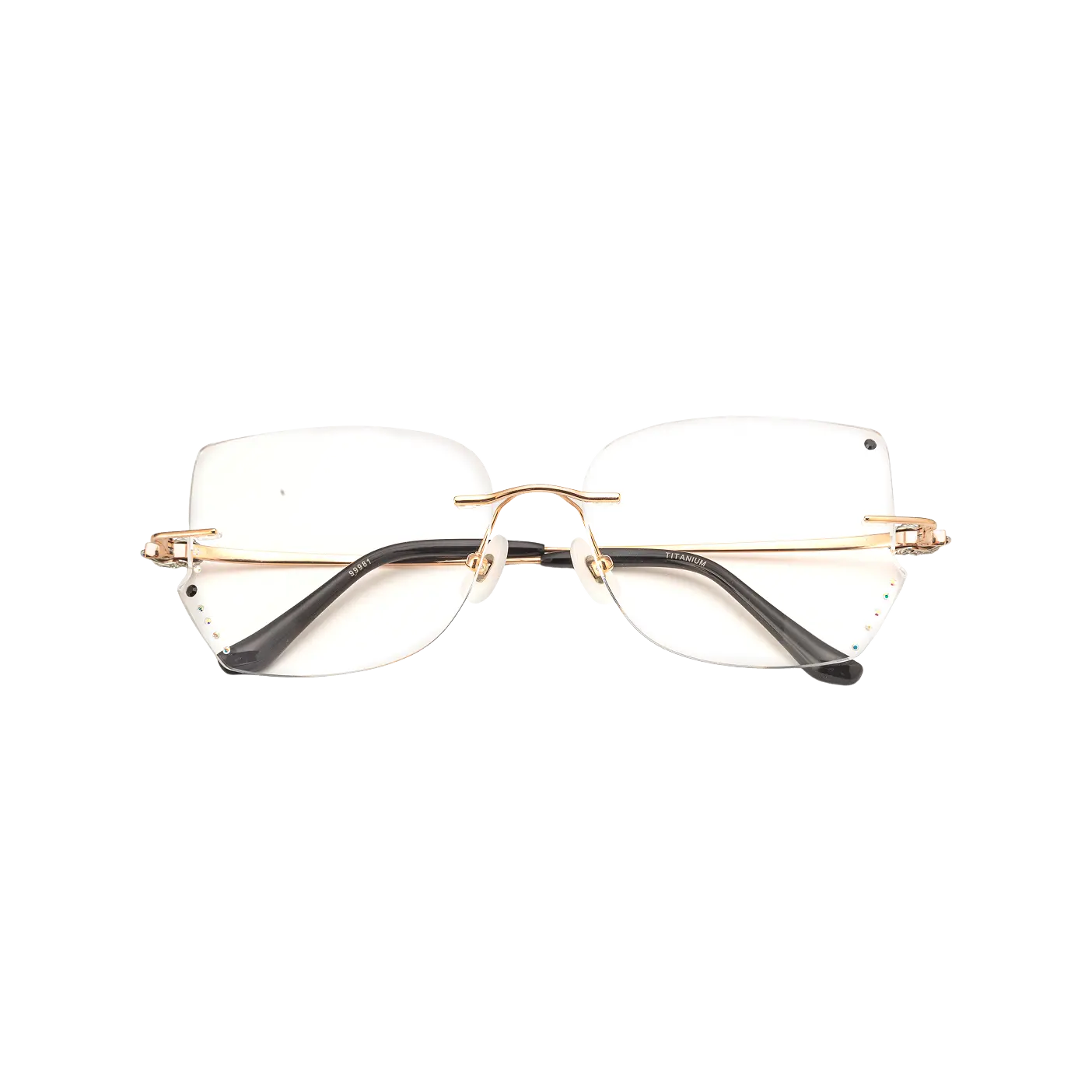
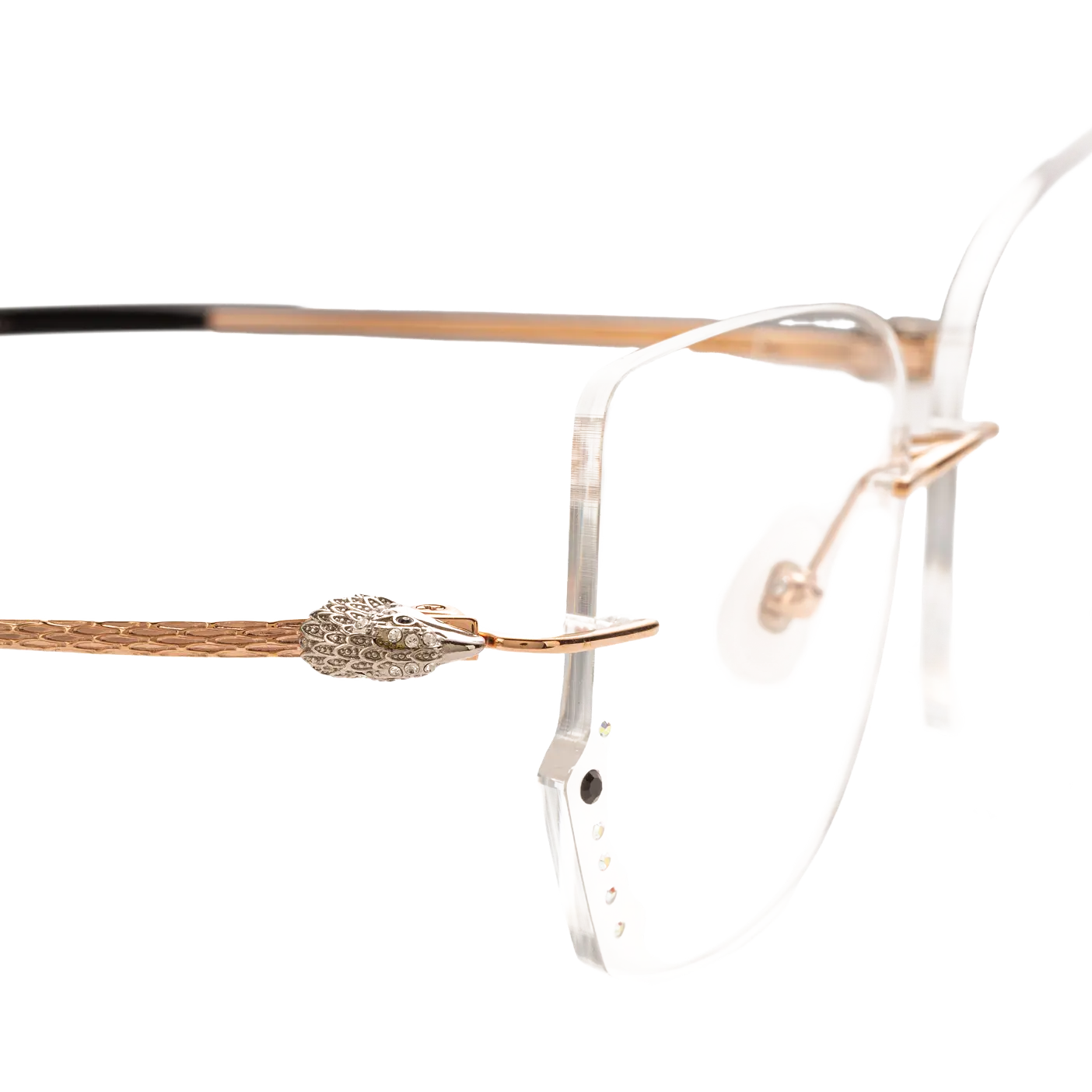
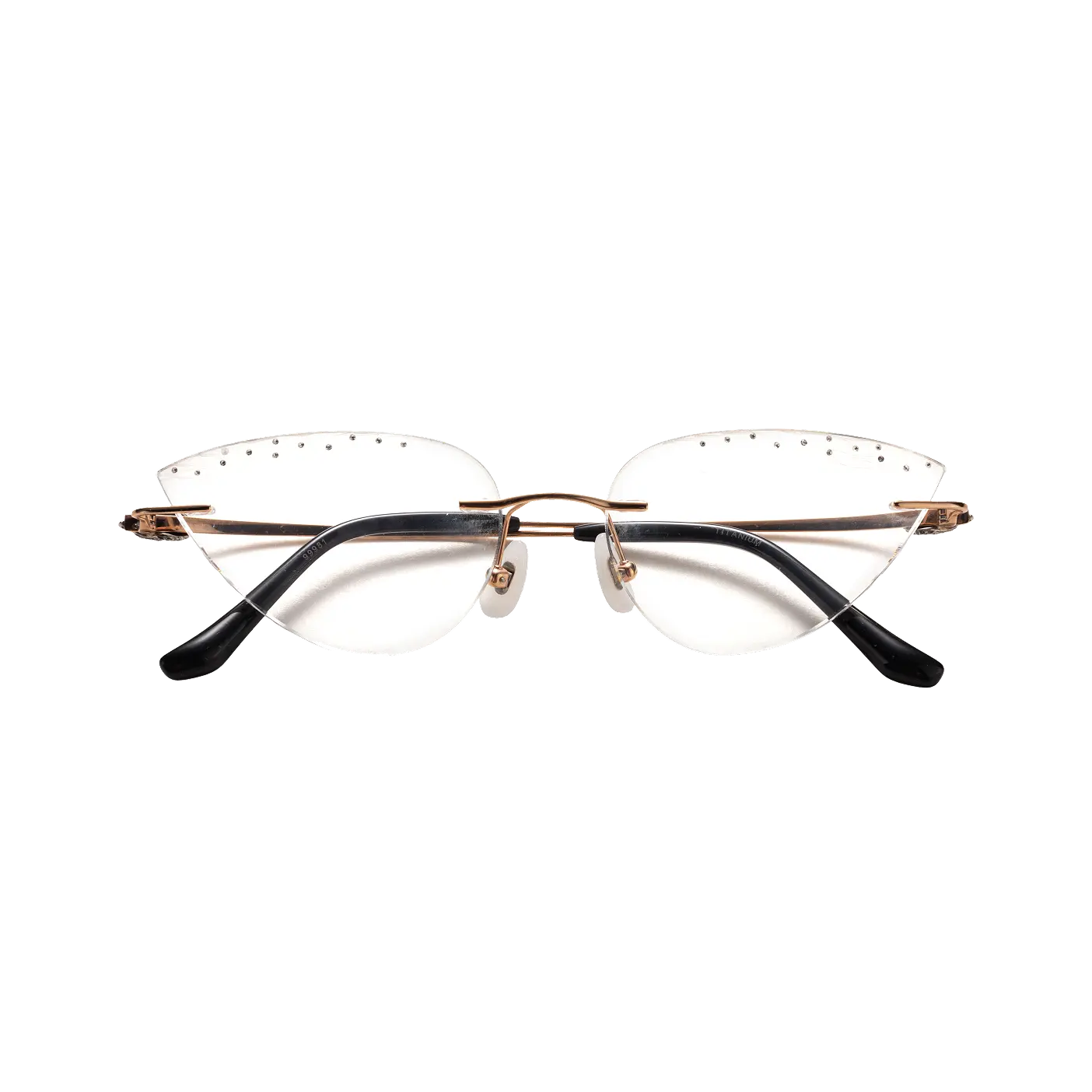
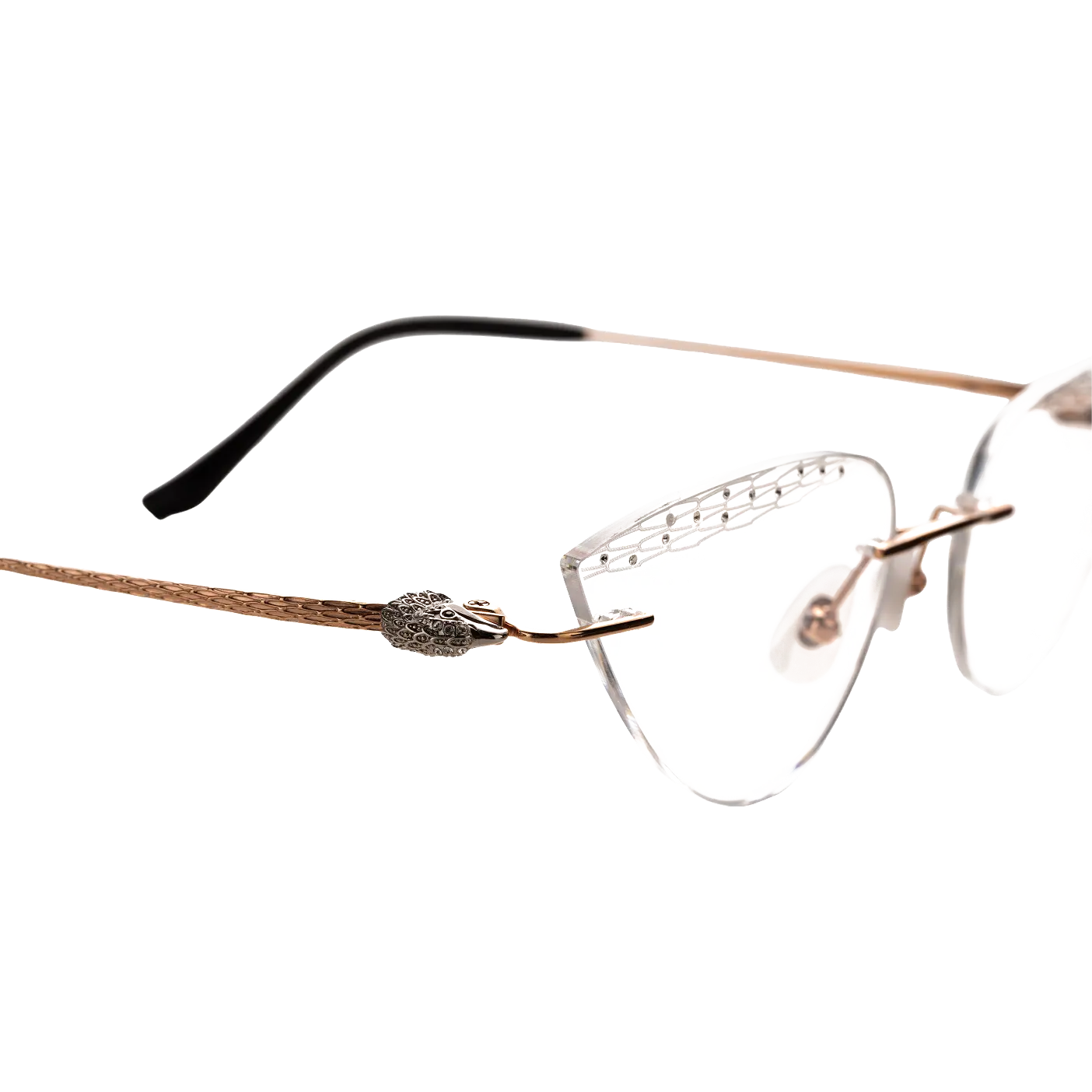
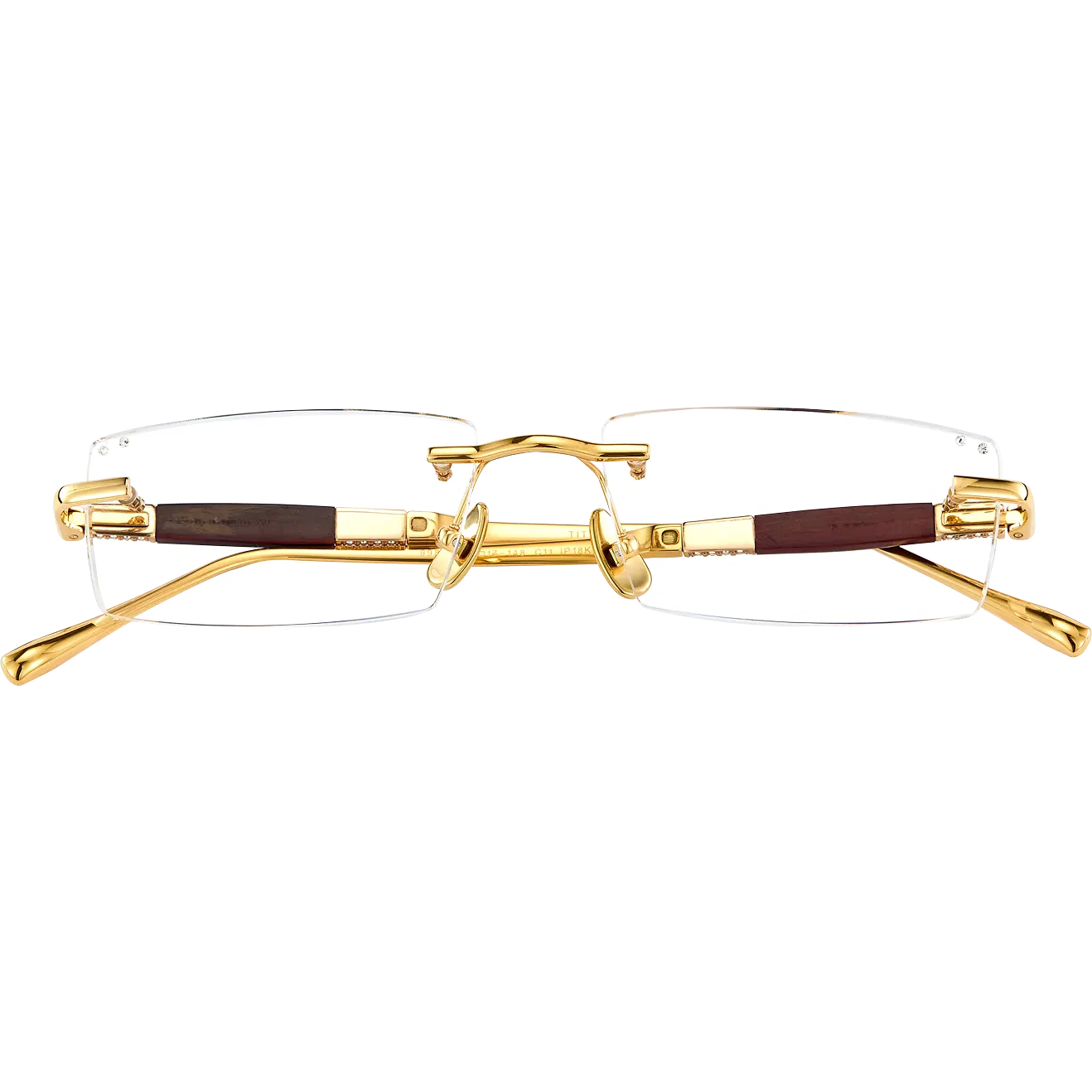
Rounded shapes distribute edge thickness more evenly around the frame. Combined with a full acetate rim and a compact lens width they are one of the best practical combinations available. The Gold Eagle Rimless Glasses takes a cleaner approach for those who want precision without bulk. The women rimless glasses collection covers a range of silhouettes in this space.
Extra Hacks to Make Thick Lenses Look Thinner

Choose High-Index Lenses
Standard plastic lenses at 1.50 index are the default. For prescriptions beyond -4.00 they are not the right choice. A 1.67 lens is noticeably thinner. A 1.74 goes further and is particularly effective above -6.00.
The reduction is not cosmetic — the lens is physically flatter and lighter. Less glass pressing on the nose bridge. Less weight pulling the frame forward.
Add Anti-Reflective Coating

Thick lenses catch more light. Without AR coating every overhead source creates white rings around the lens edge that signal the prescription to anyone looking at you.
AR coating eliminates those rings. The lens appears much closer to clear and the eye goes to your eyes rather than the glass. It is one of the cheapest upgrades with one of the biggest visible returns.
Pick Frames That Sit Close to Your Face

The further lenses sit from your eyes the more they distort your face. Minus lenses make the eyes look smaller when the vertex distance is too large. Plus lenses do the opposite.
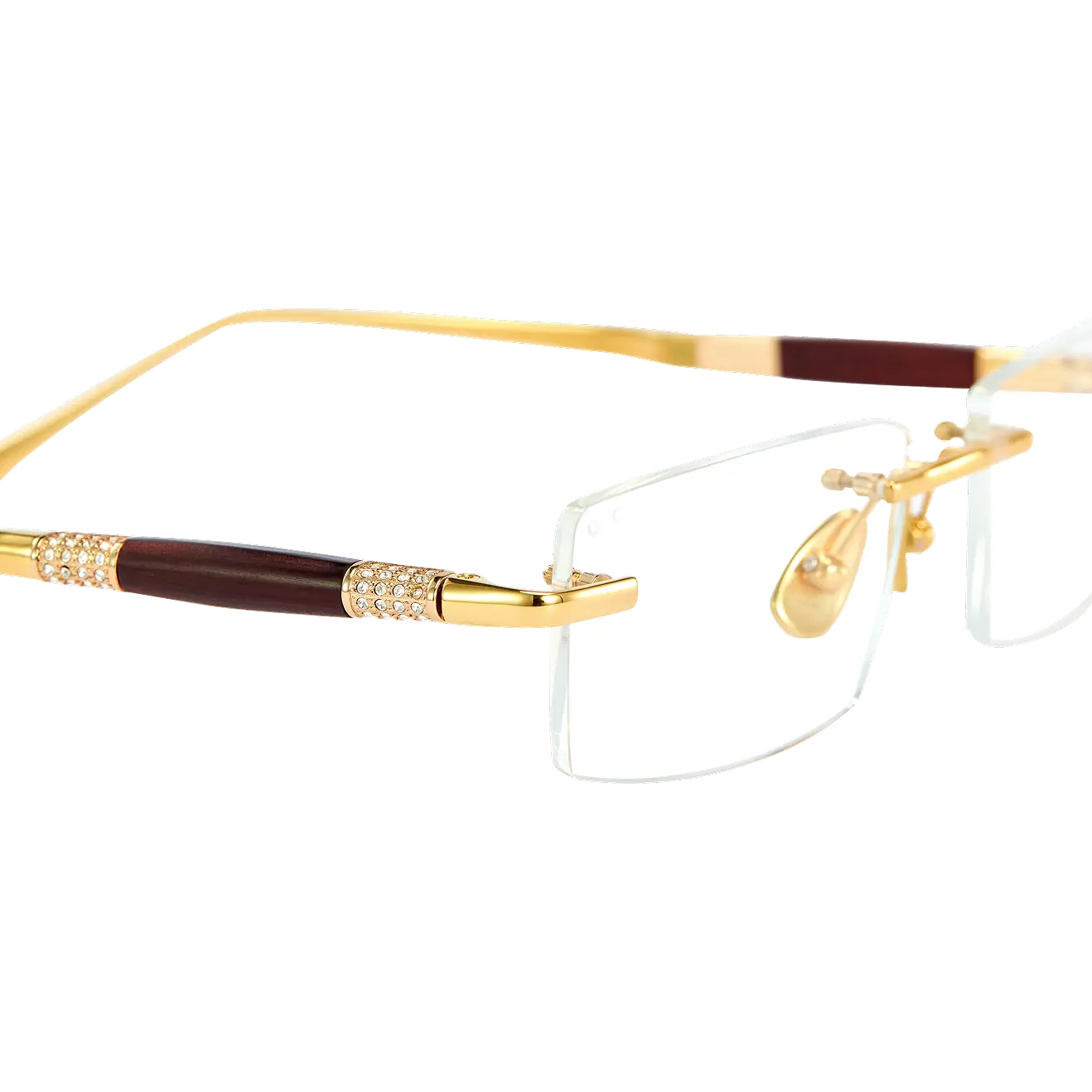
Look for frames with adjustable nose pads or a well-fitted bridge that keeps the glass close. The Gold Square Rimless Glasses is a good example of how frame geometry and fit work together to minimize that distortion.
Avoid Strong Lens Tint Contrast
A dark tinted lens in a light or clear frame creates a sandwich effect. The clear edge of the lens becomes very visible against the dark center. If you want tinted lenses match the density to the frame color.
A dark lens in a dark frame reads as one unified element. A dark lens in a clear frame reads as a thick glass object inside a thin plastic border.
Quick Comparison — Best vs Worst Frame Types
Use this as a reference when you are deciding between styles.
|
Frame Type |
Effect on Thick Lens |
Verdict |
|
Small full-rim |
Trims thickest edges, hides what remains |
Best choice |
|
Dark thick acetate |
Masks power rings and edge reflections |
Best choice |
|
Round or oval |
Even thickness around the lens — no thick corners |
Great choice |
|
Rimless |
Entire lens edge exposed from every angle |
Avoid |
|
Oversized |
Lens reaches its maximum thickness |
Avoid |
|
Ultra-thin metal |
Zero wall coverage for protruding edges |
Avoid |
How to Choose the Right Frame for Your Face and Prescription

The best frame is the one where optical function and personal style land in the same place. High prescription does not mean giving up on aesthetics. It means knowing which shapes actually work for your specific situation.
Round face with a strong minus prescription? A compact bold-rimmed rectangle adds structure and keeps the lens edge close to center. Square face with the same prescription? A thick-rim round or oval softens the jawline while managing the glass.
One practical checkpoint — look at your current favorite pair. Find your pupil in the center of the lens. If it sits off-center even slightly the frame is not fitted correctly and the lens will be thicker on one side. Centering the pupil inside the lens is the single most important fitting adjustment you can make.
Frequently Asked Questions
What are the best frames for thick lenses?
Small full-rim frames in dark acetate. Small frames let the lab cut away the thickest outer edges. Full rims hide what remains. Dark colors pull attention to the frame itself rather than the lens edge.
Do smaller frames make lenses thinner?
Yes. For nearsighted prescriptions lenses get thicker as they move away from center. A smaller frame means a smaller lens diameter — so the thickest parts of the blank get trimmed off before the lens is fitted.
Are rimless glasses bad for thick lenses?
For most high prescriptions yes. There is no outer wall to hide the lens edge. Even with high-index material the polished edge will catch light and show the full thickness from every angle.
What index lenses should I choose?
For prescriptions over -4.00 a 1.67 index lens is a solid step up. For anything beyond -6.00, a 1.74 index is worth considering — it is the thinnest available and makes a visible difference in edge thickness.
Do thick frames hide thick lenses?
They help a lot. A deep acetate rim acts as a sleeve around the lens edge. The frame wall swallows the bulk so it is much less noticeable from the side or at an angle.
What glasses look best for high prescription?
Round or oval full-rim frames in a compact size. These shapes keep the lens edge close to the center, which keeps the thickness to a minimum. Avoid sharp corners — they pull the lens to its thickest point.
Can you make thick lenses look thin?
Combine a high-index material with an anti-reflective coating and a small dark thick-rim frame. Each element works on its own. Together, they make a significant prescription look much more manageable.
What frames should men choose for thick lenses?
Bold rectangular frames with a thick bridge and deep rim. These hold heavier lenses without sliding and provide enough wall depth to hide edge thickness. Dark matte acetate works especially well.
What frames should women choose for thick lenses?
Cat-eye or rounded thick-rim styles. The upward lift of a cat-eye draws attention away from the lower outer edges where thickness is most visible. Round shapes also spread the lens thickness more evenly around the frame.

Looking for something else?

Best Frames for Thick Lenses (Men & Women Guide)
LEARN MORE
How to Fix Loose Glasses in 3 Simple Steps (At Home Fast)
LEARN MORE
Popular Glasses for Men 2026 Styles for Professionals
LEARN MORE
Eye Makeup with Glasses Tips for a Stunning Look
LEARN MORELooking for something else?

Who Invented Glasses and How They Changed the World
LEARN MORE
Diy Eyeglass Cleaner Guide for Crystal Clear Lenses
LEARN MORE
Best Glasses for Oblong Face Shapes
LEARN MOREYou may also like


Further reading
Parts of Glasses Explained: Frame, Bridge, Temple, Nose Pads and Lenses

What Are High Index Lenses and Who Needs Thinner Glasses?

Do Glasses Make Your Eyes Worse? What New Wearers Should Know