


What Is VLT in Sunglasses? Visible Light Transmission Explained
Sunglasses really come down to two things: how dark the lens is and how much UV it helps block. VLT in sunglasses means visible light transmission, or how much light passes through the lens and reaches your eyes. A lower VLT means a darker lens. A higher VLT means a lighter lens.
The best VLT for sunglasses depends on where you wear them. Bright beach days need a lower VLT. Cloudy walks, driving, and everyday use may feel better with a lighter lens. Once this number makes sense, choosing shades becomes much easier.
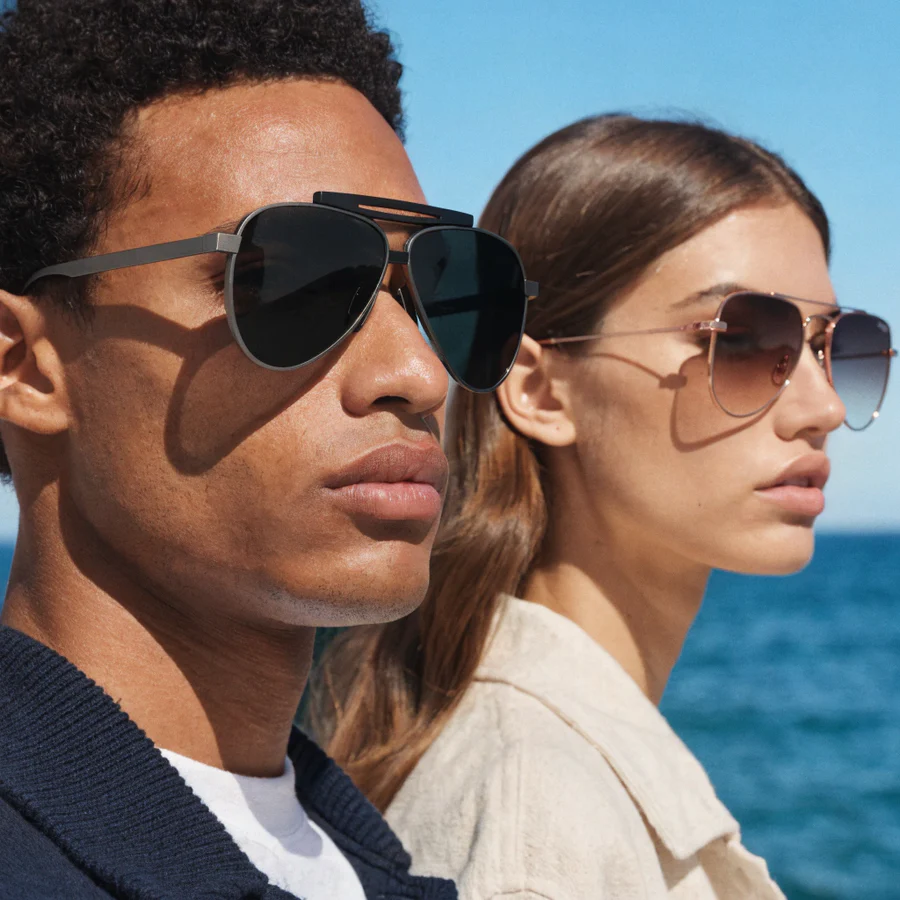
So that’s what we’ll sort out here. What the number means. A quick chart to match it to your light. Which range works for driving, the beach, snow, the everyday stuff. Why VLT, polarization and UV are three separate things people keep mixing up. Plus the S0–S4 labels you’ll spot on a spec sheet. And if you want something real to look at while you read, a pair of Bling Optical sunglasses shows how the numbers shake out in practice.
What Does VLT Mean in Sunglasses?
VLT is short for Visible Light Transmission. All it measures is how much of the light in front of you the lens passes through, on a scale of 0 to 100. A lens at 10% lets a tenth of it through. At 40%, closer to half gets in. Lower number, darker view, and the more bearable hard sun gets.
Here’s the catch nobody mentions on the shop floor: VLT says nothing about UV. A lens can be black at night and still wave UV straight through. That’s the whole reason the two get listed separately. Park that thought for now — it comes back near the end, because honestly it’s the mistake people make more than any other.
Lower VLT vs Higher VLT
Lower VLT blocks more light. Beaches, snow, open water, a bright stretch of road — anywhere the glare is coming at you, that’s its territory. Higher VLT does the opposite, letting more light in for dawn, dusk, cloud, or those moments you keep ducking between shade and sun.
Neither one wins on its own. It just depends where you actually are most of the time. Which is why a lot of people give up picking one and keep two — a dark pair for summer glare, a lighter pair for the grey days. Try both. See which one your eyes stop fighting. That’s your pair.
VLT Sunglasses Chart by Light Condition

Start with this, then shift a little up or down depending on how sensitive your eyes run. It’s a starting map, not gospel.
|
VLT Range
|
Lens Feel
|
Best For
|
|
0–19%
|
Very dark to dark
|
Bright sun, beaches, open roads, boating, snow glare
|
|
20–40%
|
Medium tint
|
Everyday wear, commuting, travel, mixed sun and shade
|
|
40–80%
|
Light tint
|
Overcast days, shaded trails, dawn, dusk
|
|
80%+
|
Near-clear
|
Indoor, night cycling, safety lenses, very low light
|
It’s the reason a lens that’s perfect at noon suddenly feels like a cave the moment you step under some trees. Nothing changed about the lens. The light did. For most strong-sun days, somewhere in that 10–18% band is the sweet spot. Go single digits and you’ll be too dark the second there’s any shade — keep those for the real extremes, snow and altitude. Anything north of 80%, meanwhile, is basically clear glass: fine indoors, fine at night, useless against actual sun.
Best VLT for Sunglasses by Activity

“Best” depends entirely on what you’re up to. A beach lens and a trail lens are doing nearly opposite jobs. So here’s the rundown by activity.
Driving
Daytime Driving
For daytime driving, the best VLT for sunglasses is usually around 10–30%. This range cuts harsh brightness without making the road too dark. It also helps you see dashboards, signs, and traffic changes more clearly.
Polarized lenses can help with road and windshield glare, but they may affect some digital screens. Test them with your dashboard before you rely on them every day.
Night Driving
For night driving, the only safe VLT is 80%+. Sunglasses are not recommended at night because darker lenses reduce the light your eyes need to see clearly.
Beach and Water Glare
Water and wet sand bounce glare right back up into your face, so you may want a darker lens here — 8–18% or so. Polarization can reduce harsh surface reflections. Bling Optical does not currently offer polarized lenses; for current non-polarized styles, compare the verified tint, VLT and UV specifications on Emera Sunglasses, or browse women’s sunglasses.

Hiking and Snow
Trails won’t commit to one kind of light. You’re blasted on an open ridge, then five minutes later the tree cover swallows it all — so a 20–40% lens handles that back-and-forth best. Snow flips the whole thing. Up on a snowfield or a high pass the ground throws the sun straight back at you, and that’s one of the rare moments the really dark end makes sense, down around 3–8%, the glacier stuff. On a normal sunny day at sea level you’d be drowning in too much lens with that.
Daily Wear
For just living your life, most people land around 15–35% and stay happy. Sensitive eyes drift to the darker side; if your days are mostly cloudy and shade, drift lighter. And for clean frames that sit well with everyday driving and travel tints, men’s sunglasses cover that middle ground.
Sunglass Lens Colors and VLT
VLT sets how bright things look. Tint colour sets how they look in a different sense — the contrast, the warmth, whether reds still read as red. Two lenses can sit at the exact same VLT and feel like totally different worlds, which is why colour is your second call after you’ve nailed the range.
-
Gray — keeps colors true and neutral. The safe default for driving and daily wear.
-
Brown / copper — lifts contrast and depth; warm, good for changing light, golf, and hiking.
-
Green — softer than gray, cooler than brown, balanced; a classic everyday look.
-
Yellow / amber / rose — brightens dull, low light, but gets overwhelmed by midday sun.
Go gray when you want things to look the way they actually are. Brown or copper when you need to read the ground — a fairway, a trail, a road in dull flat light. And the warm low-light tints? Keep those for overcast afternoons. Not noon in July.
Polarized Lenses, UV Protection, and VLT

Three things, three different jobs, and people blur them together constantly. Let’s pull them apart. If you want to see how the engineering side of VLT and UV protection works, take a look at our lens technology options. Bling Optical does not currently offer polarized lenses.
How Polarized Lenses Reduce Glare
Polarized lenses strain out the light bouncing off flat stuff — water, snow, a wet road, glass, baking pavement — so a harsh scene suddenly reads calm. Driving, fishing, beach days, long walks in full sun, all better for it. But here’s the part people miss: polarization is not UV protection. The American Academy of Ophthalmology points out that polarized lenses cut glare for things like driving and boating, and that’s all — you’ve still got to check the label for UV.
VLT vs UV400: Why Dark Doesn’t Mean Protected
This is the part that confuses many shoppers. VLT is about brightness. UV400 protection is about blocking ultraviolet light up to 400 nanometers.
Without UV400 protection, a dark lens can still let harmful UV rays reach your eyes. A dark lens may also make your pupils open wider, so checking the label matters more than the shade.The American Academy of Ophthalmology doesn’t mince words about it: darker doesn’t mean safer, so look for a tag that says 100% UV protection or “UV absorption up to 400 nm.” Cleveland Clinic lands in the same place — it’s the label, UV400 or 100% UV, that counts. Not the shade.
|
DARK ≠ PROTECTED
A dark lens with no UV defense relaxes your pupils wide open, then lets UV pour in. Cleveland Clinic warns that a dark lens or a high price tag doesn’t guarantee protection — the one thing to check on the tag is 100% UV or UV400.
|
VLT Categories Explained: S0 to S4

Lens makers sort VLT into five buckets, S0 through S4. Same idea as the percent bands, just tidied into categories — handy shorthand when you’re comparing two pairs on a spec sheet.
|
Category
|
VLT Range
|
Typical Use
|
|
S0
|
80–100%
|
Indoor, night, safety eyewear, very dim settings
|
|
S1
|
43–80%
|
Cloudy days, dawn, dusk, shaded areas
|
|
S2
|
18–43%
|
Mild sun, changing weather, everyday outdoor wear
|
|
S3
|
8–18%
|
Sunny days, beaches, driving, strong daylight
|
|
S4
|
3–8%
|
Glaciers, snowfields, high-altitude sun (not for driving)
|
S2 and S3 are home for most of us. S2 is the do-everything medium tint, good for mild sun and weather that can’t make up its mind — grab it if you don’t want anything heavy. S3 goes a step darker for bright days, beaches and driving, and it’s where most regular sunglasses sit. Buying one all-purpose sunny-day pair? Start in S3. As for S4, it’s flat-out too dark for daily life and not safe to drive in — only worth it when the place you’re going genuinely calls for it.
Common VLT Mistakes to Avoid
Almost all VLT buyer’s remorse comes down to the same few slip-ups. Run through these before you pay:
-
Buying on how they look indoors. Shop lighting hides what a lens does in real sun, shade and glare. Check the tint, the VLT and the UV label — not the mirror.
-
Going very dark for low light. Murky shade and dim rooms are what you get for over-tinting. Match the lens to where you usually are.
-
Treating VLT as UV protection. They’ve got nothing to do with each other. A pale lens can be full UV400; a dark one can be zero. Read the tag.
-
Thinking all lenses are basically the same. Same colour, different VLT, different polarization, different coating. The whole package decides how it performs, not just the shade.
Conclusion
VLT in sunglasses helps you choose the right lens darkness for the light around you. As a simple rule, choose 10–30% VLT for bright sun, beach glare, open roads, and snow.
For cloudy days, shade, dawn, or dusk, 40–80% VLT usually feels more comfortable. No matter the shade, always check for UV400 protection or 100% UV protection on the label.
For most people, a medium-to-dark lens works best for daily wear, driving, and travel. The goal is simple: less squinting, clear contrast, and steady comfort without making your view too dark. Have a browse through our luxury sunglasses collection and match a lens to the light you live in.
|
THE TWO-NUMBER CHECK
Before you buy, read two things on the tag: the VLT (how dark) and the UV rating (how protected). Match the VLT to your light, confirm UV400, and the rest is just style.
|
FAQs
What is VLT on sunglasses?
VLT means Visible Light Transmission — basically the percent of light a lens lets through. Low is dark, high is light. Go low for bright sun, high for shade or dim conditions.
Is 10% VLT too dark?
Not for bright sun, beaches or open road. It does get too dark in shade or after dark. If your light keeps shifting, 15–30% is an easier pick.
Is 11% VLT good?
For bright outdoor stuff, yeah — sunny driving, beach days, summer trips. It’ll feel heavy under cloud or at dusk, and it still needs proper UV protection.
Is higher or lower VLT better?
Neither, really. Lower’s for bright sun, higher’s for low light. Pick the VLT for what you do most, then sort out colour and frame.
What VLT is best for sunglasses?
For everyday use, 10–30% is the safe range. After one pair for general sunny days? Aim 15–25%.
Is 70% VLT the same as 30% tint?
Pretty much. A 70% VLT lens lets 70% of light through; a “30% tint” usually means it blocks about 30%. Same lens, just two ways of saying it.
What VLT is best for night?
80% or higher — basically clear. Dark sunglasses have no place in night driving; they take away the light your eyes need.
Which sunglass lens color is best?
Depends what you’re doing. Gray keeps colours natural, brown and copper push contrast, green stays balanced, yellow and rose help in low light.
Sources
-
American Academy of Ophthalmology — how to choose sunglasses and why a darker lens does not mean more protection
-
American Academy of Ophthalmology — the effect of UV light on the eyes and the case for 100% UV protection
-
Cleveland Clinic — how to pick the right sunglasses and check for 100% UV or UV400
-
Cleveland Clinic — why sunglasses matter and why dark lenses alone are not enough

Looking for something else?

Best Frames for Thick Lenses (Men & Women Guide)
LEARN MORE
How to Fix Loose Glasses in 3 Simple Steps (At Home Fast)
LEARN MORE
Popular Glasses for Men 2026 Styles for Professionals
LEARN MORE
Eye Makeup with Glasses Tips for a Stunning Look
LEARN MORELooking for something else?

Who Invented Glasses and How They Changed the World
LEARN MORE
Diy Eyeglass Cleaner Guide for Crystal Clear Lenses
LEARN MORE
Best Glasses for Oblong Face Shapes
LEARN MOREYou may also like




Further reading
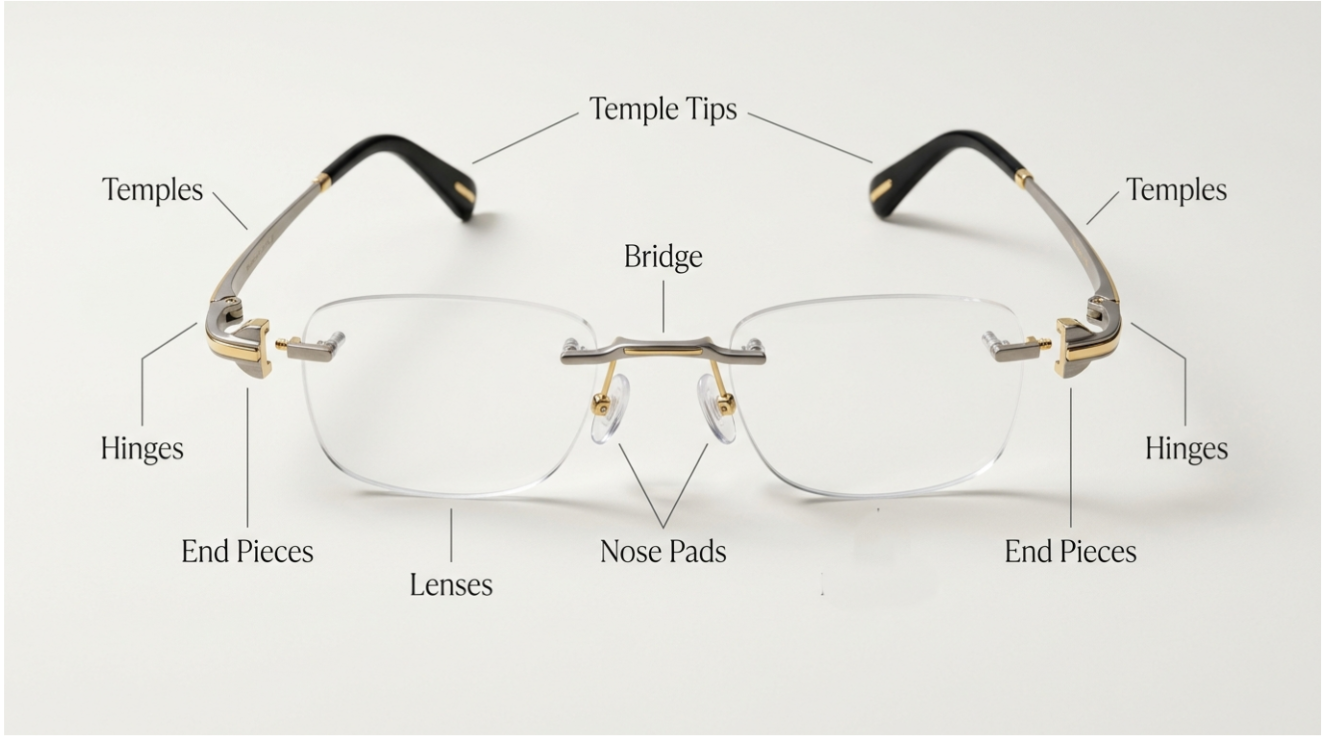
Parts of Glasses Explained: Frame, Bridge, Temple, Nose Pads and Lenses
A pair of glasses looks simple until a screw works loose. Then you notice how many small parts had to line up before the lenses ever sat in front of your eyes. The frame front holds the lenses. The...
What Are High Index Lenses and Who Needs Thinner Glasses?
Thinner lenses. The trick is the material: it bends light harder than regular plastic, so your prescription needs less of it to do the same job. Standard plastic, and a strong prescription bulges ...

Do Glasses Make Your Eyes Worse? What New Wearers Should Know
Your first pair of glasses does something odd. The world goes sharp. Suddenly there's text you can read from the couch, and a street sign you'd been guessing at for months. You wonder how you coped...
Best Lens Color for Fishing Sunglasses: Polarized Lens Guide
what color lens is best for fishing in 2026 Ask three anglers what color lens is best for fishing and you'll get four answers, a story about a lost pair of glasses, and probably a strong opinion ab...


