


Best Glasses for Astigmatism: Lens and Frame Buying Guide
Choosing the best glasses for astigmatism starts with one thing: a clear prescription. Astigmatism can make lights look streaky at night, blur small text, or make your eyes feel tired after screen time. The right lenses help correct the uneven curve of the eye so vision looks sharper and steadier.
Prescription glasses for astigmatism usually use cylindrical lens correction. The frame also matters. A stable frame helps keep the lenses in the right position, so your correction works the way it should. Lens material, coating, and fit can all affect comfort, clarity, and daily wear..
The fix is a cylindrical lens, and it works fast. Pop the right pair on and the picture usually snaps into place within a minute or two. What follows is the stuff that actually decides whether your glasses feel great or merely fine: two numbers on your prescription, the lens material, a couple of coatings, and the frame shape. Get those right and you’re set. If you want to see how the pieces come together on real frames, refined prescription eyewear built for everyday wear is a fair place to start comparing.
What Are Glasses for Astigmatism?
Strip away the jargon and it’s simple. These are ordinary prescription glasses carrying one extra trick in the lens: a cylindrical correction. Astigmatism is a refractive error, and your CYL and axis values tell the lens where and how strongly to correct it.
Your cornea curves more steeply in one direction than the other, so the lens adds power along that one direction to even things out. Light lands where it should, and the blur lifts.

How cylindrical lenses work
A normal lens has the same strength everywhere on its surface. That handles plain short or long sight. A cylindrical lens is choosier—it loads power onto a single angle and leaves the rest untouched, cancelling out the cornea’s lopsided curve. The American Academy of Ophthalmology puts it plainly: with astigmatism, light doesn’t bend right on the way in, so things blur up close and far away both.
And plenty of us carry more than one problem at a time. If you’re short-sighted and astigmatic, your lens does double duty—a spherical power for the short sight, a cylindrical one for the astigmatism, both ground into the same piece of plastic.
Why CYL and Axis matter
Two numbers run the whole show. CYL is the strength of the correction. Axis is the angle it sits at, somewhere from 1 to 180 degrees. Nail the strength but miss the angle and you’ve corrected the wrong part of the eye—which, honestly, can feel worse than going without.
|
CHECK BOTH NUMBERS BEFORE YOU ORDER
CYL and Axis come as a pair. If a prescription shows one and not the other, it’s incomplete. Worth a thirty-second check before you click buy.
|
Do You Need Glasses for Astigmatism?
Not everyone does, at least not all day. The number on the chart matters less than you’d think. What matters is whether the blur is getting in your way—at the desk, behind the wheel, halfway through a book.
Common signs
One tell stands out: blur that won’t go away no matter how you adjust the distance. Pull the book closer, push the phone further out, and it follows you. The rest is the familiar tired-eye cluster.
-
Squinting at road signs or small print
-
Heavy, worn-out eyes after a screen-heavy day
-
Halos or spikes around lights once it’s dark
-
That dull headache that creeps in after focused work
Kids almost never mention any of it. To them the blur is just how the world looks, so they’ve got nothing to compare it to. The National Eye Institute points out that astigmatism tends to ride along with short or long sight, which is exactly why a routine exam catches what a kid won’t say.
Mild vs moderate
Doctors measure this in diopters. Most people land between 0.5 and 0.75, and under about 1.00 you can often get by part-time—glasses for the night drive, maybe a long read, nothing more. Climb past that and the blur tends to stick around all day. The Mayo Clinic says the same thing in fewer words: once it’s interfering with everyday tasks, see someone.
Best Lens Types for Astigmatism

For stronger prescriptions, high-index lenses for astigmatism help reduce lens thickness and weight, which can make glasses feel lighter and keep the edges less noticeable inside the frame.
|
Lens Type
|
Best For
|
Worth Knowing
|
|
Single vision
|
Astigmatism alone, one viewing distance
|
Clean optics, nothing to adapt to
|
|
Progressive
|
Near + distance, age 40 and up
|
A short break-in while your eyes learn the zones
|
|
High-index
|
Moderate to strong prescriptions
|
Thinner and lighter; edges stay inside the frame
|
|
Polycarbonate
|
Active wear, kids
|
Tough, blocks UV, barely there on the nose
|
|
Anti-fatigue
|
Long screen days
|
A small reading boost down low—not a progressive
|
Strong prescription? High-index keeps it from turning into coke-bottle thickness. Hard on your glasses, or buying for a child? Polycarbonate shrugs off knocks. The American Optometric Association notes the cylindrical lens, usually single-vision, is the standard fix—with a bifocal or progressive stepping in once reading up close gets harder with age.
Best Lens Coatings for Astigmatism

Coatings are the difference between a lens that does the job and one you actually enjoy wearing. Astigmatism already scatters light, so a good coating earns its keep faster here than it would on a plain prescription.
Anti-reflective coating
If you only pay for one extra, pay for this. It kills the reflections bouncing around the front and back of the lens—the very thing that turns a streetlight into a spiky little sunburst. Bonus: cleaner screens, better-looking photos, fewer distractions on video calls.
UV, blue light, and tints
UV protection is mostly baked in now, so you don’t have to think hard about it. Blue light filters help if your day is wall-to-wall screens, and they’re easy to skip if it isn’t. Photochromics darken outside and clear up indoors, though here’s a catch worth knowing: many stay clear in the car, because the windshield blocks the UV that’s supposed to trigger them.
Best Frame Styles for Astigmatism

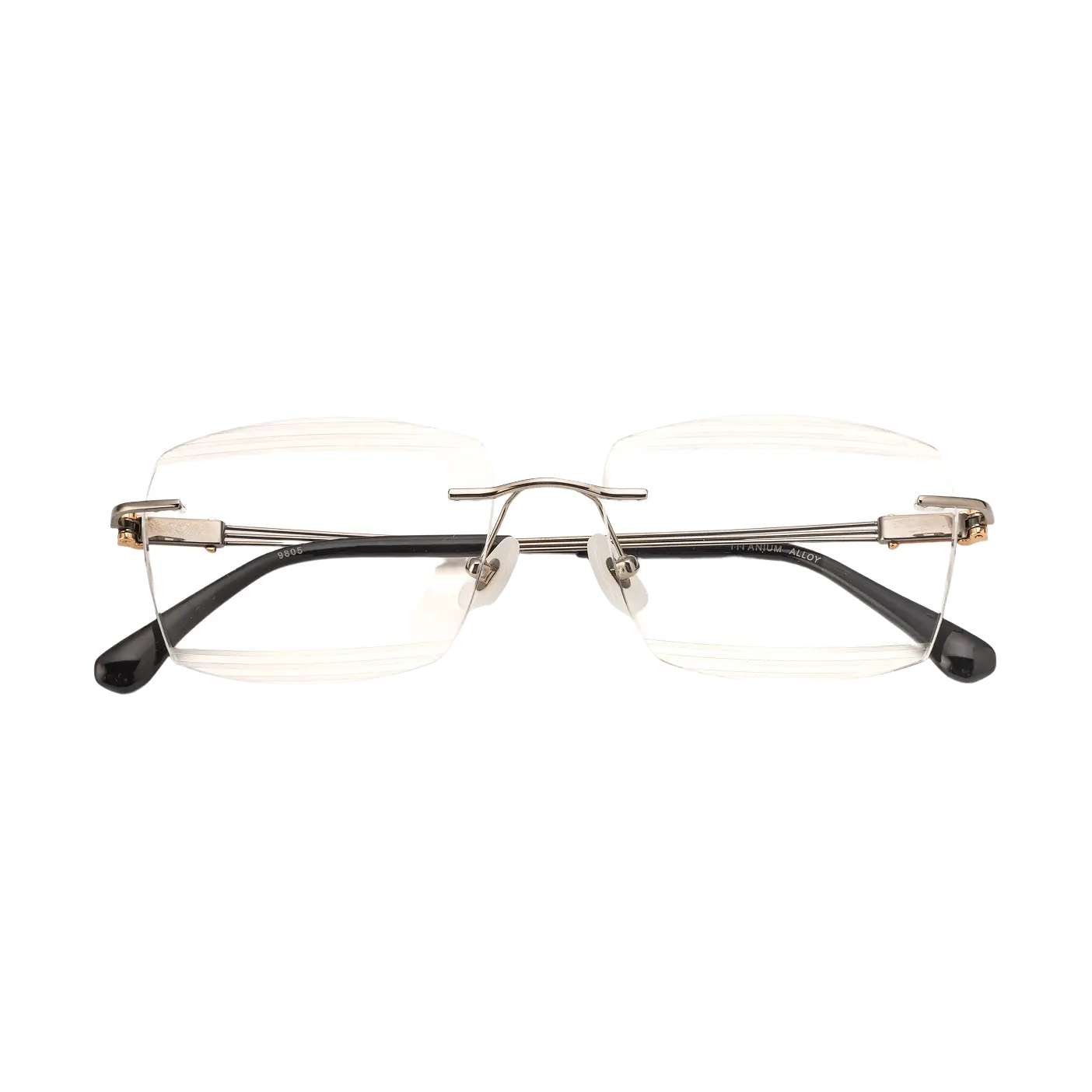
So, what type of glasses are best for astigmatism? Choose flat-front rectangular, gently rounded, or lightweight rimless frames because they help keep the lenses stable, centered, and easier to wear all day.
Flatter fronts
A flat-fronted frame keeps the lens square to your eye, which keeps the correction pointed where it’s meant to point. Rectangular and gently rounded shapes do this nicely. Deep wraparound curves tilt the lens off true and smear the edges. For a stronger prescription, lightweight rimless frames that sit flat on the face keep the lens slim and the angle honest.
A secure nose bridge
Let a frame slide down your nose and the sweet spot of the lens drifts off your pupil—suddenly everything’s a touch soft. A steady bridge with adjustable pads parks the lens where it belongs. People with high cylinders feel even a millimeter of slip, so this isn’t fussy; it’s the difference between clear and not. A piece like a lightweight titanium frame with a secure, flat-front fit holds its position from the first coffee to the drive home.
Glasses for Astigmatism and Night Driving

For a lot of people the dark winter commute is when astigmatism finally makes itself known. Your pupils widen in low light and let in more of that scattered glare, so one headlight blooms into a starburst. Cleveland Clinic notes that a stale prescription, sometimes paired with early cataracts, only makes the night worse—so step one is simply getting your eyes rechecked.
Step two: anti-reflective coating, which stops headlights from doubling up into extra glare inside the lens. And don’t overlook the boring stuff. A smudged lens or a grimy windshield scatters light just as badly as the wrong prescription, so keep both clean.
What to Avoid When Buying Astigmatism Glasses
Most regrets come from a short list of mistakes. Dodge these and you’re most of the way there.
|
DON’T REACH FOR DRUGSTORE READERS
Off-the-shelf readers magnify, but they carry no cylinder and no axis—so they do nothing for astigmatism, and sometimes leave you worse off. A prescription missing its CYL or Axis can’t correct it either. Check both numbers, and copy your pupillary distance carefully so the lenses actually sit centered on your eyes.
|
Two more, quickly. A frame that perches crooked keeps shoving the lens off your line of sight—five minutes at an optician fixes that. And trimming coatings to save a few dollars usually backfires: more glare, more scratches, less comfort by week two.
Glasses vs Contacts vs Surgery for Astigmatism

Glasses are the usual answer, not the only one. It comes down to how you live, what’s comfortable, and how permanent you want the fix.
|
Option
|
How it works
|
Worth knowing
|
|
Prescription glasses
|
Cylindrical lenses refocus light on the retina
|
Easy to update; nothing touches the eye
|
|
Toric contact lenses
|
Weighted to hold their angle on the eye
|
Wide field of view; need cleaning and swapping out
|
|
LASIK / surgery
|
A laser reshapes the cornea
|
Results vary; not everyone qualifies
|
LASIK can cut or end the need for correction for the right person. The FDA lists what matters—a stable prescription, healthy corneas, being over 18—and the only honest way to know if you fit is a consult, not a guess.
Conclusion
Buying glasses for astigmatism is not about one perfect frame. It comes down to the right prescription, accurate CYL and axis values, a stable frame, and lens material that matches your prescription strength.
For daily comfort, choose lenses that stay centered and frames that sit level without sliding. If glare bothers you, an anti-reflective coating can make screen use and night driving more comfortable.
The best pair is the one you wear without thinking about it. Book the eye exam, use a fresh prescription, and choose glasses that feel steady from the first day.
One last nudge: if your last exam is more than a year or two back and things have quietly gotten harder, that’s your sign. Eyes drift. Prescriptions drift with them. A quick recheck is cheaper than squinting through another winter.
FAQs
What type of glasses are best for astigmatism?
Honestly, the frame matters less than people expect. What you actually need is a prescription with the right CYL and Axis, because that’s where the correction lives. A flat-fronted shape and anti-reflective coating just make the whole thing more comfortable to wear all day.
Is it worth getting glasses for astigmatism?
If the blur, glare, or those late-afternoon headaches are getting on your nerves, then yes, it’s worth it. Sorting out that uneven curve takes the strain off reading, screens, and the drive home after dark.
What glasses lenses are best for astigmatism?
Depends on you. Single vision is plenty if astigmatism is your only issue. Go high-index if your prescription is strong, since it keeps the lens thin, and look at progressives once close-up reading starts to slip. Whichever you pick, get the anti-reflective coating.
What should you avoid if you have astigmatism?
Skip the drugstore readers entirely, and never order from a prescription that’s missing its CYL or Axis. Beyond that, watch out for frames that won’t stay put and those deep wraparound shapes that smear everything at the edges.
How much do astigmatism glasses cost?
It’s really the lenses that move the price, not the frame. High-index, progressives, and the extra coatings all add up. My advice: don’t chase the cheapest option, spend a bit more where it actually buys you comfort.
Can astigmatism be 100% corrected?
While you’re wearing them, glasses and contacts do correct it completely. They just don’t change the eye itself, so the blur comes back the moment you take them off. Surgery is the route to something more permanent, assuming you’re a good candidate.
Can astigmatism get worse over time?
Yep, it can. It might creep up in strength or shift its angle as you get older, which is exactly why a checkup every year or two is a good habit. Eyes change quietly, and you don’t always notice until something feels off.
How to drive at night with astigmatism?
Two things make the biggest difference: a current prescription and anti-reflective coating on the lenses. After that, keep your lenses and windshield clean. Smudges scatter headlight glare just as badly as the wrong prescription does.
Sources
-
American Academy of Ophthalmology — how astigmatism bends light and why vision blurs at near and far
-
National Eye Institute (NIH) — symptoms and how astigmatism appears alongside other refractive errors
-
Mayo Clinic — when symptoms are worth an eye exam
-
American Optometric Association — cylindrical lens correction and single-vision vs progressive options
-
Cleveland Clinic — why astigmatism worsens night driving and how to manage glare
-
U.S. Food & Drug Administration — LASIK eligibility and candidacy factors for refractive surgery

Looking for something else?

Best Frames for Thick Lenses (Men & Women Guide)
LEARN MORE
How to Fix Loose Glasses in 3 Simple Steps (At Home Fast)
LEARN MORE
Popular Glasses for Men 2026 Styles for Professionals
LEARN MORE
Eye Makeup with Glasses Tips for a Stunning Look
LEARN MORELooking for something else?

Who Invented Glasses and How They Changed the World
LEARN MORE
Diy Eyeglass Cleaner Guide for Crystal Clear Lenses
LEARN MORE
Best Glasses for Oblong Face Shapes
LEARN MOREYou may also like


Sharp Minimalism · Laser-Cut Design · Sophisticated Presence


Swan-Inspired Design · Sculpted Lenses · Rose-Gold Elegance
Further reading
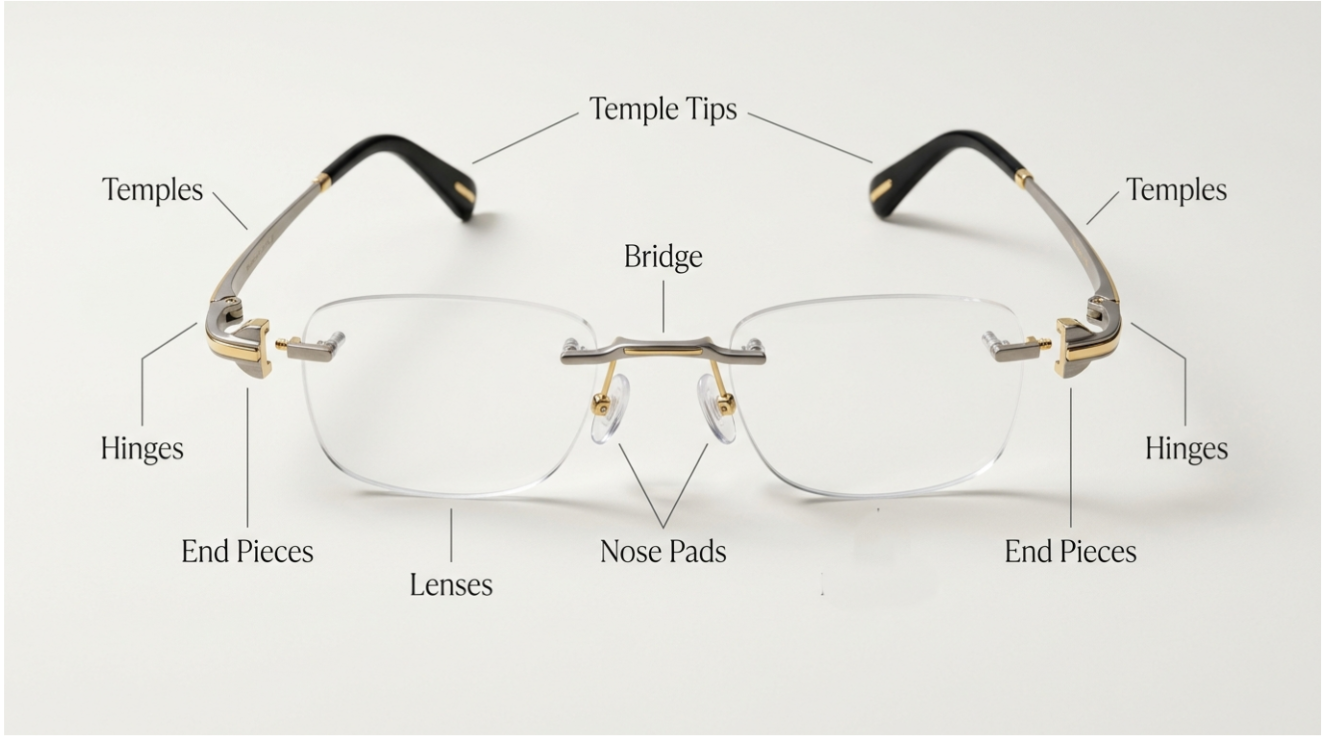
Parts of Glasses Explained: Frame, Bridge, Temple, Nose Pads and Lenses
A pair of glasses looks simple until a screw works loose. Then you notice how many small parts had to line up before the lenses ever sat in front of your eyes. The frame front holds the lenses. The...

What Are High Index Lenses and Who Needs Thinner Glasses?
Thinner lenses. The trick is the material: it bends light harder than regular plastic, so your prescription needs less of it to do the same job. Standard plastic, and a strong prescription bulges ...

Do Glasses Make Your Eyes Worse? What New Wearers Should Know
Your first pair of glasses does something odd. The world goes sharp. Suddenly there's text you can read from the couch, and a street sign you'd been guessing at for months. You wonder how you coped...

Best Lens Color for Fishing Sunglasses: Polarized Lens Guide
what color lens is best for fishing in 2026 Ask three anglers what color lens is best for fishing and you'll get four answers, a story about a lost pair of glasses, and probably a strong opinion ab...


