


How to Tighten Loose Glasses at Home Without Damaging the Frame
Loose glasses usually happen in three places. A hinge screw can loosen and make the arm swing outward. Nose pads may spread apart and cause the frame to slide down your nose. The temples can also widen over time from daily wear and constant adjustments. If you are wondering how to tighten loose glasses at home, the good news is that most small fixes only take a few minutes.
You do not need professional tools for every adjustment. A small screwdriver, soft cloth, or warm water is often enough for basic frame fixes. Learning how to adjust glasses at home the right way can help improve comfort, keep your frames aligned, and prevent extra pressure on the hinges.
Order matters. Start with the screw, then check the nose pads, and adjust the arms last. This simple order helps you fix the most common causes first without cracking a lens, bending the frame too far, or making the fit worse.
Here is a five-minute, step-by-step way to tighten loose glasses at home. Move slowly, check the fit after each step, and stop if the frame feels stiff or fragile. A quick screw check every couple of weeks can also help prevent the same problem from coming back.Wear lightweight rimless eyewear daily? A quick screw check every couple of weeks saves you the whole problem.
|
The 30-second diagnosis. Hold the frame front and wiggle one arm. Wobble at the hinge? Tighten the screw. Frame slides but the hinges feel solid? Adjust the nose pads. Both fine but it still drifts forward? The arms are too wide. Match the fix to the symptom and you won’t waste a step.
|
Why Glasses Loosen in the First Place

Think about how often you fold your glasses. On, off, on again, dozens of times a day. Each fold nudges the hinge screw a hair looser, and a few months of that leaves it noticeably slack. Most loose frames trace back to exactly this. Good news is it’s also the quickest thing to put right.
Then there are the habits nobody thinks about. Yank your glasses off one-handed and you stretch that arm wider every time. Fall asleep in them, toss them in a bag bare, leave them cooking on a hot dashboard, and the temples bend or the acetate softens. Pads loosen up too. None of it happens overnight, which is why the slide sneaks up on you.
|
What you notice
|
Likely cause
|
Where to start
|
|
One arm flops open on its own
|
Loose hinge screw
|
Tighten the screw
|
|
Frame slides down your nose
|
Nose pads too wide
|
Pinch the pads inward
|
|
Glasses drift forward as you move
|
Arms too wide for your head
|
Bend the arm ends in
|
|
One side sits higher than the other
|
A bent temple
|
Reshape the high side
|
And don’t sleep on storage. Leave a pair face-down on the desk and its whole weight presses on the arms, slowly splaying them. A hard case fixes that for free. It also keeps the screws from rattling loose in your bag.
|
A frame built without screws skips the most common failure point entirely. Bling Optical’s screwless construction is one reason a pair tends to hold its shape long after the first year of daily wear.
|
What You’ll Need

Hardly anything, and nothing that means a trip out. Get it all on a flat surface under decent light before you start.
-
A precision screwdriver, ideally from an eyeglass repair kit
-
Spare screws and nose pads (most kits include them)
-
A microfiber cloth
-
A mirror
-
Warm water, only if your frames are plastic or acetate
Put a light towel underneath. It catches the screw when you drop it, and you will drop it, and gives you something clean to work on.
Why a Repair Kit Beats a Household Screwdriver
Eyeglass screws are barely bigger than a grain of rice. The screwdriver in your kitchen drawer is built for furniture, not this. It rides up out of the slot, scratches the hinge, chews the screw head round. A proper kit hands you the right tip and a few spare screws, and the job goes from infuriating to thirty seconds.
|
Leave these in the drawer. Knives, scissors, and oversized drivers crack frames and scratch lenses. Skip strong adhesive near the hinges too. Glue locks the arm in place and makes the next repair far harder than it needs to be.
|
Step 1 — Tighten the Hinge Screws

Always start here. Nine times out of ten a loose screw is the whole story, and snugging it down ends the problem on the spot.
-
Find the screw. Look where each arm meets the front of the frame. There’s usually one small screw per side. Bright light helps you spot the slot.
-
Steady the frame. Hold the front in one hand so it can’t twist while you work.
-
Turn slowly. Set the tip in the slot and turn clockwise until the screw feels snug and the arm stops wobbling. Keep the driver upright so it doesn’t skip onto the lens.
-
Test the fold. Open and close the arm. It should move smoothly. If it’s stiff or squeaks, you’ve gone slightly too far, so back off a quarter turn.
That’s the whole job on most frames. Put the glasses on and see how they sit before moving on.
When the Screw Just Spins
Screw spinning forever and never catching? The threads inside are stripped, or it’s simply the wrong screw. Drop in a fresh one from your kit. Still loose with a new screw in place? Stop there and let an optician handle it instead of forcing the issue. Warby Parker’s at-home tightening guide runs the same screw-first order.
Step 2 — Adjust the Nose Pads
Screws tight but it still slides? Look at the nose pads. This is mostly a metal-frame thing, the little adjustable pads sitting on thin wire arms.
-
Hold the bridge. Grip the centre of the frame with the lenses facing away from you.
-
Pinch the pads inward. Use your thumb and index finger to move the pads a little closer together. Narrowing the gap lifts the frame and tightens its grip on your nose.
-
Keep both sides even. Adjust one, then match the other so the frame stays level.
-
Try it on. The pads should hold without pinching or leaving deep red marks.

|
Clean before you adjust. Oil from skin, sweat, and skincare builds up on the pads and kills their grip. A quick wipe with mild soap and warm water often fixes “sliding” glasses before you bend anything at all.
|
Step 3 — Reshape the Arms
Tightened the screw, set the pads, and it still slips forward? The arms are wider than your head. From here the method splits by material, so check what your frame is made of first.
Metal Frames
Metal gives slightly, so your hands are usually enough. Hold the glasses face-up, with the lenses pointing toward you. Curl the end of each arm inward so it tucks behind your ear. Use a slow, gentle motion and stop as soon as the metal pushes back.
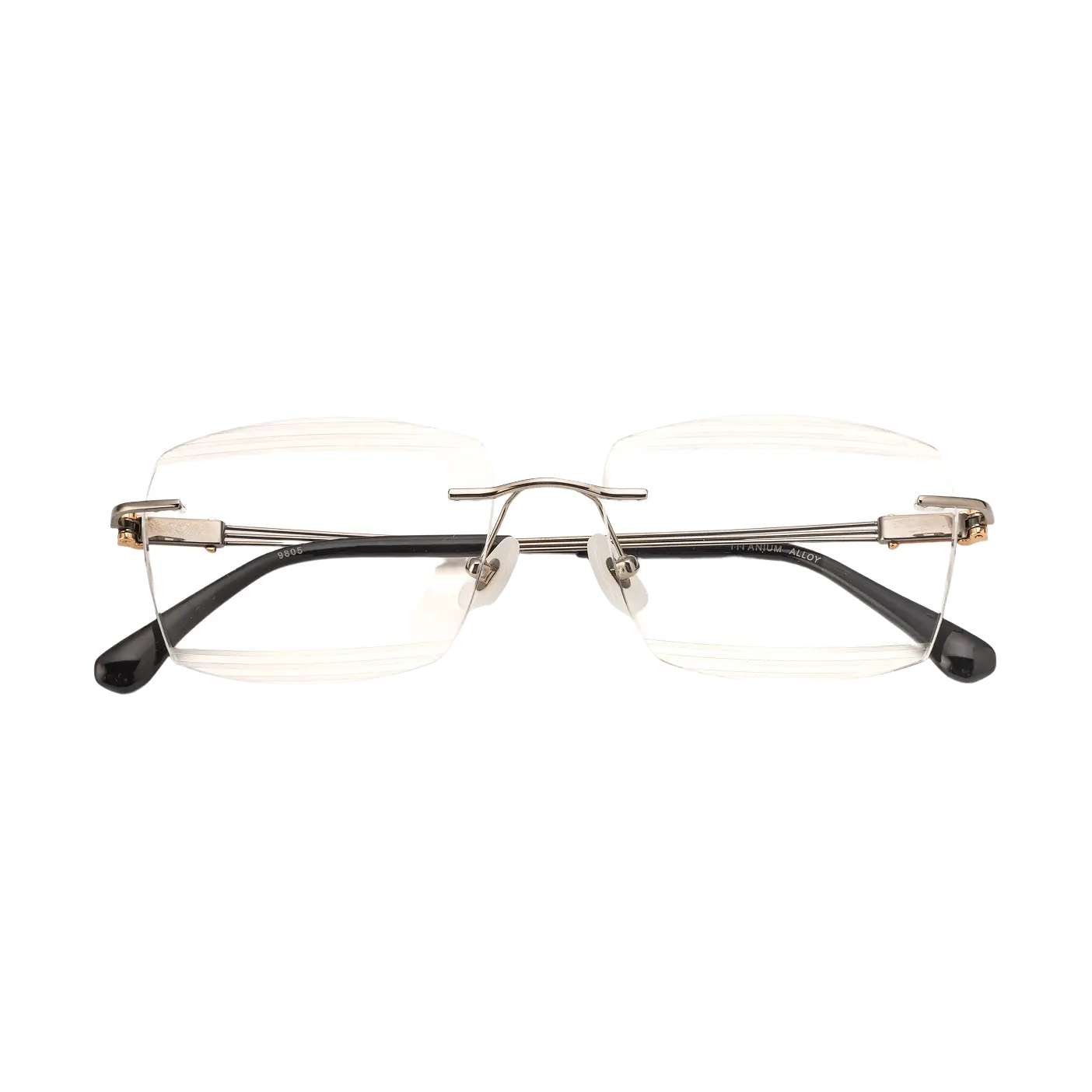
If you need to tighten rimless glasses at home, only adjust the nose pads. Rimless and screwless frames should not be bent at the temples or lens area, because too much pressure can crack the lens or loosen the mount. For those fixes, take them to an optician.
Titanium and memory alloy frames also do not bend much before they spring back.
Plastic and Acetate Frames
Plastic snaps when it is cold. Warm it first, every time. Then make small adjustments only.


-
Warm the arm. Run warm water over the temple end for about 30 seconds, or use a hair dryer on low. The plastic should feel warm and pliable, never hot.
-
Bend gently. Curve the end inward with steady, even pressure. Match both sides.
-
Let it set. Lay the frame flat to cool, then try it on. Repeat in small passes if it needs more.
-
|
Frame material
|
Heat needed?
|
DIY-friendly?
|
|
Standard metal
|
No
|
Yes, bend by hand
|
|
Acetate / plastic
|
Yes, warm water
|
Yes, with care
|
|
Titanium / memory metal
|
No
|
Risky, prefer an optician
|
|
Rimless / semi-rimless
|
No
|
Nose pads only at home
|
|
Keep heat off the lenses. Anti-reflective and other coatings are sensitive to high temperatures, so aim for warm water or a dryer at the arm ends only, never the lenses or bridge. The American Academy of Ophthalmology covers how these coatings behave.
|
||
How to Stop Glasses Sliding Down Your Nose
A frame that keeps sliding usually has more than one thing going on. Pad spacing, arm width, a slick of skin oil, all of it at once. Work through them in order and it settles down.
-
Lift the frame: move the nose pads slightly inward so the glasses sit higher and grip more.
-
Anchor the back: tighten the arms behind the ears so the frame stops creeping forward.
-
Restore friction: clean the pads and bridge daily, since oil is the quiet reason most frames slip.
Aim for balanced, not clamped. Digging in anywhere means you’ve gone too far, so ease it back a touch. Oily skin and bent temples top the list of culprits, as Warby Parker’s guide to keeping glasses from slipping points out.
Mistakes That Damage Frames
When a frame snaps at the kitchen table, it’s almost always one of four moves. Spot them coming and you’ve dodged most of the danger.
|
Mistake
|
What goes wrong
|
Do this instead
|
|
Over-tightening the screw
|
Stripped threads, cracked hinge
|
Snug, with the arm still folding smoothly
|
|
Bending an arm too far
|
Uneven, lopsided fit
|
Small passes, test between each
|
|
Boiling water or high heat
|
Warped plastic, loosened coatings
|
Warm water, arm ends only
|
|
Forcing rimless frames
|
Cracked lens at the mount
|
Nose pads only, optician for the rest
|
|
The first-pass rule. Change one thing, then test. Adjust the screw, the pad, and the arm all at once and you’ll never know which move fixed the fit, or which one bent it out of true.
|
||
When to See an Optician
Small stuff, you’ve got. Some jobs need a bench, the right pliers, and hands that do this all day. Book an appointment if any of these show up:
-
A screw is missing entirely
-
The hinge feels broken or grinds
-
The frame is badly bent out of shape
-
A lens feels loose in its mount
-
The glasses still slip after you’ve worked through all three steps
With a delicate or pricey frame, the trip beats the gamble. Shopping for a replacement anyway? frames built with screwless construction skip the loose-screw cycle from the start.

When the Frame Is Simply Too Wide
Sometimes you adjust everything and nothing sticks because the frame is too big for your face from day one. How do you know if your glasses fit properly? A good frame should sit level, stay in place when you look down, and rest comfortably without pinching your nose or ears.
You cannot tighten your way out of that. Bend the arms in far enough and you only swap a slide for two red dents on your temples. A frame that truly fits sits level, holds when you look down, and never pinches, which is the bar the American Optometric Association sets for a proper fit.
Been fighting the same ill-fitting pair for months? Starting over wins. Look for everyday Classic frames cut to sit balanced from the first wear.
Conclusion
Fixing loose glasses works best when you go in the right order. Tighten the screw first, check the nose pads next, and adjust the arms last. If you want to keep glasses from sliding down your nose, make small moves and test the fit after each step.
If your frames still feel loose, the issue may be size, not adjustment. A good pair should sit level, stay steady, and feel quiet on your face. That is why Bling Optical designs its rimless line with screwless construction, soft jade nose pads, and a light fit that helps frames stay comfortable without daily fixing.
That’s also where the frame itself earns its keep. Bling Optical builds its rimless line around screwless construction, so the part that loosens first on most glasses simply isn’t there to loosen. A frame that holds its fit on its own, with jade nose pads and traceless welding doing the quiet work, is the one you stop thinking about, which is the whole point of everyday rimless eyewear.
|
The one-frame mindset. The pair worth keeping isn’t the one you fuss over every morning. It’s the one that holds its fit on its own, week after week.
|
FAQs
How do you fix glasses that are too loose?
Go for the screws first. Grab a tiny screwdriver and snug the hinge screws, that fixes most loose pairs right there. Still sliding down? Squeeze the nose pads a touch closer. Still slipping forward off your ears? Curl the arm tips in, but gently.
How can I keep my glasses from sliding down my nose?
Usually it’s oil, not the frame. Wipe the pads and bridge every day and half the slipping stops. After that, pinch the pads in a little for extra grip, and snug the arms behind your ears if they’ve gone slack.
How do I make my glasses tighter at home?
Tighten the screws, then deal with the arms. Metal you can bend with your fingers. Plastic you warm under the tap for half a minute, then bend. Whatever you do, nudge a little and try them on before you nudge again.
What can I put on my glasses to make them tighter?
Stick-on silicone nose pads or little ear hooks do the trick, and they go on in seconds. Just don’t reach for tape or glue, you’ll wreck the finish and gum up the hinges, and you’ll regret it next time something needs fixing.
How do I tighten glasses without a tool?
You can get pretty far with your hands, bending metal arms in, pressing the nose pads closer. The catch is the screw. If that’s what’s loose, there’s no hand trick for it. You need a small screwdriver, full stop.
Do glasses get looser over time?
They do, and it’s normal. All that folding loosens the screws bit by bit. Pull them off one-handed enough times and an arm stretches out. The pads soften too. Give the screws a quick check once a month and you stay ahead of it.
How do I know if my glasses fit properly?
Right fit feels like nothing. They sit level, hold steady when you look down, and don’t pinch or leave marks behind your ears. The tell that they’re too big? You keep adjusting and they keep slipping anyway.
Can I tighten rimless glasses at home?
A little, carefully. Touch up the nose pads with your fingertips and that’s about it. Stay away from the spots where the lens meets the metal, that’s exactly where a lens cracks. Anything more than a pad tweak, let an optician handle it.
Sources
-
American Academy of Ophthalmology, ophthalmologist-reviewed guidance on anti-reflective lens coatings
-
American Optometric Association, professional standard for proper eyeglass fit and frame sizing,
-
Warby Parker Editorial Team, optician-reviewed how-to on tightening and adjusting glasses at home
-
Warby Parker Editorial Team, optician-reviewed guidance on why frames slip

Looking for something else?

Best Frames for Thick Lenses (Men & Women Guide)
LEARN MORE
How to Fix Loose Glasses in 3 Simple Steps (At Home Fast)
LEARN MORE
Popular Glasses for Men 2026 Styles for Professionals
LEARN MORE
Eye Makeup with Glasses Tips for a Stunning Look
LEARN MORELooking for something else?

Who Invented Glasses and How They Changed the World
LEARN MORE
Diy Eyeglass Cleaner Guide for Crystal Clear Lenses
LEARN MORE
Best Glasses for Oblong Face Shapes
LEARN MOREYou may also like


Swan-Inspired Design · Sculpted Lenses · Rose-Gold Elegance


Further reading
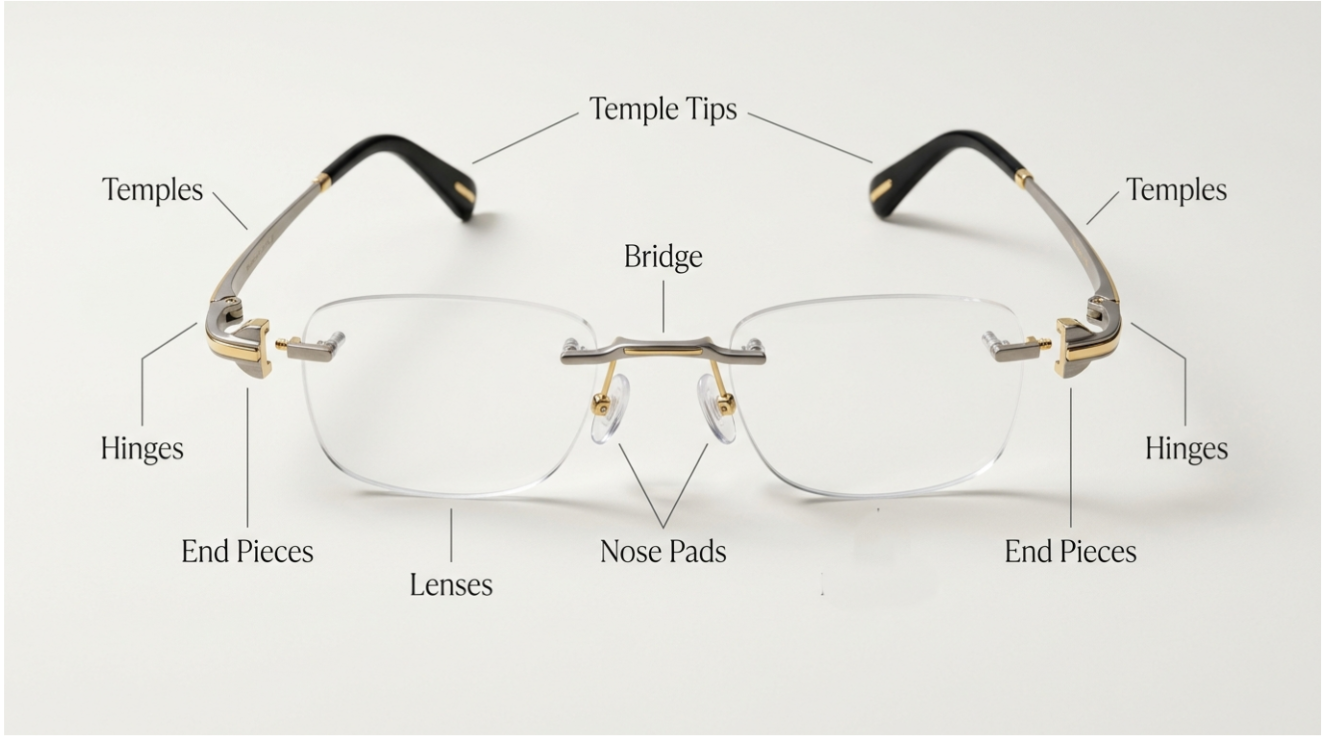
Parts of Glasses Explained: Frame, Bridge, Temple, Nose Pads and Lenses
A pair of glasses looks simple until a screw works loose. Then you notice how many small parts had to line up before the lenses ever sat in front of your eyes. The frame front holds the lenses. The...

What Are High Index Lenses and Who Needs Thinner Glasses?
Thinner lenses. The trick is the material: it bends light harder than regular plastic, so your prescription needs less of it to do the same job. Standard plastic, and a strong prescription bulges ...
Do Glasses Make Your Eyes Worse? What New Wearers Should Know
Your first pair of glasses does something odd. The world goes sharp. Suddenly there's text you can read from the couch, and a street sign you'd been guessing at for months. You wonder how you coped...

Best Lens Color for Fishing Sunglasses: Polarized Lens Guide
what color lens is best for fishing in 2026 Ask three anglers what color lens is best for fishing and you'll get four answers, a story about a lost pair of glasses, and probably a strong opinion ab...


