Mens vs Womens Sunglasses - What Is Actually Different
The label matters less than the fit.
Men's vs. women's sunglasses differ mainly in three physical measurements — bridge width, temple length, and overall frame width — because those measurements are calibrated to average anatomical differences in head size. The UV protection, lens technology, and optical quality are identical. What varies is the engineering of fit. At Bling Optical, the design brief for every frame starts with fit first, which means the relevant question is always whether the frame fits your face, not which section of the website it came from.
|
Key Differences at a Glance |
|
Frame width — men's wider / women's narrower (averaged to head size) |
|
Bridge — men's wider gap/women's narrower gap over nose |
|
Temple length — men's 145–150 mm/women's 135–145mm, typically |
|
Lens shapes — angular for men's / upswept and curved for women's (not a rule) |
|
UV protection — identical in both / always look for UV400 |
|
2026 trend — frame size categories replacing gender labels entirely |
Understanding Sunglasses Basics

Both categories protect your eyes from UV light. Both can be polarized. Both use the same lens coatings and materials. The differentiation between men's and womens sunglasses is entirely in the physical architecture of the frame — not in the optical performance.
Understanding this makes the shopping decision simpler. You are choosing a frame for your face, not for a gender. The measurements that matter are bridge width, total frame width, and temple length. If those numbers work for your face, the frame works for you.
How to Tell Men's vs. Women's Sunglasses

Without a label, three physical clues usually reveal the intended audience.
- Frame width and temple length: Men's frames typically run wider — 140mm total frame width and above — with longer temple arms, 145mm to 150mm. Women's frames are often 125mm to 135mm wide with shorter temples of 135mm to 145mm.
- Bridge width: The gap between the lenses over the nose is wider in men's frames to accommodate a broader nose bridge. A woman's frame with a narrow bridge placed on a wider nose will sit too high.
- Design language: Men's collections tend toward angular shapes — squares, rectangles, D-frames — in matte neutrals. Women's collections more commonly feature upswept cat-eye or rounded silhouettes and a wider color range, including pastels and translucents.
These are tendencies, not absolutes. The best test is putting the frame on. If the bridge sits at the correct height, the temples reach behind your ears without bowing, and the lenses cover the eyes without resting on your cheeks — the frame fits.
Key Design Differences
|
Feature |
Typical Men's Frames |
Typical Women's Frames |
Unisex Direction |
|
Frame width |
Wider — 140mm+ total width |
Narrower — 125mm–135mm typical |
Sold in mm sizes, not gender labels |
|
Bridge width |
Wider — 18mm–22mm |
Narrower — 14mm–18mm |
Adjustable nose pads resolve this |
|
Temple length |
Longer — 145mm–150mm |
Shorter — 135mm–145mm |
Same — adjustable at the optician |
|
Lens shape |
Angular square rectangle D-frame |
Rounded cat-eye butterfly oversized oval |
Both directions are available in most styles |
|
Color palette |
Dark neutrals — black tortoise slate navy |
Pastels, translucents, warm rose champagne |
Earth tones and clear work across both |
|
Design details |
Matte finishes minimal branding |
Filigree crystals, gradient lenses, decorative hinges |
Clean precision hardware works for both |
Masculine vs Feminine Styles

Men's collections in 2026 are moving toward what the industry calls robust minimalism. Thick matte acetate. Brushed metal. Strong geometric forms. Color palette in deep neutrals — slate forest green dark tortoiseshell navy. The design language signals structural confidence without decoration.
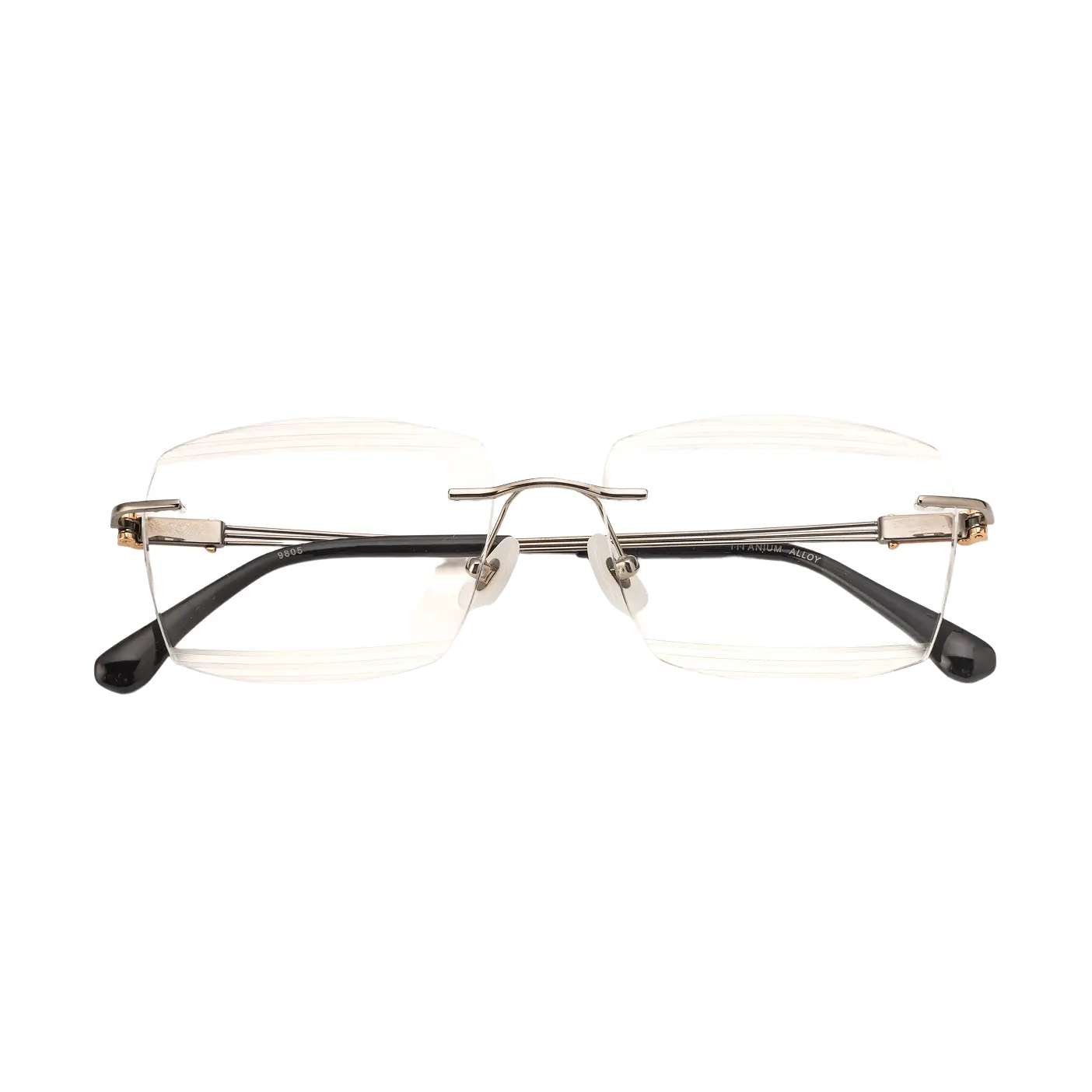
Women's collections are exploring a wider range simultaneously. The Rimless Glasses for Women collection shows how the rimless direction works within a feminine context — the absence of an outer frame creates a delicate quality without requiring decorative elements to carry the aesthetic.
Frame Shapes and Sizes

The physical measurements are the most practically relevant difference between men's and women's sunglasses for anyone shopping across categories.
- Frame width: Men's frames are sized for a broader interpupillary distance and temple width. A too-narrow frame pinches the sides of the head. A too-wide frame slides down the nose.
- Bridge fit: If the bridge is too wide, the glasses sit lower than intended, and the lenses fall out of the optimal viewing position. If the bridge is too narrow, the glasses sit too high and can be uncomfortable.
- Temple length: Arms that are too short end at the ear rather than behind it — no grip. Arms that are too long produce an uncomfortable downward pressure at the ear tip.
Color and Pattern Preferences

Men's collections default to deep neutrals that function as wardrobe staples. Women's collections have moved significantly toward warm translucents — champagne, pale rose, and smoky lavender — that carry visual lightness while still having presence.
The shared direction in 2026 is tone-on-tone — frame color matched to lens tint for a cohesive monochromatic effect. This works across any gender category and produces a considered aesthetic regardless of the specific color chosen.
Functionality and Comfort
UV protection is the baseline. Everything else is a matter of fit and preference.
- UV400 certification: This is the standard that confirms full UVA and UVB blocking. It applies equally to men's and women's frames. Always check for this label regardless of which category the frame comes from.
- Polarization: Also identical in both categories. Polarized lenses block horizontal light reflection, which reduces glare from water, roads, and reflective surfaces. The practical benefit is the same regardless of the frame it sits in.
- Weight and materials: Bio-acetate and titanium are now standard in quality frames across both categories. The distinction between heavy, durable men's frames and delicate,e lightweight women's frames has narrowed significantly as material technology has improved.
The Rimless Glasses for Men collection demonstrates how men's eyewear has evolved toward lightweight precision frames that hold their structure without the bulk that characterized earlier men's design conventions.
Men's vs. Women's Aviator Sunglasses

The aviator is the clearest case study for what the differences between men's and women's sunglasses actually look like in practice.
|
Feature |
Men's Aviators |
Women's Aviators |
|
Lens shape |
Traditional large teardrop — maximum coverage |
Slightly softened or rounded edges |
|
Frame weight |
Bolder double-bridge bars — more structural presence |
Thinner wire frames — rose gold or champagne tones |
|
Sizing |
Wider — 140mm+ to suit broader face shapes |
More compact — avoids overwhelm on smaller faces |
|
Finish |
Matte gunmetal black brushed silver |
Gradient lenses — decorative small accents |
Subtle Differences in Style and Sizing

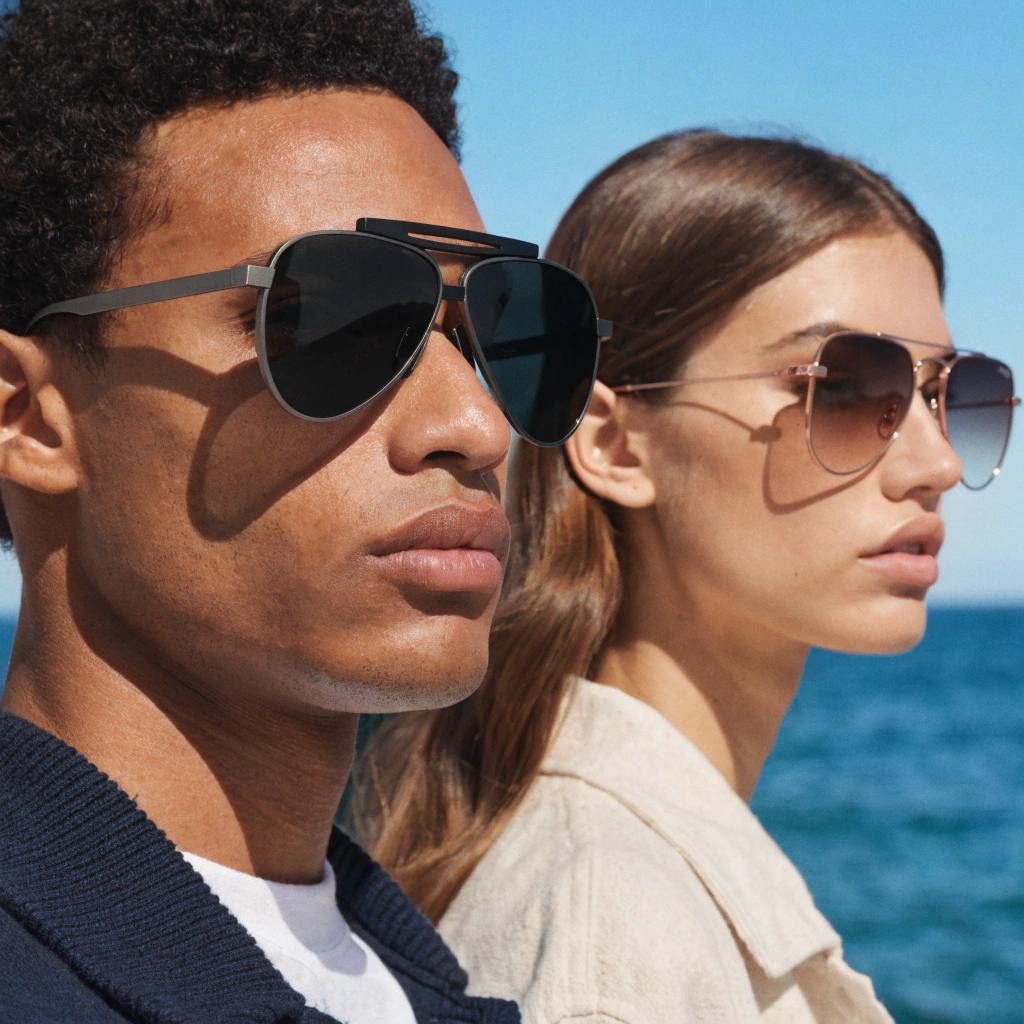
Men's aviators are typically built wider and heavier. The double bridge bar is more pronounced. The lens size is larger — both in teardrop length and overall coverage. The finish tends toward matte gunmetal, brushed silver, or black.
Women's aviators in 2026 are slimmer with more refined hardware. Rose gold and champagne are common finish options. Some versions soften the classic teardrop shape into a more rounded bottom. The Rimless Cat-Eye Sunglasses takes the upswept lens principle in a different direction — the cat-eye angle as a contemporary alternative to the aviator teardrop for a similar facial lift effect.
Can Women Wear Male Aviators and Vice Versa?

Yes. The oversized men's aviator is a deliberate style choice for many women precisely because the larger proportion creates a specific visual effect — it makes the face look smaller by comparison and offers more peripheral sun coverage.
Men who prefer a more refined look sometimes find that a women's or smaller unisex aviator fits their face better than a standard men's width — particularly for narrower faces where a standard 140mm frame has too much excess material at the temples.
Unisex and Gender-Neutral Sunglasses

Unisex is the fastest-growing segment in the sunglasses market. The category has moved from a niche offering to a mainstream approach as brands recognize that fit-by-measurement is simply more practical than fit-by-gender-assumption.
The Rise of Unisex Frames

The practical shift has been from two gender categories to four or five size categories. Narrow, medium, wide, extra wide. These measurements correspond to actual head sizes and bridge widths rather than assumed gender norms. The result is that a woman with a wider face shops the wide category and a man with a narrower face shops the narrow category — both find a better fit than they would from a gender label.
The Fox-Eye Gold Rimless Glasses is a frame that works without a gender qualifier — the fox-eye upswept angle and gold hardware read as considered style on any face. The frame is the statement. The wearer's gender is irrelevant to how the design functions.
Tips for Choosing Based on Face Shape, Not Gender

- Match angles to face: Round or oval faces benefit from angular, rectangular, or geometric frames. Square or heart-shaped faces do better with rounded or curved shapes. This logic applies regardless of which section the frame came from.
- The third rule for height: The top edge of the frame should sit close to the eyebrow. The bottom edge should not rest on the cheeks when you smile. If either of these conditions is off, the frame size is wrong.
- Check temple alignment: The arms should run straight back to the ears without bowing outward or pressing inward. If they bow, the frame is too narrow. If there is a significant gap between the arm and the temple, the frame is too wide.
Sustainable and Eco-Friendly Sunglasses

In 2026, the material story applies equally to both categories.
Bio-acetate is now standard at the quality end of the market for men's and women's frames alike. The shift away from petroleum-based plastics is not a niche feature — it is the expectation for brands operating at a considered level.
The Silver Trapezoid Rimless Glasses use precision titanium hardware — a material chosen for lightness, durability, and recyclability. These are the material standards that 2026 buyers expect, regardless of frame gender category.
- Bio-acetate: Plant-based material that matches traditional acetate in color depth and surface quality. Industrially biodegradable. Now the default for premium acetate frames is in both categories.
- Recycled materials: Some brands are using recycled ocean plastics and recycled metal in frame construction. The quality at this level is competitive with virgin materials.
- Titanium: 100 percent recyclable and built to last significantly longer than standard metal alloys. The investment in titanium pays back in longevity regardless of which gender section it came from.
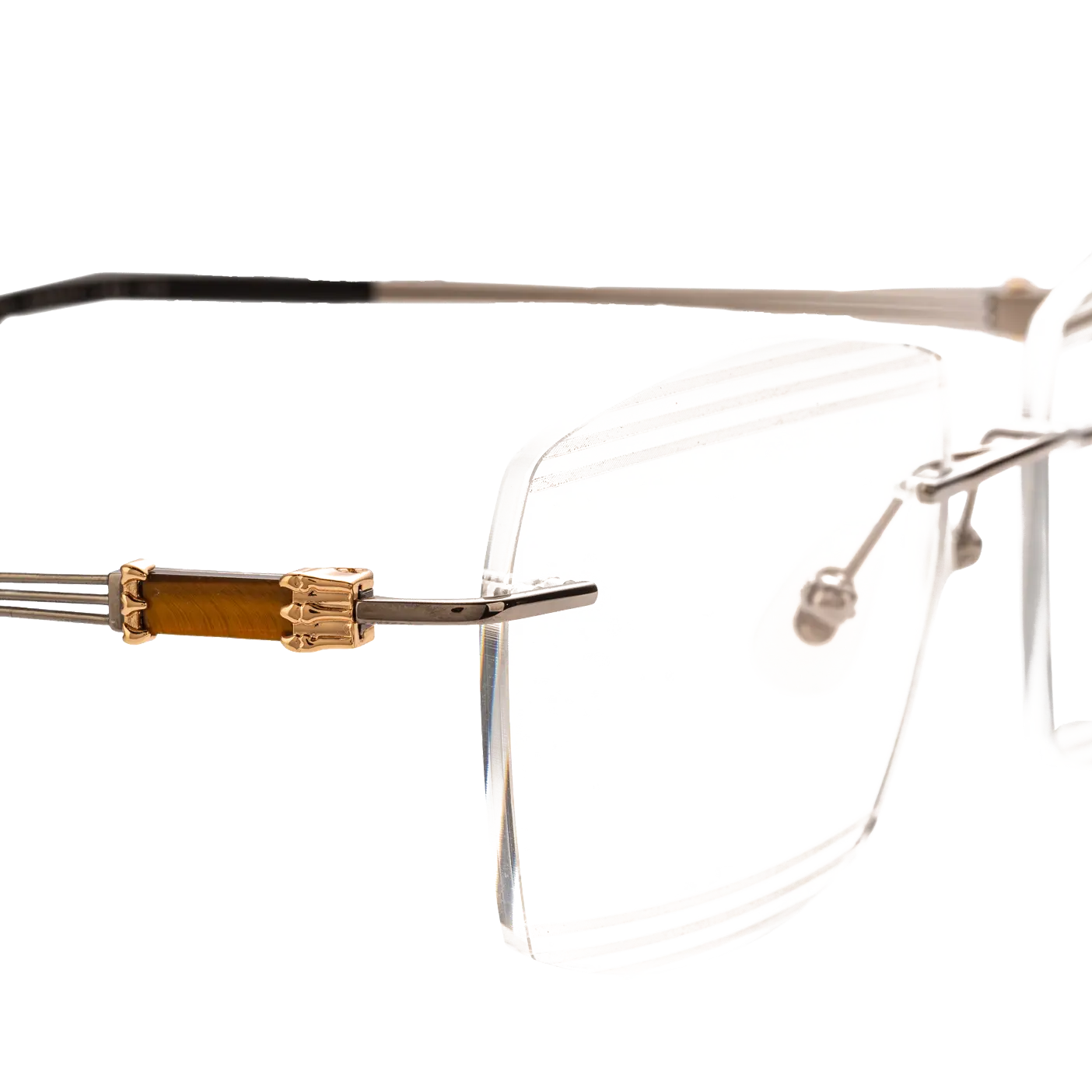
The Gold Peacock Rimless Glasses combine precision metal construction with a design detail — the peacock motif — that has presence across all gender categories. This is the direction the unisex market is moving: quality and design that speak for themselves.
FAQs
What is the difference between men's and women's sunglasses?
The real differences are in the engineering, not the marketing. Men's frames tend to have wider bridges, longer temple arms, and larger lens widths to fit broader head shapes. Women's frames often use narrower bridges and lighter silhouettes. Design language also differs — angular structures are more common in men's collections, while upswept and decorative styles are more common in women's. In 2026, many brands simply sell by frame size rather than gender.
How to tell men's vs women's glasses?
Look at three things. Bridge width — men's frames have a wider gap at the nose. Temple length — men's arms are usually 145mm to 150mm, while women's run 135mm to 145mm. Design details — women's collections more commonly feature upswept corners, gradient lenses, or decorative hardware. But these are tendencies, not rules. Plenty of frames cross these lines by design.
Can men wear unisex sunglasses?
Yes, and unisex is the fastest-growing category in the market. Many frames are now sized by width — narrow, medium, wide, extra wide — rather than by gender label. A man who prefers a slimmer or more refined look often finds that a medium or narrow unisex frame fits better than a standard men's width.
Why are women's sunglasses often larger?
Oversized frames are a fashion staple that also offers practical UV coverage for the skin around the eye. A larger lens covers more of the orbital area, which reduces light exposure from below and at the sides. The association between oversized frames and glamour also has cultural staying power, rooted in decades of iconic eyewear styling.
What style of sunglasses are popular for men?
In 2026, the leading styles for men are modernized aviators with flat-brow bar, wide rectangles in matte acetate, and D-frame shapes. Earth tones — slate, navy olive, and dark tortoiseshell — are the dominant color palette. Quiet construction quality without heavy visible branding is the aesthetic direction the market has been moving toward.
Are sunglasses gender neutral?
The function always has been. UV400 protection works the same on any face. The gender labeling is mostly about fit conventions and marketing. Many 2026 collections have dropped gendered labels entirely in favor of size categories. If a frame fits your face comfortably and aligns with the measurements you need, it is the right frame, regardless of which section it came from.
Can a female wear male sunglasses?
Yes — and many do deliberately. The key consideration is bridge width. Men's frames have a wider bridge, which can cause the frame to sit lower than intended on a narrower nose. If the bridge fits and the frame does not slide, the gender label on the product is irrelevant. Oversized men's frames on women is a consistent style choice precisely because the larger proportion creates a specific fashion effect.

Looking for something else?

Best Frames for Thick Lenses (Men & Women Guide)
LEARN MORE
How to Fix Loose Glasses in 3 Simple Steps (At Home Fast)
LEARN MORE
Popular Glasses for Men 2026 Styles for Professionals
LEARN MORE
Eye Makeup with Glasses Tips for a Stunning Look
LEARN MORELooking for something else?

Who Invented Glasses and How They Changed the World
LEARN MORE
Diy Eyeglass Cleaner Guide for Crystal Clear Lenses
LEARN MORE
Best Glasses for Oblong Face Shapes
LEARN MOREYou may also like


Further reading
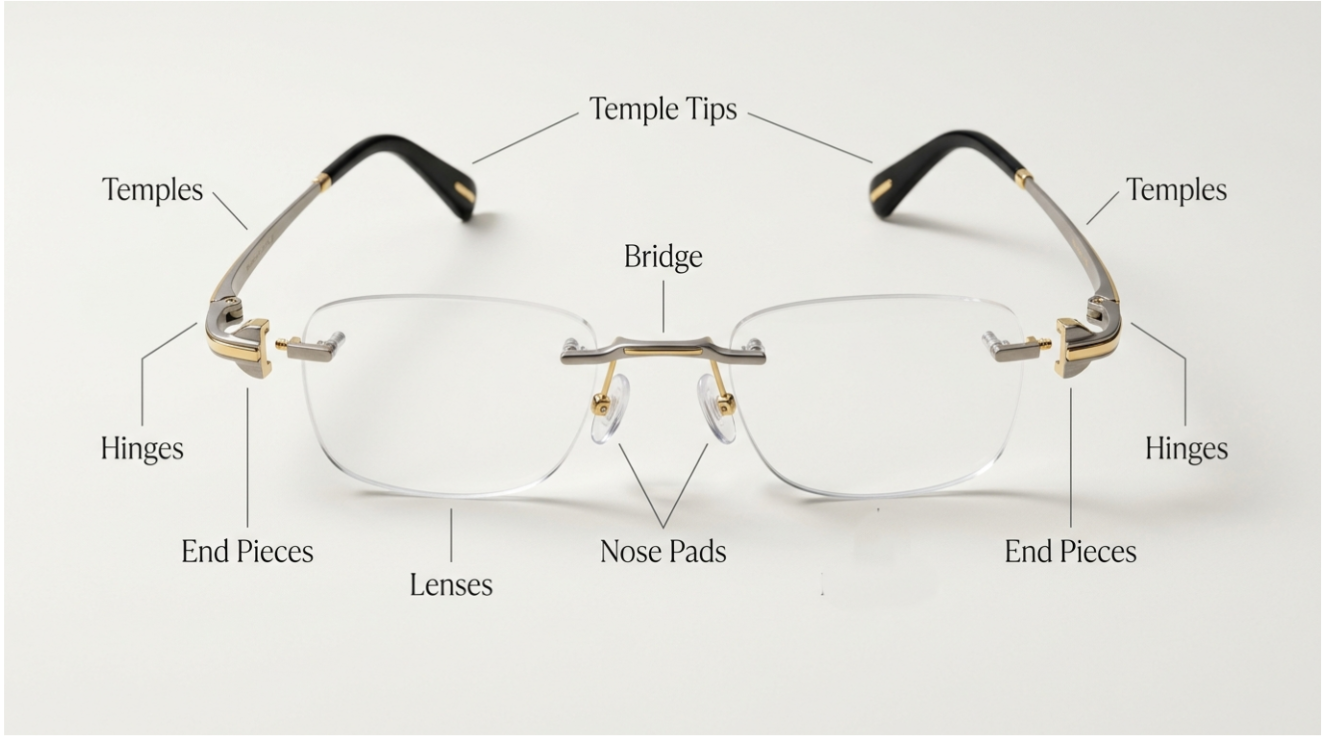
Parts of Glasses Explained: Frame, Bridge, Temple, Nose Pads and Lenses

What Are High Index Lenses and Who Needs Thinner Glasses?

Do Glasses Make Your Eyes Worse? What New Wearers Should Know