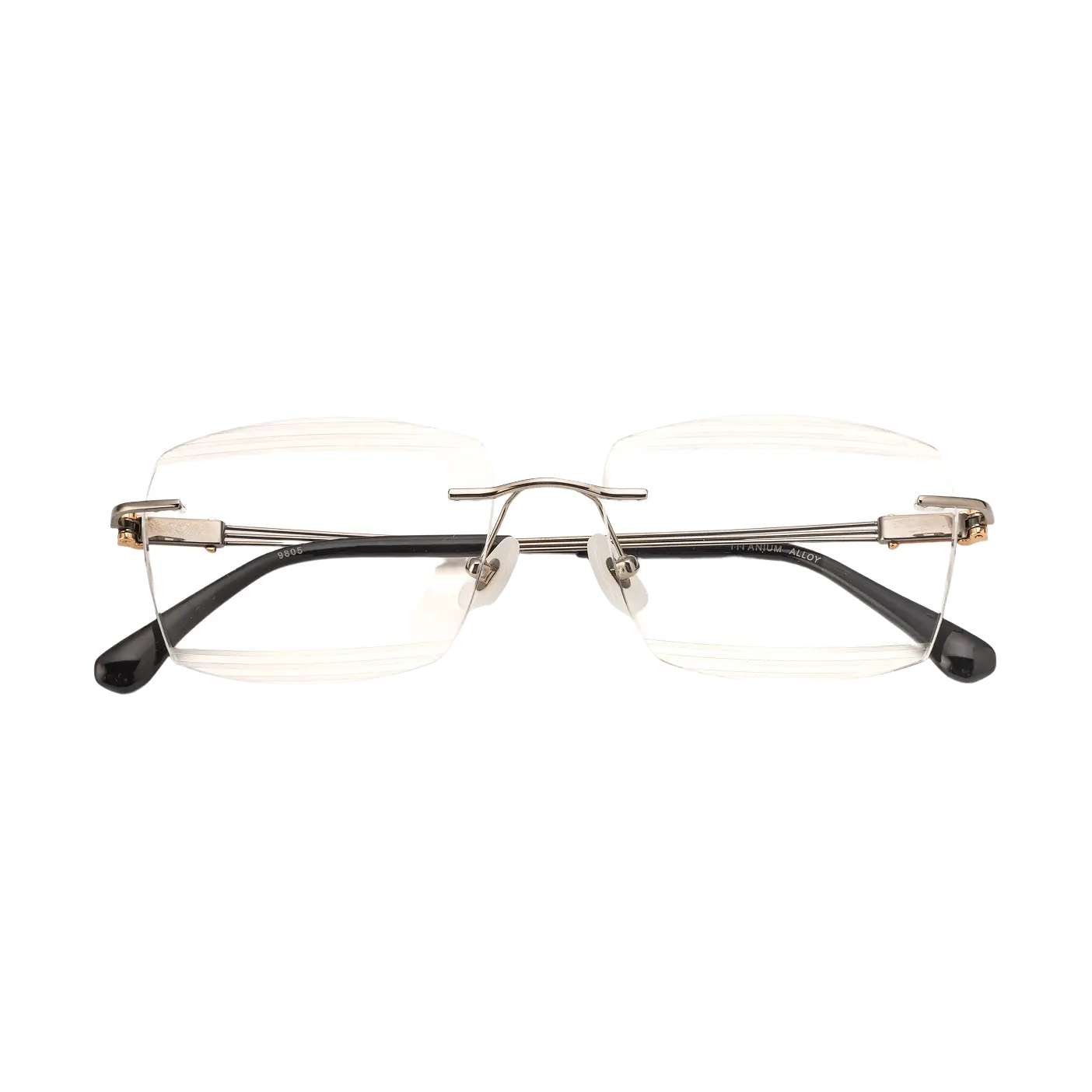

What Are Glasses Frames Made Of? Metal, Acetate, Titanium and Rimless Options
Pick up almost any pair of glasses and the frame is one of five things: plastic (usually cellulose acetate), a steel-family alloy, titanium, a bendable memory metal, or, on rimless designs, barely anything at all. That's the short answer. The longer one is where it gets interesting, because the material quietly decides how the glasses live on your face. The weight. The fit. Whether your skin stays calm. How many years the pair holds together before it gives up.
Frames sit on you for twelve, fourteen hours a day. Very few things you own get that kind of wear. So the material isn't a footnote on the spec sheet. It basically is the spec sheet.
|
THE SHORT VERSION Acetate for color and bold shapes. Stainless steel for slim metal lines at a moderate cost. Titanium when you want the lightest, most skin-friendly frame that holds its shape for years. Memory metal for rough handling. And rimless when you'd rather the lenses do the talking, as long as you pair them with a lens material strong enough for drilled mounting. |
What Are Glasses Frames Made Of? (Quick Answer)
Frames split into two big families: plastics and metals. On the plastic side you'll mostly meet cellulose acetate, propionate, nylon blends, and TR90. On the metal side, stainless steel, monel, aluminum, titanium, and nickel-titanium memory alloys. Then there's the outlier. Rimless eyewear, where the lenses themselves carry the structure and the "frame" shrinks down to a bridge, two temples, and the hardware holding everything together.

A small cast of specialty materials rounds things out. Carbon fiber. Wood and bamboo. Gold plating and crystal detail on luxury pieces. All real, all rare. Most of what's on an optical shelf is acetate or metal, and knowing the difference between them is most of the decision.
Why Frame Material Matters More Than the Style
Here's the part nobody mentions during the mirror moment: two frames can look nearly identical on the shelf and feel completely different by four in the afternoon. One presses a red line into the bridge of your nose. The other, you forget you're wearing.
Material drives that. It also decides whether the frame keeps its shape after a year of being pushed up, pulled off, and folded into bags, and whether your skin reacts to it at all. The American Academy of Ophthalmology points to titanium and most plastics as reliable picks for people who need hypoallergenic frames. Nickel, which hides in plenty of lower-priced metal alloys, is the usual culprit when glasses leave itchy patches behind the ears.
Fit still matters, obviously. The lightest titanium in the world won't rescue a bridge that's the wrong width. But material sets the ceiling for how good a frame can ever feel.
Frame material vs lens material
People mix these two up constantly, and honestly, fair enough. The frame holds. The lenses correct. Different jobs, different materials. A frame might be acetate or steel or titanium, while the lenses sitting in it are CR-39 plastic, polycarbonate, Trivex, high-index plastic, sometimes glass. The National Eye Institute has a plain-English explanation of how lenses bend light onto the retina. The point is, that work happens inside the lens. The frame just has to hold still and not get in the way.
Where the two start depending on each other is rimless and semi-rimless eyewear. Drill a hole in a lens and it stops being just optics; now it's load-bearing, so it had better be tough. The AAO recommends polycarbonate for protective eyewear because the stuff refuses to shatter, and that same stubbornness is what makes it good for drilled mounting. Then there's astigmatism. Cleveland Clinic points out that glasses correct it routinely, but only while the lens stays at the precise angle your prescription was ground for. Keeping it there is the frame's whole job. A wobbly frame can quietly undo a perfectly good prescription.
Plastic Glasses Frames: Acetate, Propionate, TR90
Plastic is where the fun lives, frankly. No metal will ever give you a proper tortoise pattern, a milky translucent, a two-tone laminate. And plastic starts warm against the skin where metal starts cold. The catch? The word "plastic" is doing a lot of heavy lifting here. Four or five different materials hide under it, and they don't behave alike at all.

Cellulose acetate
The standard-bearer. Acetate comes from plants, oddly enough, and the good stuff is never molded. It gets cut out of layered sheets, which is why quality acetate has that depth to it; the pattern goes all the way through instead of sitting on the surface like paint. It polishes to a glassy finish, adjusts with gentle heat, and carries thicker lenses without looking unbalanced.
Two cautions. Acetate relaxes over time, so it wants the occasional professional re-fit. And it hates heat. A July dashboard will warp it.
Propionate and nylon-based plastics
Propionate gets less press. It's a nylon-based plastic, lighter and a bit thinner-feeling than acetate, kind to sensitive skin, and it quietly fills the casual end of most eyewear walls. Proper nylon blends are what sports frames use, since they flex and hold a curved wraparound shape without complaint. Their weakness is age. Give nylon enough years of sun and temperature swings and it can go brittle on you.
TR90 and flexible plastics
TR90 is the thermoplastic inside most kids' and activewear frames. It bends, springs back, shrugs off drops. What it doesn't do is look dressed-up. Choose it for durability, not for dinner.
|
QUICK ACETATE TEST Look at the cut edge of the frame. Real layered acetate shows its color all the way through. Painted injection-molded plastic reveals a different color where it's worn, usually at the nose bridge and temple tips first. |
Metal Glasses Frames: Stainless Steel, Monel, Aluminum
Metal frames trade boldness for line. They go thinner, sit cleaner, read more professional. The real differences between them come down to three things: weight, corrosion, and what they do to sensitive skin.

|
Metal |
Feel & Weight |
Skin Note |
Where It Fits |
|
Stainless steel |
Slim, firm, mid-weight |
Some alloys carry nickel; ask for nickel-free |
Clean modern frames at a moderate price point |
|
Monel |
Heavier, easy to shape |
Nickel-based; coatings wear thin over years |
Common in lower-priced metal eyewear |
|
Aluminum |
Light but rigid |
Generally skin-friendly |
Designer styles with firm, sculpted lines |
|
Titanium |
Lightest of the group |
Hypoallergenic |
All-day wear, sensitive skin, long-term frames |
|
THE NICKEL PROBLEM Red, itchy patches behind the ears or along the nose? Nine times out of ten that's nickel. Monel has it. So do most memory metals. A coating buys time, but coatings wear thin exactly where the frame rubs, and once that happens the fix that actually lasts is moving to titanium or acetate. |
Titanium Glasses Frames: The Lightweight Standard
People talk about titanium like it's a luxury for its own sake. It isn't, really. The metal is simply better at this particular job than anything else going: the strongest strength-to-weight ratio among the frame metals, no corrosion from sweat or salt air, and nothing in it that skin tends to argue with. A finished titanium frame can land under ten grams. Most wearers stop noticing it somewhere around the second coffee.

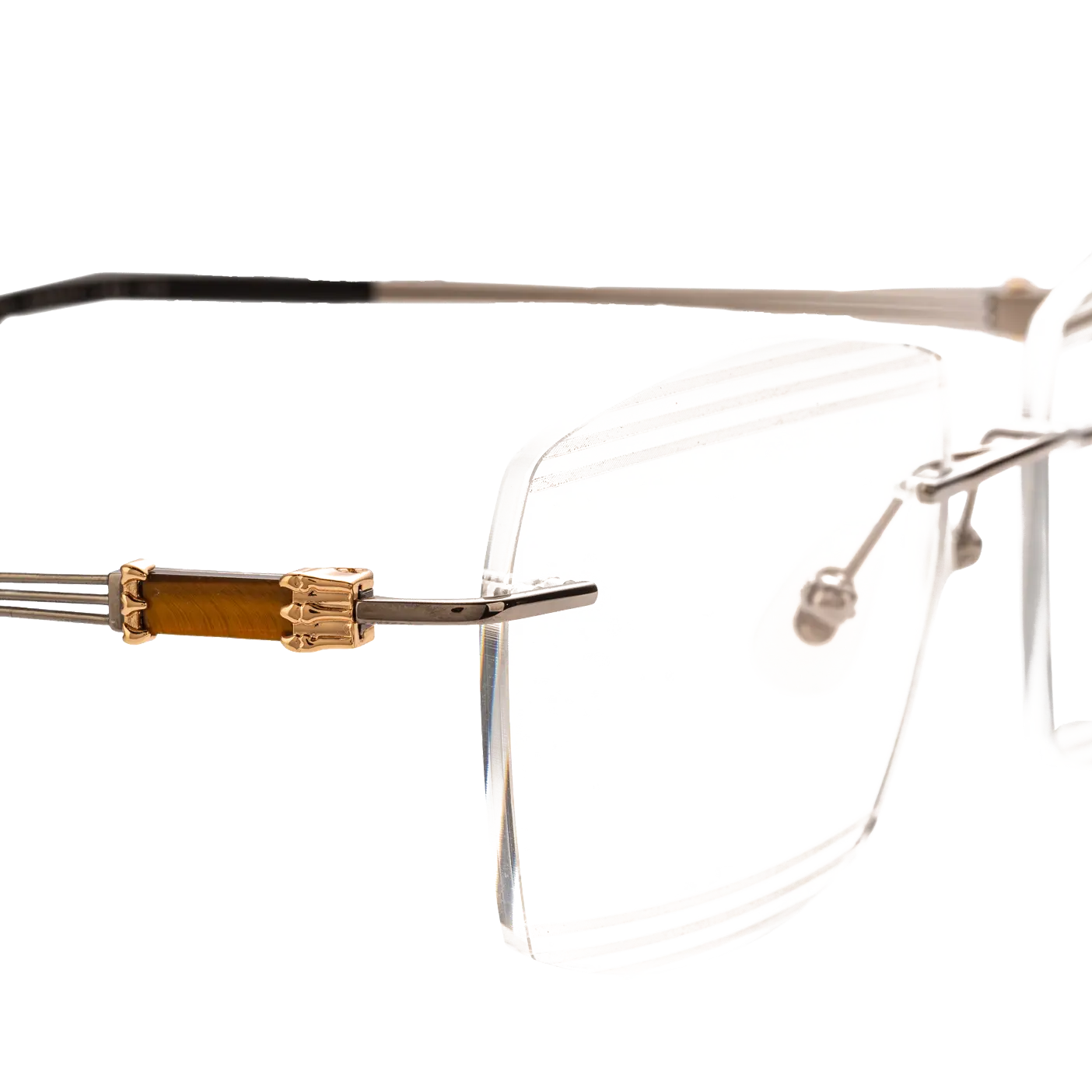
Which goes a long way to explaining why luxury rimless eyewear is so committed to it. Bling Optical builds on a titanium frame for that exact reason, and a piece like an 18K gold-plated titanium frame finished with embedded crystals shows the logic at work. The metal solves the weight problem so quietly that what's left for the eye is the finishing, the crystal setting, the detail you only catch up close.
Pure titanium vs titanium alloy
One label, several meanings, unfortunately. "Titanium" stamped on a temple arm might mean pure titanium, which runs lighter and sits gentler on skin, or it might mean an alloy with other metals mixed in. Alloys aren't a downgrade; some are excellent, and beta titanium in particular adds a useful springiness that suits thin temples. But the comfort and the allergy story both depend on what's in the blend. If the label is vague, ask.
Memory Metal and Flexible Frames
Memory metal is the showman of the bunch. Usually a nickel-titanium alloy, sold under names like Flexon, and the party trick is real: twist it, bend it, sit on it, and it walks itself back to its original shape. If you have kids, or you travel constantly, or your glasses live a hard life at the bottom of a bag, this is the material that forgives you.
Two honest caveats. It can still snap at the hinge if pushed far enough. And because the alloy is nickel-based, sensitive skin may object to it. Flexible, yes. Indestructible, no.
Rimless and Semi-Rimless Glasses: When the Frame Almost Disappears
Rimless isn't really a material at all. It's closer to an attitude about construction. Take the rim away and what remains is a bridge, two temples, a few bits of mounting hardware, and lenses that suddenly hold two jobs at once, optics and structure both.
Everything that's left has to be better because of it. The hardware on a well-made rimless pair is titanium or surgical-grade steel, and the mounting is where the craft shows. The precision-drill technique anchors each lens without stressing its edge, and screwless construction means there's no tiny screw working itself loose month after month, the way screw-mounted hinges always seem to. Get all of that right and you end up with about the lightest thing you can put on a face. Rimless frames built to stay light through a long day can weigh a fraction of a full acetate frame.

Semi-rimless is the compromise position. A half-frame runs along the top while the bottom stays open, so you get more support than full rimless with less presence than a full rim.
Best lens types for rimless frames
Drilled lenses need toughness. Polycarbonate and Trivex handle drilling far better than basic plastic, and for stronger prescriptions, high-index plastic keeps the exposed lens edge slim. The AAO's guidance on choosing glasses for vision correction walks through lens materials in more depth. Glass is the one to skip here. Too heavy, too prone to cracking at the drill points.
Specialty Materials: Carbon Fiber, Wood, and Gold Details
Beyond the mainstream sits a small cabinet of curiosities. Carbon fiber: featherweight, strong, almost always dark-toned, with a technical look. Wood and bamboo: handmade, one-of-a-kind grain, lovely and a little fussy — keep them dry. And on luxury pieces, gold finishing and crystal work move the frame from accessory toward jewelry. K gold IP plating belongs to this last family, an ion-plated gold finish chosen because the color holds over years of wear rather than fading where fingers touch it.
Which Frame Material Is Best for You?
There's no single winner. Only the right match for how you actually live in your glasses. A quick map:
|
If you want… |
Look at |
Why |
|
The lightest all-day wear |
Titanium, especially rimless titanium |
Lowest weight, no nickel, holds its shape for years |
|
Bold color and pattern |
Cellulose acetate |
Color runs through the material; carries thick lenses well |
|
Calm, unreactive skin |
Titanium or acetate |
Both hypoallergenic; no nickel contact |
|
A strong prescription |
Acetate or titanium with high-index lenses |
Thicker fronts hide lens edges; titanium offsets lens weight |
|
Sport and rough handling |
TR90, nylon, memory metal |
Flex without snapping |
|
A slim metal look for less |
Stainless steel |
Durable, clean lines at a moderate cost |

How to Tell What Your Frames Are Made Of
Your current pair will usually tell you, if you know where to look.
- Read the temple arms. Material markings (acetate, TR90, a Ti-P stamp for pure titanium) are often printed inside. Numbers like 55 □ 18 are size, not material.
- Weigh it in your hand. Titanium feels almost absent. Monel has noticeable heft. Acetate sits between the two, warm to the touch.
- Flex gently. TR90 and memory metal give and return. Acetate resists. Don't force anything.
- Check the nose pads and hinges. Adjustable pads usually signal metal construction; a molded one-piece bridge means acetate.
- Ask. Any optician can name the material in about ten seconds, and they'll tell you whether it actually suits your skin and prescription while they're at it.
Conclusion
So where does that leave the question we started with? Frames are mostly acetate and metal. Titanium sits at the refined end, memory metal covers the rough-and-tumble crowd, and rimless construction exists for people who'd rather the frame got out of the way altogether. Whatever you pick decides the weight on your nose, how your skin feels at hour twelve, and how many years you get before the pair quits. Which makes it worth a few minutes more thought than the color usually gets.
If lightness is the thing you're after, that's the territory Bling Optical works in: a full lineup of titanium rimless eyewear built with screwless construction and traceless welding, finished with the kind of detail you only notice up close. Quiet on the face. Considered everywhere else.
FAQs
What are my glasses frames made of?
Check inside the temple arms first. Many frames print the material there: acetate, TR90, or a titanium purity stamp like Ti-P. Nothing printed? Hand it to an optician; weight and flex usually give it away in under a minute.
How can I tell if my glasses are plastic or polycarbonate?
Usually it's both, funnily enough. "Plastic" tends to mean the frame, while polycarbonate is a lens material. So the thick warm part around the edge is the plastic, and the bit you actually see through is very possibly polycarbonate.
What kind of plastic are most eyeglass frames made of?
Cellulose acetate, and nothing else comes close. The rest of the shelf is mostly propionate, nylon blends, and TR90. If a frame looks beautiful, odds are it's acetate. If it keeps surviving your kid, that's TR90.
What are the disadvantages of polycarbonate glasses?
They scratch. Not instantly, but without a decent hard coating it happens sooner than you'd want. A few people also pick up on a bit of blur near the lens edge that Trivex doesn't have. Where polycarbonate earns its keep is impact; it just doesn't shatter easily.
What does 55 □ 18 on a frame mean?
Those are measurements, nothing to do with material. 55 is how wide each lens is in millimeters, and 18 is the bridge across your nose. There's usually a third number further down the arm, somewhere around 140, and that one's the temple length.
Can you get progressive lenses in polycarbonate?
You can, and opticians do it all the time. The one real condition is lens height: the frame needs enough vertical room for the distance, middle, and reading zones to all fit. Get it fitted in person, because progressive placement is fussy about millimeters.
What glasses are good for astigmatism?
Whichever frame keeps the lenses from shifting, really. An astigmatism prescription is ground at a specific angle, and it only works while the lens stays put at that angle. A solid full-rim does that well. So does a properly made semi-rimless.
What to avoid when buying glasses?
Frames that pinch, or slide off the moment you look down. Labels that won't say what the material is. Hinges with wobble in them, coatings already flaking on the display model. And if your skin acts up easily, stay away from nickel-heavy metals; never put weak lenses in a rimless mount either.
Sources
- American Academy of OphthalmologyHow to Choose the Glasses Frame Material That's Right for You
- American Academy of Ophthalmology — Safety Glasses: How to Prevent Blinding Eye Injuries
- American Academy of Ophthalmology — Eyeglasses: How to Choose Glasses for Vision Correction
- National Eye Institute — Eyeglasses for Refractive Errors
- Cleveland Clinic — Astigmatism: What It Is, Symptoms, Tests & Treatment

Looking for something else?

Best Frames for Thick Lenses (Men & Women Guide)
LEARN MORE
How to Fix Loose Glasses in 3 Simple Steps (At Home Fast)
LEARN MORE
Popular Glasses for Men 2026 Styles for Professionals
LEARN MORE
Eye Makeup with Glasses Tips for a Stunning Look
LEARN MORELooking for something else?

Who Invented Glasses and How They Changed the World
LEARN MORE
Diy Eyeglass Cleaner Guide for Crystal Clear Lenses
LEARN MORE
Best Glasses for Oblong Face Shapes
LEARN MOREYou may also like


Further reading
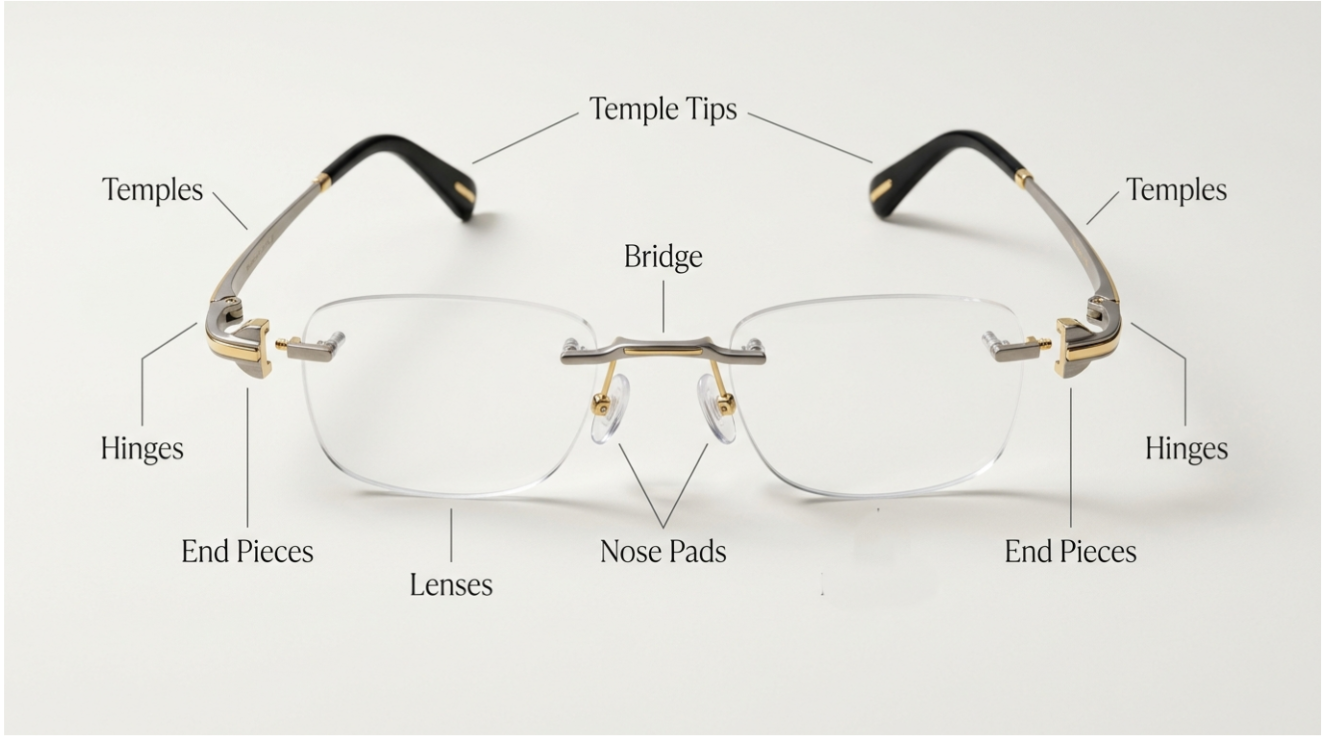
Parts of Glasses Explained: Frame, Bridge, Temple, Nose Pads and Lenses

What Are High Index Lenses and Who Needs Thinner Glasses?

Do Glasses Make Your Eyes Worse? What New Wearers Should Know