How Much Do Prescription Glasses Cost Online?
Most online glasses cost $50 to $300 a pair. A lot of people pay around $100 to $150. Basic single-vision sits at the bottom of that. Progressives, thinner lenses, fancier frames? That’s what drags you up.
Now the part the banner ads skip. That $39 you saw on the homepage is rarely what you pay. You pick a frame. Then a lens. Then a coating, maybe two. Cart says $130. Nobody’s cheating you, that’s just how glasses get priced. So before you shop lightweight rimless eyewear, or anything else, know which boxes cost you real money.
|
The 10-second version. Frame + lens + coatings = your real online total. A $95 pair turns into $250 once you add progressives and thin lenses. Price each part. Not the headline. |
What Do Online Prescription Glasses Cost on Average?
Prices jump around because no two orders are built alike. Frame, lens, prescription, where you buy. Each one tugs the number. But the ranges hold steady enough to plan with, so here’s what to expect.
|
Pair Type (Bought Online) |
Typical Price |
Who It Suits |
|
Basic single-vision |
$50 – $150 |
Simple prescriptions, backup pairs |
|
Average complete pair |
$100 – $250 |
Most everyday wearers |
|
Progressives |
$120 – $350+ |
Near, middle and distance correction |
|
Premium / designer |
$300 – $1,000+ |
Titanium, high-index, luxury frames |
A standard online pair, decent frames plus single-vision lenses, runs about $100 to $200. Cheaper than the same pair in a shop. Why? Online sellers skip the showroom and all the staff that comes with it.
What Changes the Price of Glasses Online?
Six things set your final number. Learn them and the messy checkout turns into choices you’re actually driving.

Frame Material and Build
Frames come first. Plain plastic, $10 to $50. Acetate, metal, titanium climb from there. They hold shape and survive getting tossed in a bag every single day. A $15 frame that slides down your nose or cracks by month six? Not a bargain. You just buy twice.
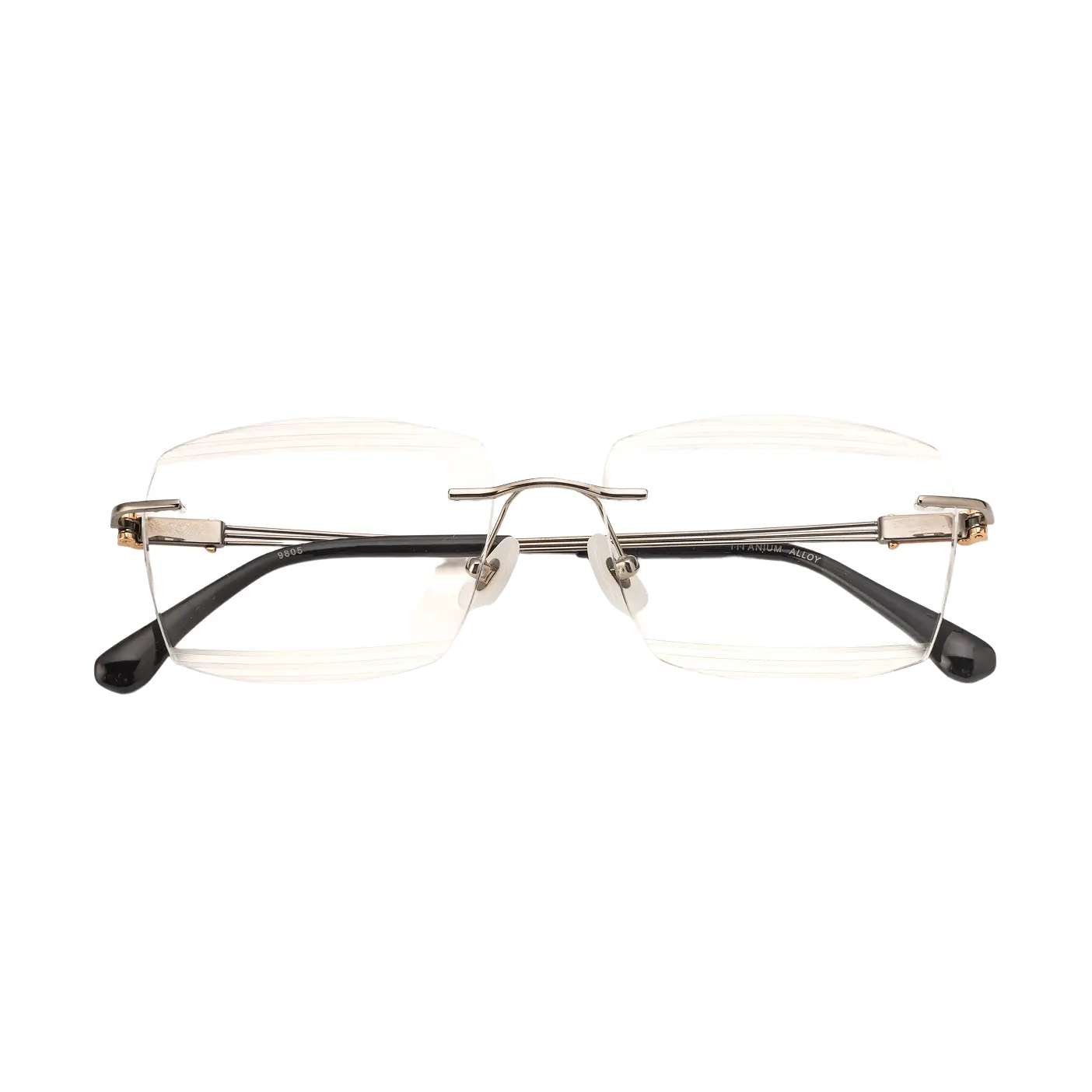
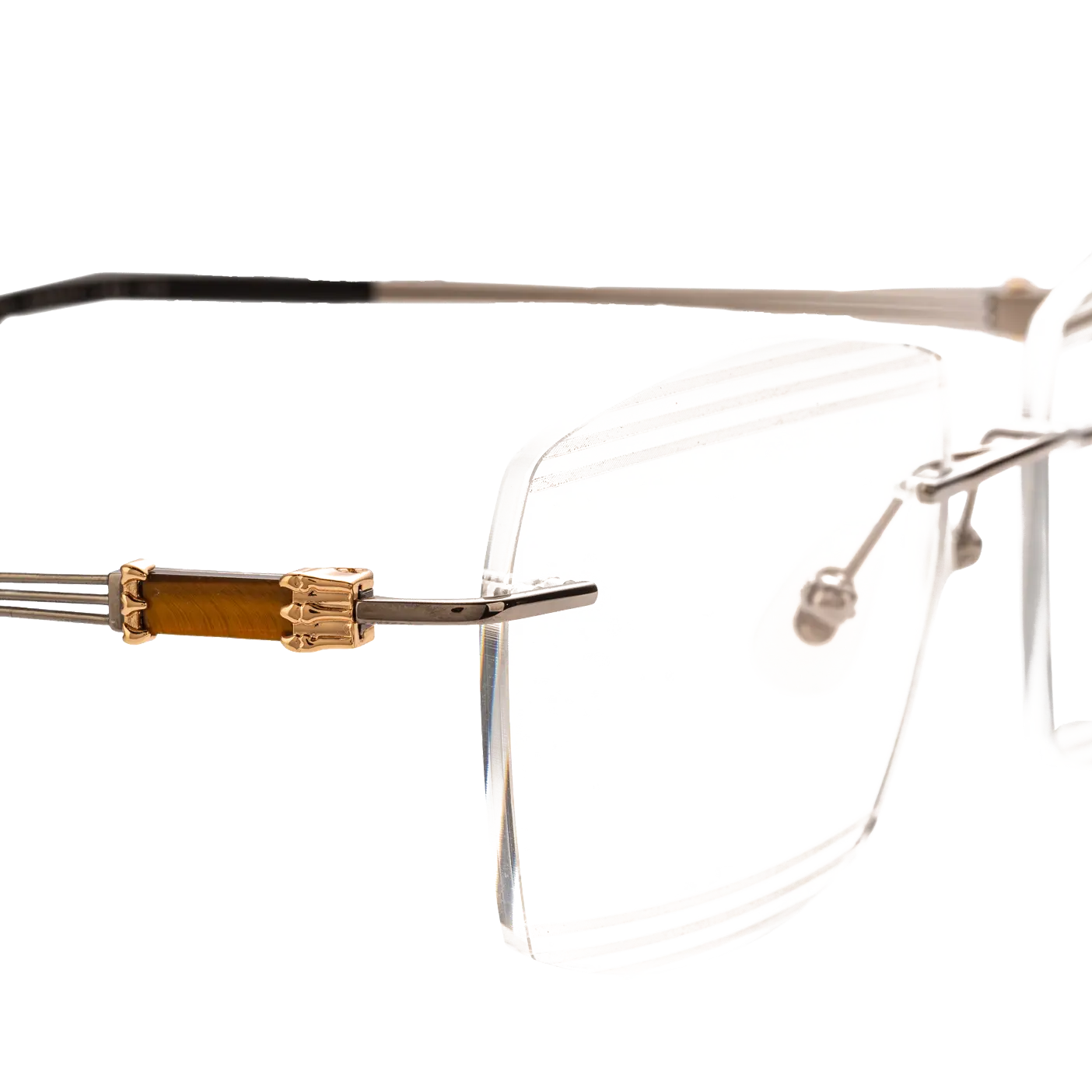
Build quality earns its money here. Designer rimless frames built to last use titanium and precision mounting. The pair you order today isn’t the pair you’re replacing come spring.
Lens Type
Lenses move the price more than anything else in the cart. Single-vision, cheapest. Bifocals, more. Progressives, the most, because they handle three distances with no line across the lens. People with presbyopia usually need that multifocal correction, which the National Eye Institute explains in its guide to refractive errors.
Prescription Strength
A strong prescription quietly pads the bill. Stronger correction wants thinner, lighter material, so your lenses don’t end up looking like jar bottoms. High myopia, hyperopia, astigmatism. All of them nudge you toward high-index lenses. They cost extra. They also wear better and look better, so it’s usually money well spent.
|
Mind the checkout creep. A pair advertised at $39 can hit $120+ the second you tick lens thickness, coatings, and tint. Compare the final cart. Never the first number you saw. |
Lens Type Costs, Explained
Lenses usually drive the biggest jump in any online order. The more your eyes need, the more the lens costs to make. That’s the whole logic.

|
Lens Type |
Typical Online Price |
Best For |
|
Single vision |
$50 – $150 |
One viewing distance |
|
Bifocal |
$100 – $200 |
Near and distance, visible line |
|
Progressive |
$120 – $350+ |
Near, middle, distance, no line |
|
High-index |
+$50 – $150 add-on |
Strong prescriptions, thinner look |
Single-vision covers most simple prescriptions and keeps the total down. Progressives are fussier. They need accurate measurements, so getting your pupillary distance right matters way more than saving five bucks on the lens.
Coatings and Add-Ons Worth Paying For
Coatings make glasses nicer to wear. Each one tacks on a fee, though. The move is simple: buy the ones your day calls for, ignore the rest.

- Anti-reflective: kills glare off screens and headlights. Worth it if you drive at night or wear glasses dawn to dusk.
- Scratch resistance: guards against daily knocks. Helpful. Not scratch-proof, so keep using a case.
- UV protection: shields your eyes outside. Sunglasses should block 99 to 100% of UVA and UVB.
- Blue-light filtering: a screen-time favorite, though the evidence runs thinner than the marketing.
About that last one. The American Academy of Ophthalmology points out that digital eye strain comes mostly from screen habits, not blue light. So if your eyes are fried by 5pm, take breaks and recheck your prescription before you pay for the upgrade. Want the clear picture on the lens upgrades that actually matter? Match each coating to how you really spend your day.
|
Buy the coating, not the hype. Anti-reflective and UV protection earn their cost for most people. Blue-light filtering is optional. Spend where your routine needs it. |
Online vs In-Store: Which Costs Less?
Online wins on price almost every time. Stores win on fitting help. Which one’s right comes down to your prescription and how comfy you are measuring yourself.

|
Factor |
Online |
In-Store |
|
Price |
Lower (no showroom) |
Higher (service built in) |
|
Fitting help |
You measure yourself |
Optician adjusts in person |
|
Best for |
Simple Rx, known frame size |
Progressives, complex Rx |
|
Selection |
Very wide |
Limited to stock |
Prescription current and frame size already in hand? Ordering online is real value. First-time progressive wearer, or a tricky prescription? Get fitted in person the first round. It saves a headache, and probably a return.
Does Vision Insurance Help When You Buy Online?
Sometimes. Sometimes not. Insurance can shrink your out-of-pocket cost, but it hangs on your plan and whether the online store is in-network. A frame allowance plus a lens discount might knock $100 to $200 off.
It doesn’t always come out ahead, though. A cash discount or a flash sale can beat an in-network price, especially on plain single-vision pairs. Weird, right? Glasses sometimes cost more with insurance, because fixed retail pricing and a skimpy allowance can total more than a straight sale would.
One more lever to pull: HSA and FSA money. The IRS lists prescription eyeglasses as an eligible medical expense, so you can usually pay with pre-tax dollars. Hang onto the receipt, in case your provider asks.
Conclusion
So, how much do prescription glasses cost online? For most folks, a solid complete pair lands at $100 to $200. A basic single-vision pair comes in under $100. Progressives, high-index lenses, premium frames cost more, sure. They also pay you back in comfort and years of wear.
The smart play stays the same every time. Price the whole pair, not the sticker. Buy the coatings you’ll use, skip the ones you won’t. And remember this: one well-built frame is cheaper over five years than three cheap ones bought back to back. That’s the idea behind lightweight rimless eyewear made with titanium and high-index lenses. Pay once. Wear it for years. Stop replacing it.

|
The one-pair mindset. The cheapest pair isn’t the one with the lowest tag. It’s the one you’re not buying again next year. |
FAQs
What is the average price for prescription glasses?
Online, a complete pair usually runs $50 to $250. Single-vision starts near $50. Progressives and designer frames sit higher. Online sellers tend to cluster at the low end, so that’s where you’ll spend the least.
How much should a new pair of prescription glasses cost?
Figure $50 to $300 online, depending on the frame, the lens type, and the add-ons. Simple prescription, less. Progressives or a strong prescription, more. Whatever the number, check the full cart before you decide.
Is $300 a lot for glasses?
For basic single-vision, yeah. For progressives, high-index lenses, or premium titanium frames, $300 is pretty normal. You’re paying for lens complexity and frame material, not the number by itself.
Is $400 too much for glasses?
Can be, for a plain online pair. But $400 makes sense for premium progressives, a strong prescription, or frames built to actually last. Look at which line item is pushing the price, then judge.
Is $600 a lot for prescription glasses?
Yes, $600 is steep for most pairs. Before you pay it, compare a couple of options and spot which lens upgrade is inflating things. Designer frames or premium progressives can earn it. Basic lenses can’t.
Who has the most affordable prescription glasses?
Online retailers, usually. No showroom overhead. Just weigh the final checkout price and the return policy, not the starting frame price alone, before you commit to anyone.
Why are glasses more expensive with insurance?
It happens when a store leans on fixed retail pricing, a small frame allowance, or in-network rules. Now and then a cash discount or sale beats your benefit outright. Price it both ways before buying.
How much is a standard pair of prescription glasses?
A standard online pair, basic frames plus single-vision lenses, usually runs $50 to $150. Add coatings, thinner lenses, or progressives and it climbs from there.
Sources
- National Eye Institute, Refractive Errors, 2025.
- American Academy of Ophthalmology, Are Blue Light-Blocking Glasses Worth It?, 2024.
- American Academy of Ophthalmology, Choosing the Best Sunglasses, 2024.
- Internal Revenue Service, Publication 502: Medical and Dental Expenses, 2025.

Looking for something else?

Best Frames for Thick Lenses (Men & Women Guide)
LEARN MORE
How to Fix Loose Glasses in 3 Simple Steps (At Home Fast)
LEARN MORE
Popular Glasses for Men 2026 Styles for Professionals
LEARN MORE
Eye Makeup with Glasses Tips for a Stunning Look
LEARN MORELooking for something else?

Who Invented Glasses and How They Changed the World
LEARN MORE
Diy Eyeglass Cleaner Guide for Crystal Clear Lenses
LEARN MORE
Best Glasses for Oblong Face Shapes
LEARN MOREYou may also like


Further reading
Parts of Glasses Explained: Frame, Bridge, Temple, Nose Pads and Lenses
What Are High Index Lenses and Who Needs Thinner Glasses?
Do Glasses Make Your Eyes Worse? What New Wearers Should Know