


Average Pupillary Distance and How to Measure PD at Home
This guide shows you the normal PD ranges, the difference between single and dual PD, and how to measure your own pupillary distance at home with a ruler and a mirror.
Most people land here wanting one number, so here it is. The average pupillary distance for adults sits between 54 and 74 mm. Women usually fall around 60–65 mm, men around 62–67 mm, and children lower because their faces are still growing. Your own number beats the average every time.
PD is the gap in millimeters between the centers of your pupils. The lens lab uses it to place the sharpest part of each lens right where you look. Get it wrong and a perfect prescription can still leave your eyes tired by afternoon. Get it right and new glasses tend to feel correct from the first wear.
Quick reference: Adults 54–74 mm · Women ~60–65 mm · Men ~62–67 mm · Children 43–58 mm. There's no single “correct” PD — only the one that's accurate for your face.
What Pupillary Distance Actually Is

Picture looking straight ahead while someone measures from the middle of your left pupil to the middle of your right. That distance, in millimeters, is your PD. It's one of those terms you'll only ever hear at an eye exam or an online checkout, so don't worry if it's new.
Why the Optical Center Matters
Every lens has an optical center the one spot engineered for the cleanest vision. PD tells the lab how to line that point up with where your eyes actually point. When it's off, your eyes quietly compensate all day, and that effort is what becomes strain, edge blur, or a dull headache. The same alignment logic runs through how lens technology aligns with your eyes, where the optical center is doing quiet work every time you put the glasses on.
PD vs Interpupillary Distance — Same Thing?
Yes. Interpupillary distance is the longer, clinical name for the exact same measurement. Sites and opticians shorten it to PD because it's faster. If you see either term, treat them as identical.
What Counts as a Normal PD

People want a tidy answer, and the honest one is a range, not a target. The table gathers the figures opticians and labs work with day to day.
|
Group
|
Typical PD Range
|
Notes
|
|
Adult women
|
60–65 mm
|
Many sit slightly outside this with no issue
|
|
Adult men
|
62–67 mm
|
Wider facial bones tend to read higher
|
|
Adults overall
|
54–74 mm
|
The full span most labs expect to see
|
|
Children
|
43–58 mm
|
Grows with the face through adolescence
|
Average PD for Women

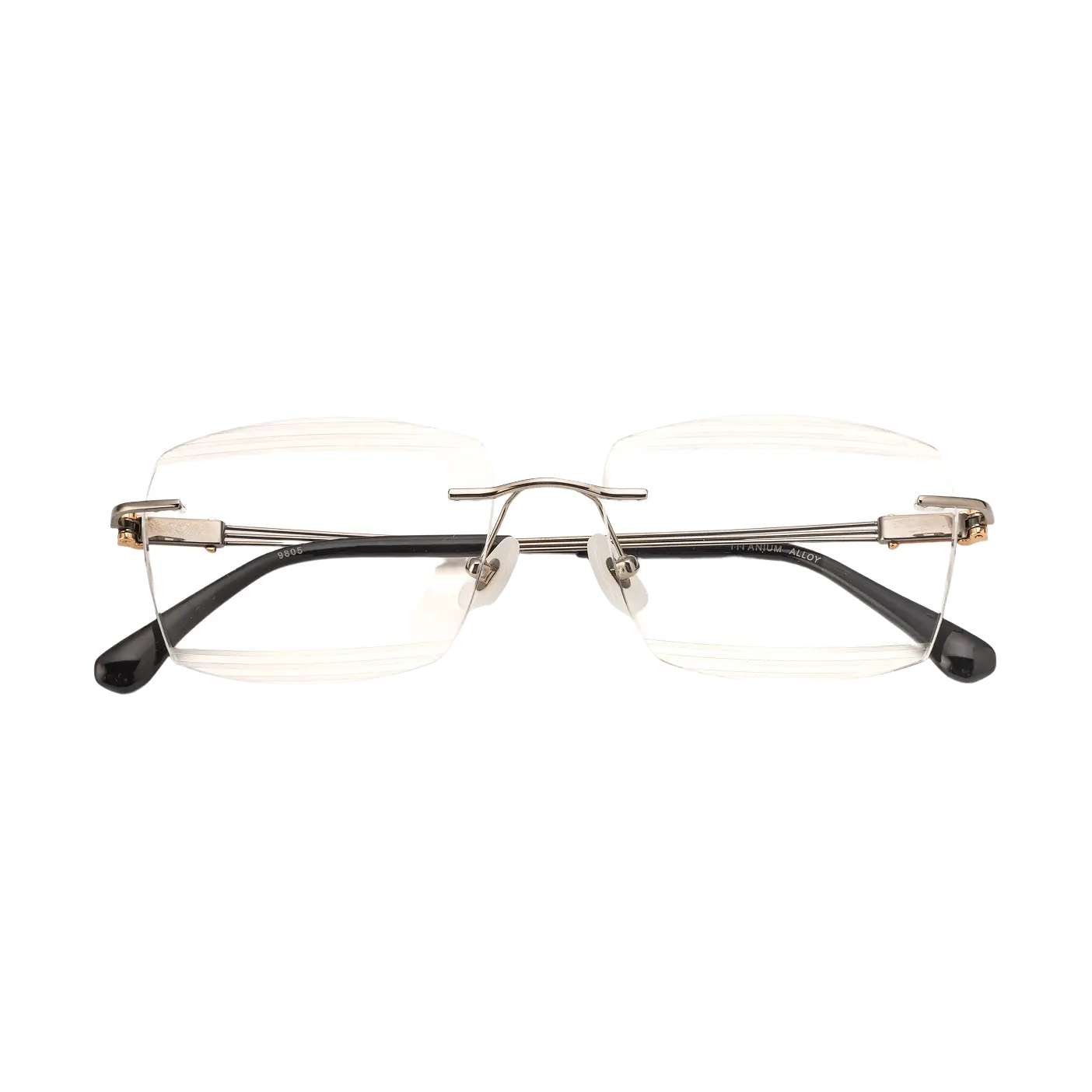
Most adult women measure 60 to 65 mm. If yours reads 58 or 67, that's still firmly normal genetics and bone structure set the number, not your vision quality. One upside of a smaller PD is that narrow, lightweight frames line up cleanly with your eyes. Thin rimless styles for lightweight daily wear are a popular pick for exactly that reason.
Average PD for Men
Adult men usually land between 62 and 67 mm, and wider features push toward the top of that band. A larger PD says nothing about how well you see. It only changes where the lab places the optical center inside each lens.
Is a PD of 58.5 Normal?
Yes. A PD of 58.5 mm sits comfortably inside the standard adult range and is common among adults and teenagers. The number itself tells you nothing about eye health — it's purely a positioning measurement.
Single PD vs Dual PD, Without the Confusion
Both describe the distance between your pupils. The difference is how it's recorded, and which one you need depends on the lenses you're ordering.
|
|
Single PD (Binocular)
|
Dual PD (Monocular)
|
|
What it measures
|
Pupil to pupil, one total number
|
Each pupil to the nose bridge, two numbers
|
|
Looks like
|
63 mm
|
32 / 31 mm
|
|
Best for
|
Standard, distance, sunglasses
|
Progressives, multifocals, strong scripts
|
For everyday single-vision glasses, single PD does the job. Move into progressives or a strong prescription and dual PD earns its keep, because each eye is positioned on its own.
Worth knowing: If your prescription includes prism correction or multifocal lenses, ask for dual PD before ordering online. It's the one detail that quietly makes or breaks progressive lenses.
How to Measure Your PD at Home
You don't need a clinic to get a workable PD. A millimeter ruler and a mirror cover most cases, and a second person makes it easier. Whichever route you take, measure three or four times and average them a single reading is the usual reason home numbers come out wrong.

Method 1 — Ruler and Mirror
-
Stand about 8 inches back from a mirror, somewhere with decent light.
-
Lay a millimeter ruler flat across your brow and hold it steady.
-
Shut your right eye. Slide the ruler so the zero mark sits dead center on your left pupil.
-
Now hold everything still, open your right eye, and close the left.
-
Whatever line falls over the center of your right pupil that's your PD.

Method 2 — Ruler and a Friend
This one's easier, honestly. Pick something across the room 10 to 20 feet away and just look at it, eyes relaxed. Your friend holds the ruler across your brow, lines up zero with one pupil, and reads off the other. Since you're gazing into the distance instead of at your own face in a mirror, your eyes barely move, and the number comes out steadier.
Method 3 — Online or App Tools
Don't have a ruler handy? Plenty of eyewear sites have a digital PD tool that runs off your phone camera. Fast and painless though tilt your head or sit in bad light and the number drifts a bit. If you wear progressives, treat the app figure as a ballpark and get it confirmed by a pro before you order.
Common mistakes that throw the number off: measuring in inches instead of millimeters, tilting the ruler, focusing on your reflection rather than straight ahead, dim light, or measuring only once. Any one can shift your PD a couple of millimeters.
Near PD vs Distance PD for Reading Glasses

When you read, your eyes rotate slightly inward, so close work needs a narrower spacing than distance. That narrower figure is your near PD, and it matters most for reading glasses and computer lenses.
|
Starting point
|
How to get near PD
|
Example
|
|
Single distance PD
|
Subtract 3 mm
|
63 mm → 60 mm
|
|
Dual distance PD
|
Subtract 1.5 mm per eye
|
32/30 → 30.5/28.5
|
For everyday distance glasses, driving, sunglasses, and sports eyewear, stick with your distance PD. Save the near calculation for reading and close-up work, and confirm it with an optician if you're ordering progressives.
Does PD Really Have to Be Exact?
As accurate as you can reasonably make it. “Exact to the decimal” matters more for some lenses than others, and the deciding factors are prescription strength and lens type.
Off by 1 mm
For a mild single-vision prescription, a 1 mm gap often goes unnoticed. Some people feel slight strain after a few hours, and progressive wearers notice sooner because the viewing zones must sit right over the pupils. Strong or progressive script? Push for the most precise number you can get.
Off by 2 mm
Two millimeters is where problems get likely — headaches, edge blur, or focus that never settles. Strong and multifocal lenses are the least forgiving. If new glasses feel off after a few days, ask an optician to recheck both the prescription and the PD before blaming the frames.
Signs Your PD Might Be Wrong
-
Headaches within days of new glasses
-
Eye fatigue late in the day
-
Blurring toward the edges of your vision
-
Trouble locking focus, or a faint dizziness while wearing them
These usually surface in the first few days. A quick re-measure ideally with a pupillometer at an optical shop clears up most cases.
Does Pupillary Distance Change With Age?
A lot in childhood, then mostly not. As the skull and eye spacing develop, a child's PD climbs steadily. Once facial growth finishes in the late teens, adult PD settles and tends to stay put. Small shifts can happen with age, but a large jump in an adult is uncommon and usually points to injury or a medical cause.
Practically: kids need updated readings at their exams, while most adults can reuse a reliable past measurement. Recheck yours when you order online, after a facial injury, if your glasses suddenly feel uncomfortable, or when you switch to progressives.
Why Your Prescription Might Not List Your PD
Plenty of people find no PD on the form they take home. It's not an oversight so much as how clinics divide the work. Eye doctors focus on your vision correction, while PD is often handled separately during the frame fitting.
Can You Order Glasses Without a PD?
Generally, no most online stores need it so the lenses line up with your eyes. If you're eyeing lightweight options like prescription eyeglasses designed for comfortable daily wear, sort out your PD first. Most opticians will hand it over if you ask, though a few charge a small fitting fee, and measuring it yourself at home is a reliable fallback.
Conclusion
Funny how much rides on one little measurement. PD is just the gap between your pupils, but it's what puts the clearest part of each lens exactly where you're looking so your eyes can settle instead of working overtime. Most adults land somewhere between 54 and 74 mm. Forget the average, though. The only number that matters is yours.
Measure more than once. Lean on a professional reading for progressives, strong scripts, or prism corrections. Single PD covers most standard glasses, dual PD adds precision per eye, and near PD trims about 3 mm for reading. Get the number right and a new pair tends to feel natural from the first wear.

When you're ready to shop, the full range of luxury rimless glasses built for accurate lens fitting is built around that alignment lightweight titanium, hand-finished edges, and lenses centered to your eyes rather than a generic default. This year's rimless eyewear trends show where the look is heading, but the comfort starts with one accurate measurement.
Measure twice, order once. Five readings, one answer — that's all accurate PD really takes.
FAQs
Does PD matter for glasses?
Yes, for nearly every prescription pair. It lines the lens optical center up with your pupils, so the wrong PD means strain, edge blur, or headaches worse with progressives. Measure carefully before ordering online.
What is the average PD for a woman?
Most adult women measure 60 to 65 mm, but plenty read slightly above or below with no issue. Bone structure and genetics set it. Take a few readings and average them for the best figure.
Is it okay if your PD is off by 1mm?
Often, yes, for mild single-vision lenses. Some people feel slight strain after hours, and progressive wearers notice sooner. For strong or progressive scripts, aim for the most precise number you can get.
Can PD be off by 2 mm?
A 2 mm error is more likely to cause headaches, blur, or unsettled focus, and strong or multifocal lenses are least forgiving. If new glasses feel off, have the PD rechecked before blaming the frames.
Does PD change with age?
It rises through childhood, then holds steady once facial growth stops in the late teens. Large adult changes are rare and usually tied to injury. Kids need fresh readings; most adults can reuse a reliable one.
Why don't opticians give PD?
Some clinics treat PD as part of frame fitting, not the written prescription, so it's left off the form. You're usually entitled to ask, and most opticians will provide it on request.
Is a PD of 58.5 normal?
Yes. It sits inside the standard adult range and is common among adults and teenagers. The number reflects pupil spacing only it says nothing about eye health or vision quality.
Is there a big difference between 1.75 and 2.0 readers?
The gap is small but real. The 2.0 lenses give slightly stronger close-up magnification. Pick the weakest power that lets you read comfortably without leaning in; an eye exam gives a more tailored answer.
Sources
-
American Academy of Ophthalmology — how to read an eyeglasses prescription, including PD and optical center
-
National Eye Institute — federal eye health and vision reference
-
Cleveland Clinic — plain-language explainer on PD accuracy and symptoms
-
All About Vision — how to measure pupillary distance and child PD ranges
-
Mayo Clinic — eye care reference on PD stability with age

Looking for something else?

Best Frames for Thick Lenses (Men & Women Guide)
LEARN MORE
How to Fix Loose Glasses in 3 Simple Steps (At Home Fast)
LEARN MORE
Popular Glasses for Men 2026 Styles for Professionals
LEARN MORE
Eye Makeup with Glasses Tips for a Stunning Look
LEARN MORELooking for something else?

Who Invented Glasses and How They Changed the World
LEARN MORE
Diy Eyeglass Cleaner Guide for Crystal Clear Lenses
LEARN MORE
Best Glasses for Oblong Face Shapes
LEARN MOREYou may also like
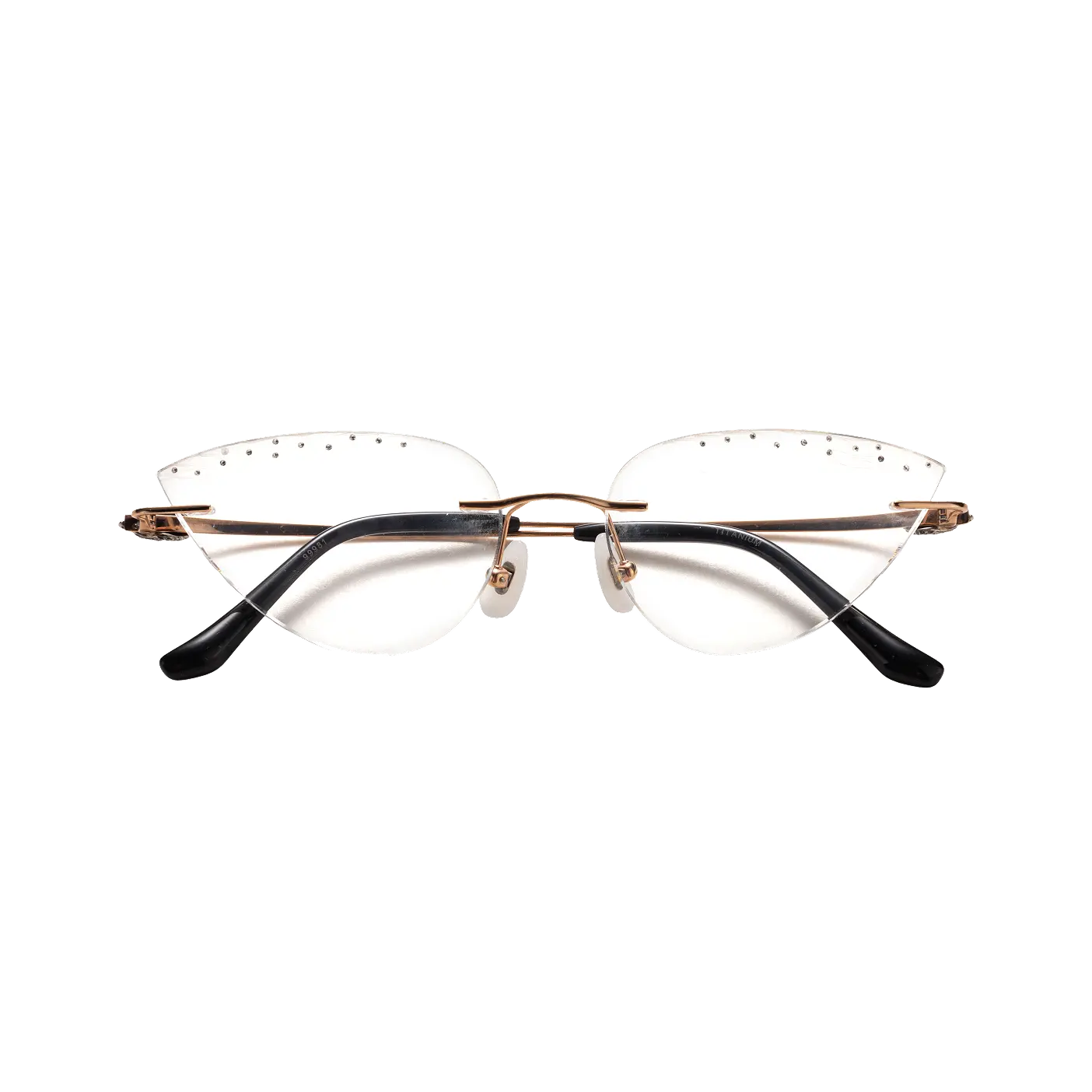


Sculpted Cat-Eye · 18K Gold-Plated Titanium · Crystal Accents
Further reading
Parts of Glasses Explained: Frame, Bridge, Temple, Nose Pads and Lenses
A pair of glasses looks simple until a screw works loose. Then you notice how many small parts had to line up before the lenses ever sat in front of your eyes. The frame front holds the lenses. The...
What Are High Index Lenses and Who Needs Thinner Glasses?
Thinner lenses. The trick is the material: it bends light harder than regular plastic, so your prescription needs less of it to do the same job. Standard plastic, and a strong prescription bulges ...
Do Glasses Make Your Eyes Worse? What New Wearers Should Know
Your first pair of glasses does something odd. The world goes sharp. Suddenly there's text you can read from the couch, and a street sign you'd been guessing at for months. You wonder how you coped...

Best Lens Color for Fishing Sunglasses: Polarized Lens Guide
what color lens is best for fishing in 2026 Ask three anglers what color lens is best for fishing and you'll get four answers, a story about a lost pair of glasses, and probably a strong opinion ab...


