



High Index Lenses: Pros, Cons and Who Needs Thinner Lenses
Before you choose thinner lenses, it helps to understand the main high index lenses disadvantages. They can cost more, show stronger edge reflections without the right coating, and may not be necessary for mild prescriptions.
So you want thinner glasses. High index lenses get you there. They're lighter on your face, slimmer at the edge, and they make a strong prescription look a whole lot less like the bottom of a jam jar. Good. But thin isn't free. You pay more, you fight a bit of glare, and the lens chips sooner if you drop it. Is it worth it? Honestly, that depends on one number: your prescription.
Take a strong script and grind it into cheap plastic. What you get back is thick, heavy, and ringed at the rim like a target. That's the problem high index was built to solve. The flip side, and nobody at the optician's counter loves saying this part out loud, is that all the downsides are real, and if your prescription is mild you're paying for a fix you don't need.
|
The short version
Strong prescription and you live in your glasses? Get high index, you'll feel the difference daily. Mild prescription, or they only come out to read a menu? Save your money. Regular plastic does the job fine.
|
What Are High Index Lenses?
Here's the science, minus the lecture. Every lens material has a refractive index, which is just a measure of how hard it bends light. Standard plastic sits at 1.50. High index materials bend it harder. Bend light harder and you need less stuff to land the same prescription, so the lens comes out slimmer and lighter. That's the entire trick.
The scale climbs from that 1.50 baseline up through 1.61, then 1.67, and finally 1.74 at the razor-thin end. The American Academy of Ophthalmology puts it plainly: high index lenses are thin, lightweight plastic for people who need serious correction, and they shrink the “coke-bottle” look you get from thick lenses. Bigger number, thinner lens. Don't overthink the rest.
The Pros: Why People Choose Them
Every good thing about a high index lens is really just a thick-lens headache, solved. Three of them stand out.
Thinner, Lighter, Easier to Wear

Still, thinner lenses can come with trade-offs. High index lenses may show more reflections without an anti-reflective coating, and the thinner edges can feel slightly more delicate than standard plastic lenses.
Eyes Look More Natural
Thick lenses mess with how your eyes look to everyone else. Strong nearsighted lenses shrink them down to little dots. Strong farsighted ones blow them up wide. High index uses less material, so both effects calm down and your eyes look like your eyes again, on camera and across the dinner table.
More Frame Freedom
Thin edges unlock frames that thick lenses simply can't pull off. Bigger shapes. Delicate metals. The lens tucks in flush instead of jutting past the rim, and the whole pair reads cleaner when someone catches you in profile.
The Cons: What to Know Before You Buy
No honest part here. None of these will ruin your day, but you should know what you are buying before you hand over the card.
The main high index lenses disadvantages are higher cost, more glare without an anti-reflective coating, slight edge distortion, and more delicate lens edges. These issues do not affect everyone, but they matter more with stronger prescriptions and larger frames.
They Cost More, and Coatings Add Up
The material costs more to start with, and 1.74 costs more still. Then there's the small print: most opticians bundle anti-reflective and scratch-resistant coatings in by default on these lenses. So the number that matters is the one at the bottom of the receipt, not the one on the shelf tag.
More Glare Without an AR Coating
The takeaway is simple: extra glare without an anti-reflective coating is one of the main high index lenses disadvantages, so AR coating is almost essential if you choose this lens type.

Denser material that sits flatter throws back more light. Skip the coating and you'll see it: shine on the lenses driving at night, glare on every video call, hot spots in photos. Add an anti-reflective coating and the problem mostly vanishes. Which is exactly why it comes standard, not as an upsell.
Slight Edge Distortion
High index materials usually have a lower Abbe value. That's a fancy way of saying the lens splits light into its colors a touch more than thicker materials do. Lower number, more splitting, and you might catch faint colored fringes at the very edge of your view. The National Institutes of Health points out this effect, chromatic aberration, gets stronger in tougher prescriptions and when your eyes drift off-center. For most people it fades into the background within a week.
More Fragile, and Easier to Scratch
Thinner material, thinner edge, and a thinner edge cracks if the glasses hit a tile floor. High index also can't match polycarbonate or Trivex for taking a hit, so if you're buying for a kid or for the rugby pitch, go tougher. The surface scuffs more easily too. That's reason number two for the scratch coating. And please, microfiber cloth only. Your shirt hem is sandpaper.
Lined up against the usual suspects, here's where each one sits:
|
Lens Material
|
Index
|
Best Prescription
|
Impact Resistance
|
Relative Cost
|
|
Standard plastic (CR-39)
|
1.50
|
Up to ±2.00
|
Moderate
|
Lowest
|
|
Polycarbonate
|
1.59
|
±2.00 to ±4.00
|
Very high
|
Low to mid
|
|
High index plastic
|
1.61–1.67
|
±4.00 to ±6.00
|
Lower
|
Higher
|
|
Ultra-high index
|
1.74
|
±6.00 and above
|
Lowest
|
Highest
|
So, which is better, polycarbonate or high index? Choose polycarbonate if you need stronger impact resistance for kids, sports, or active wear. Choose a high index if your main goal is thinner, lighter lenses for a stronger prescription.

Who Needs Thinner Lenses?
More than anything else, your prescription decides this. Find your range below.
|
Your Prescription
|
What We'd Suggest
|
|
Mild (under ±2.00)
|
Standard plastic stays thin enough. The high index difference is subtle and rarely worth the spend.
|
|
Moderate (±2.00 to ±4.00)
|
A 1.61 or 1.67 lens noticeably improves weight and looks. Most people first feel the upgrade here.
|
|
Strong (above ±4.00)
|
High index makes its biggest visible difference. The trade-offs are a fair price for the comfort.
|
|
A test you can run in the mirror
Turn your current glasses sideways and look. Does the lens stick out past the frame? Do the arms leave a red dent on your nose by bedtime? Either one says thinner material would help. Neither? You're probably fine as you are.
|
|
Do High Index Lenses Work in Rimless Frames?

Short answer: yes, but the frame has to be made for it. Rimless and semi-rimless frames leave the lens edge out in the open, with no rim to take a knock for it. Put a more brittle material in that spot and you can understand why the internet keeps telling people not to bother.
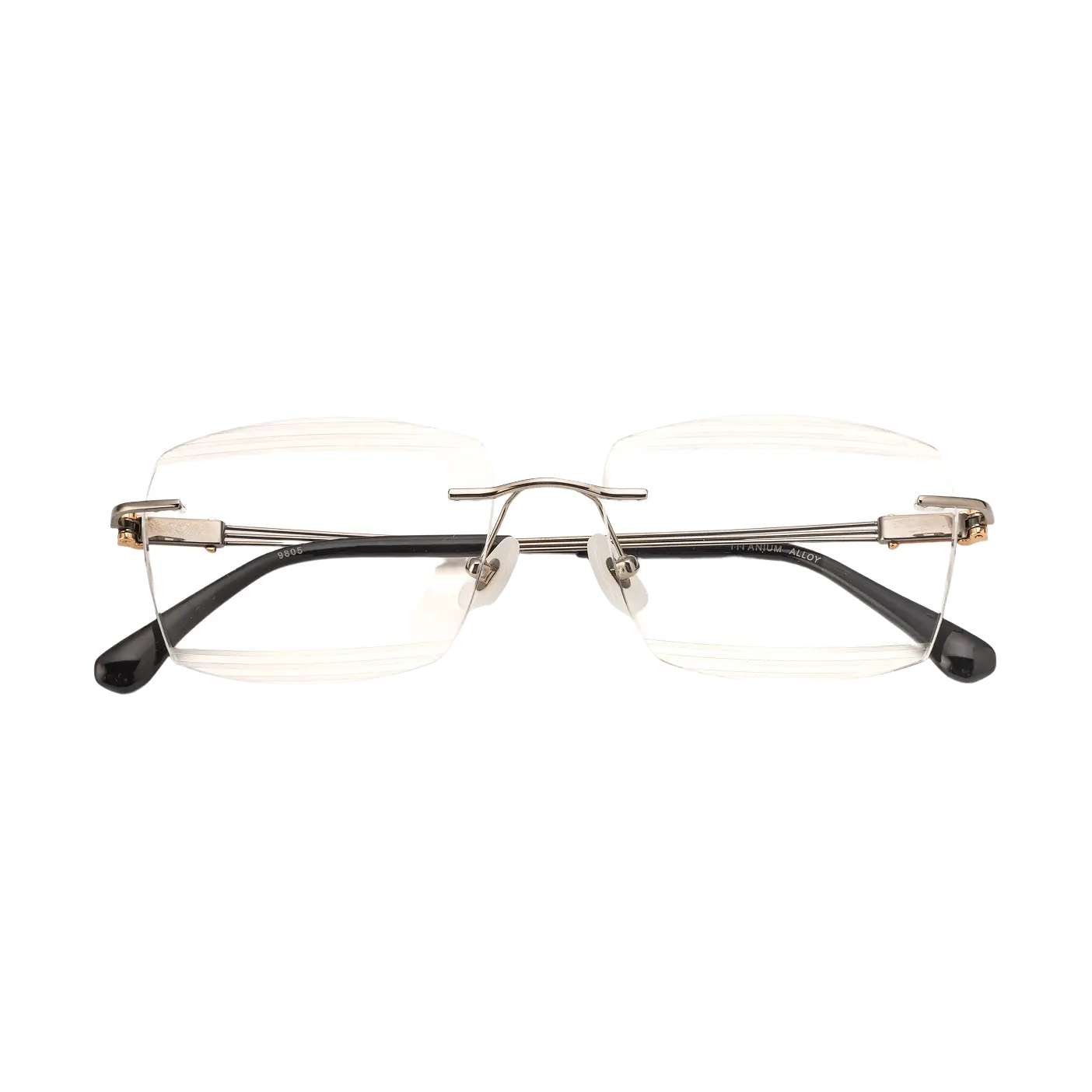
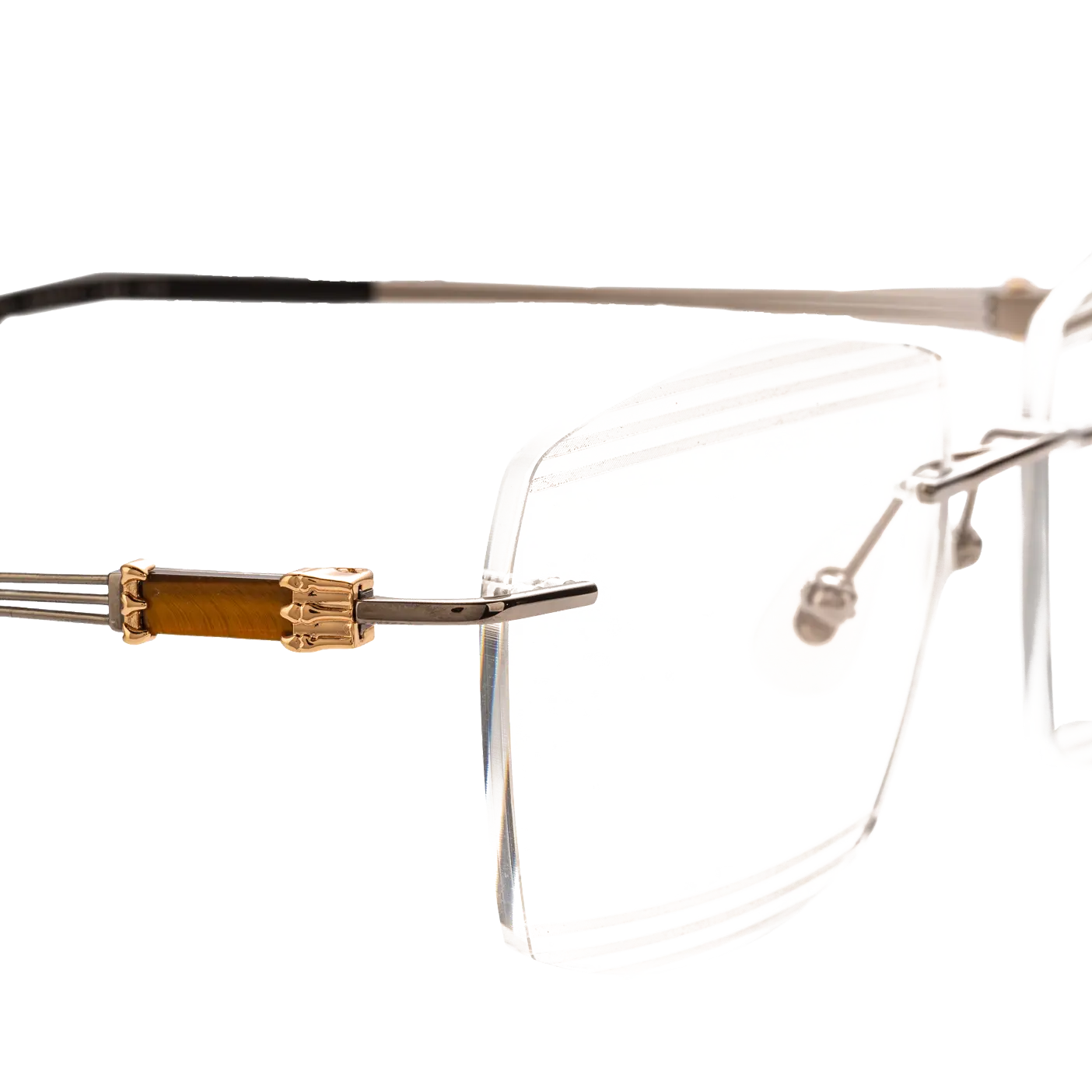
But it only goes wrong when the frame is built badly. Drill and anchor the lens properly and the thin edge gets held, not strained. That's down to how the frame is made, not what the lens is made of. Take our designer rimless glasses: the precision-drill technique pins each lens to a titanium frame so the edge stays put, and traceless welding leaves the bridge looking like one clean line. Made like that, the fragility scare that sounds so convincing online mostly melts away once the glasses are on your face.
Two things to walk away with. If your prescription is way up there, full-rim still protects a high index lens best, full stop. And if you've got your heart set on rimless, the frame engineered to hold a thin drilled edge matters far more than how pretty it looks in the photo.
Best Frame Styles for High Index Lenses

Frame and lens travel together. The frame is what decides how thin the lens looks and how long it survives a clumsy week. Three combinations that work:
-
Full-rim titanium. It wraps the whole edge, hides the thickness, and takes the hits for the lens. The safest bet for a strong prescription, hands down.
-
Smaller round or oval shapes. Less lens to play with means thinner edges and a cleaner profile. A lightweight titanium frame that supports thin edges gives you that featherweight feel plus the backbone a high index lens leans on.
-
Rimless and semi-rimless. Lightest look there is, and the least fussy. Perfect for mild to moderate prescriptions, and fine for stronger ones if the frame is built to hold drilled edges.
Conclusion
Do you really need high index lenses, or are the disadvantages not worth it for your prescription? If you have a strong prescription and wear glasses all day, thinner and lighter lenses can be worth it. If your prescription is mild, standard plastic may be enough.
The best choice depends on your prescription strength, frame style, budget, and coating needs. Choose high index lenses on purpose, not out of habit, and make sure you add an anti-reflective coating for the best daily comfort.
Once you've gone thin on the lens, the frame is what you actually feel all day. Luxury rimless eyewear built around thinner lenses shows how titanium frames hold a refined prescription lens, backed by free shipping on every order, a 14-day satisfaction guarantee, and a 2-year warranty. Thin lens, light frame. Get that pairing right and you stop noticing your glasses, which is the whole point.
The biggest mistake shoppers make is focusing only on lens thickness while ignoring the frame. A thin lens paired with a poorly built frame can still feel awkward, unstable, or fragile. Strong prescriptions usually perform best in quality titanium full-rim or engineered rimless designs that properly support thin edges. That balance matters more than chasing the absolute thinnest index number on the chart.
FAQs
What is the problem with high index lenses?
Mostly cost, glare without an anti-reflective coating, and edges that chip a bit easier. Each one has a fix, and once your prescription is strong the price stops feeling like a problem.
Do I really need high index lenses?
Probably, if you're at ±3.00 or stronger and your lenses look chunky or feel heavy. Under ±2.00? Regular plastic stays thin enough that you'd barely tell the difference.
Which is better, polycarbonate or high index?
Different jobs. Polycarbonate shrugs off impacts, so it's the pick for kids and sports. High index goes thinner for strong scripts. Match it to your life, not a leaderboard.
Do high index lenses make eyes look normal?
Pretty much. They tone down the shrinking from strong nearsighted lenses and the bug-eye magnifying from strong farsighted ones, so your eyes look like yours.
At what prescription should I get high index lenses?
Folks usually start thinking about it around ±3.00 and feel sure past ±4.00. Go for a big frame and that line creeps a little earlier.
What is the lifespan of high index lenses?
A few years with decent care, about as long as you'd keep any pair before your eyes change. Scratches kill a lens long before age does, so use the case.
Do high index lenses scratch easily?
A touch more than chunky standard lenses, which is why the scratch coating earns its keep. Wipe them with microfiber, never your shirt or a paper towel.
Is there a big difference between 1.67 and 1.74 lenses?
Mainly at strong prescriptions, where 1.74 is clearly slimmer. For moderate scripts they look almost the same, and 1.67 usually wins on value.
Sources
- American Academy of Ophthalmology (AAO), How to Choose Eyeglasses for Vision Correction
- National Institutes of Health (NIH MedlinePlus), Eyewear
- National Center for Biotechnology Information (NCBI), Chromatic Aberration (StatPearls) (2023)
- Mayo Clinic, Nearsightedness
- Cleveland Clinic, Astigmatism

Looking for something else?

Best Frames for Thick Lenses (Men & Women Guide)
LEARN MORE
How to Fix Loose Glasses in 3 Simple Steps (At Home Fast)
LEARN MORE
Popular Glasses for Men 2026 Styles for Professionals
LEARN MORE
Eye Makeup with Glasses Tips for a Stunning Look
LEARN MORELooking for something else?

Who Invented Glasses and How They Changed the World
LEARN MORE
Diy Eyeglass Cleaner Guide for Crystal Clear Lenses
LEARN MORE
Best Glasses for Oblong Face Shapes
LEARN MOREYou may also like


Further reading
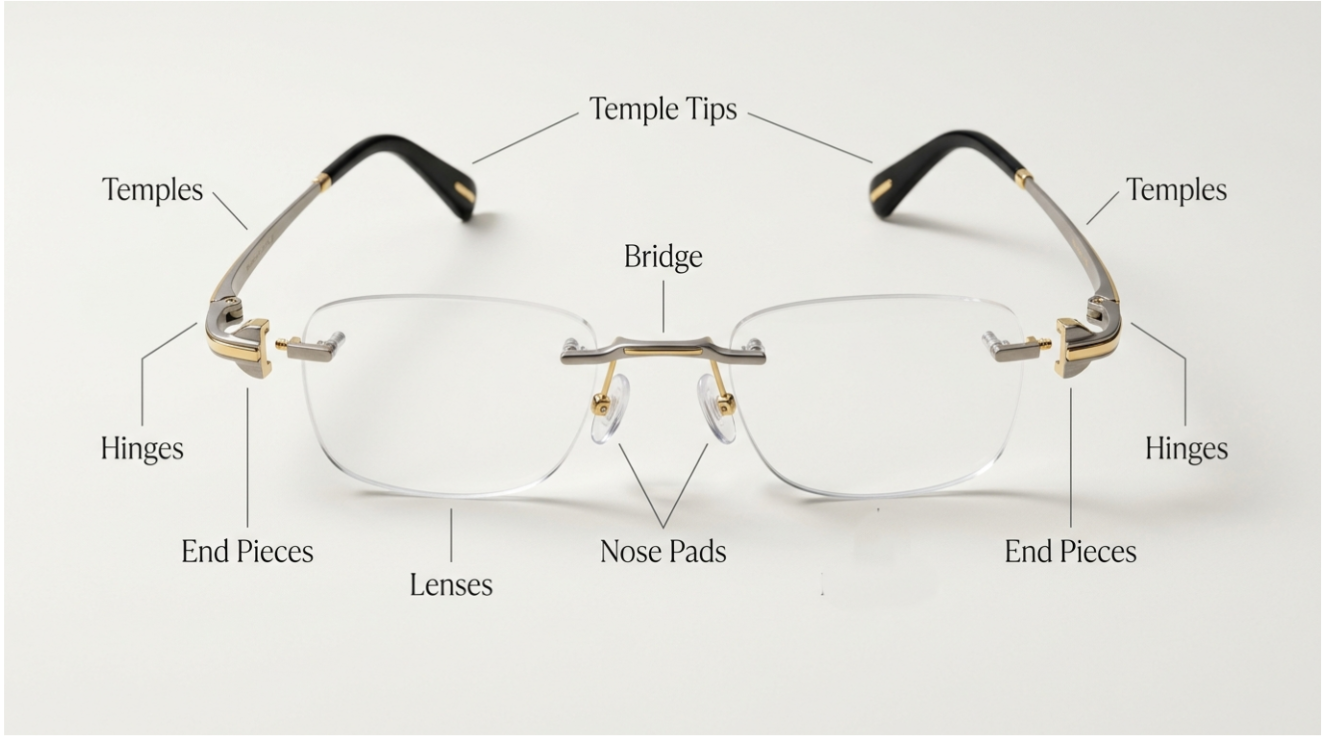
Parts of Glasses Explained: Frame, Bridge, Temple, Nose Pads and Lenses
A pair of glasses looks simple until a screw works loose. Then you notice how many small parts had to line up before the lenses ever sat in front of your eyes. The frame front holds the lenses. The...

What Are High Index Lenses and Who Needs Thinner Glasses?
Thinner lenses. The trick is the material: it bends light harder than regular plastic, so your prescription needs less of it to do the same job. Standard plastic, and a strong prescription bulges ...

Do Glasses Make Your Eyes Worse? What New Wearers Should Know
Your first pair of glasses does something odd. The world goes sharp. Suddenly there's text you can read from the couch, and a street sign you'd been guessing at for months. You wonder how you coped...

Best Lens Color for Fishing Sunglasses: Polarized Lens Guide
what color lens is best for fishing in 2026 Ask three anglers what color lens is best for fishing and you'll get four answers, a story about a lost pair of glasses, and probably a strong opinion ab...


